_1762768699969.webp)

_1789437226275.webp "Anodized Aluminum Interior Wall Panels: The Art of Metallic Texture in Interior Spaces")
_1789437226378.webp "Anodized Aluminum Interior Wall Panels: The Art of Metallic Texture in Interior Spaces")
_1789437226651.webp "Anodized Aluminum Interior Wall Panels: The Art of Metallic Texture in Interior Spaces")
_1789437226213.webp "Anodized Aluminum Interior Wall Panels: The Art of Metallic Texture in Interior Spaces")
_1789437226247.webp "Anodized Aluminum Interior Wall Panels: The Art of Metallic Texture in Interior Spaces")
Anodized Aluminum Interior Wall Panels: The Art of Metallic Texture in Interior Spaces






Thickness:1.5-5.0mm
Material:1100, 3003, 5005, 6063, etc
Surface treatment:PVDF/PE
Supply capacity:50000 ㎡/month
Service life:30-year warranty
Minimum Order Quantity (MOQ):30㎡
Color:RAL and other customized colors
Size:Customized size
Feature:Durable, easy to install, environmentally friendly, high-quality
Certificate:CE,UL,SASO,ISO 12944-6
Delivery time:15-20 days Installation
Guide:Provide detailed construction drawings
Place of Origin:Guangdong, China
- Product Description
As interior decorative materials continue to evolve, owners and designers are no longer satisfied with merely "good-looking and durable" wall finishes. They demand high-quality surfaces that offer authentic texture, low environmental impact and lasting beauty. Anodized Aluminum Interior Wall Panels are the premium wall material emerging to meet this demand. Using aluminum alloy as the substrate, an electrochemical anodizing process grows a dense oxide layer on the surface, preserving the natural metallic texture while dramatically improving wear resistance and corrosion resistance.
Unlike ordinary painted aluminum panels, an anodized surface is not "coated on" but "grown from within." The oxide film is integral to the substrate and will never peel or fade. It is a truly "lifetime texture" material. From five-star hotel lobbies in Dubai to boutique hotel corridors in Tokyo, anodized aluminum wall panels are becoming the preferred finish for premium interior spaces worldwide.

Product Overview: What Is an Anodized Aluminum Interior Wall Panel
An anodized aluminum interior wall panel is an interior wall decorative panel made from 3003 or 5005 series aluminum alloy sheet, processed through surface pretreatment, electrochemical anodizing and sealing. The core process places the aluminum as an anode in an electrolyte bath, where electric current generates a dense aluminum oxide (Al2O3) film on the surface. This oxide film is firmly bonded to the base metal — it is not a coating, but a conversion layer of the substrate itself.
The oxide film thickness for interior-grade anodized wall panels is typically 8-15 microns (Type II Anodizing standard), meeting the wear resistance, fingerprint resistance and decorative requirements of interior spaces. Panel thickness generally ranges from 1.5mm to 3.0mm, with standard widths up to 1200mm and lengths customizable per project, up to 4000mm or more to accommodate large seamless wall surfaces.
Compared with other commonly used interior wall materials, anodized aluminum wall panels offer unique advantages: they do not require periodic refinishing like paint, are not as heavy or radioactive as natural stone, and are not as moisture-sensitive or fire-prone as wood veneer. They are a premium finish material that is "installed once and used for a lifetime."
Anodizing Process: Why It Is Different
To understand the advantages of anodized aluminum wall panels, one must first understand the anodizing process itself. Unlike powder coating or PVDF coating — which are "surface coating" processes — anodizing is a "surface conversion" process.
Process flow. After degreasing, alkaline etching and neutralizing pretreatment, the aluminum is placed in a sulfuric acid electrolyte bath as the anode. When current is applied, an electrochemical oxidation reaction occurs on the aluminum surface, generating a porous aluminum oxide film. The film is then colored through electrolytic or natural coloring, followed by a sealing process that closes the micro-pores, ultimately forming a hard, smooth and corrosion-resistant surface.
Properties of the oxide film. This aluminum oxide film has a Vickers hardness of HV200-400, approaching the surface hardness of stainless steel and far exceeding any organic coating. The bond between the film and the substrate is "metallurgical" rather than "physical," meaning there is no risk of coating peeling or blistering. Meanwhile, the oxide film has a micro-pore structure that, after sealing, becomes smooth and dense — preserving the delicate luster of metal while offering stain resistance and easy cleaning.
Color formation. Anodized colors are not applied pigments. Instead, metal ions (tin, nickel, cobalt, etc.) are deposited into the micro-pores of the oxide film through electrolytic coloring. Light interferes and scatters within the pores, producing rich metallic tones. From silver, champagne and bronze to black, titanium and rose gold, all colors are native metallic hues with no plastic-like appearance.
|
Dimension |
Anodized Aluminum |
Powder Coated |
Wood Veneer |
|---|---|---|---|
|
Surface Texture |
Native metallic |
Plastic-like |
Natural wood grain |
|
Wear Hardness |
HV200-400 |
Pencil hardness 2H |
Easily scratched |
|
Color Durability |
Never fades |
5-10 years aging |
Fades over time |
|
Eco-Friendliness |
Zero VOC, 100% recyclable |
VOC emissions |
Formaldehyde release |
|
Fire Rating |
Class A non-combustible |
Class B1 flame retardant |
Class B2 combustible |
|
Maintenance Cost |
Very low, wipe with damp cloth |
Low |
High, regular care needed |
|
Service Life |
20+ years (interior) |
10-15 years |
5-10 years |
Core Advantages: Why Premium Spaces Choose It
Authentic metallic texture, irreplaceable. Anodizing preserves the natural metallic luster and delicate tactile feel of aluminum. Under sunlight or lighting, the surface shows subtle metallic luster variations that no spray coating or film can replicate. In luxury hotels, clubs and sales galleries, anodized aluminum wall panels convey a quality of "understated luxury."
Never cracks, never peels. The oxide film is integral to the substrate, so there is no coating adhesion issue. Even in environments with significant temperature fluctuations, the oxide film will not crack or delaminate due to substrate thermal expansion and contraction. This characteristic makes it particularly suitable for floor heating environments in northern climates and areas near HVAC vents where temperatures change frequently.
Eco-friendly, zero emission. The anodizing process does not use organic solvents or paints, with virtually zero VOC emissions during production. The installed panels release no formaldehyde, TVOC or other harmful substances, fully meeting green building and healthy indoor environment standards. This advantage is particularly important for medical, educational and high-end residential projects that demand the highest indoor air quality.
Class A fire rating, peace of mind. Aluminum alloy itself is a non-combustible material, and the oxide film also does not burn. In a fire, anodized aluminum wall panels do not produce toxic smoke, making them an ideal wall material for high-rise buildings and densely occupied spaces.
Fingerprint-resistant, easy to clean. The sealed anodized surface is hydrophobic and resists fingerprint marks and stains. Daily cleaning requires only a soft, damp cloth — no special cleaners needed. For high-traffic public spaces, this characteristic significantly reduces maintenance costs.
100% recyclable. Aluminum is one of the most recycled metal materials globally, and the anodized layer has no impact on aluminum recycling during smelting. For green building projects pursuing sustainability, anodized aluminum wall panels are a true circular economy material.

Finishes and Color Options
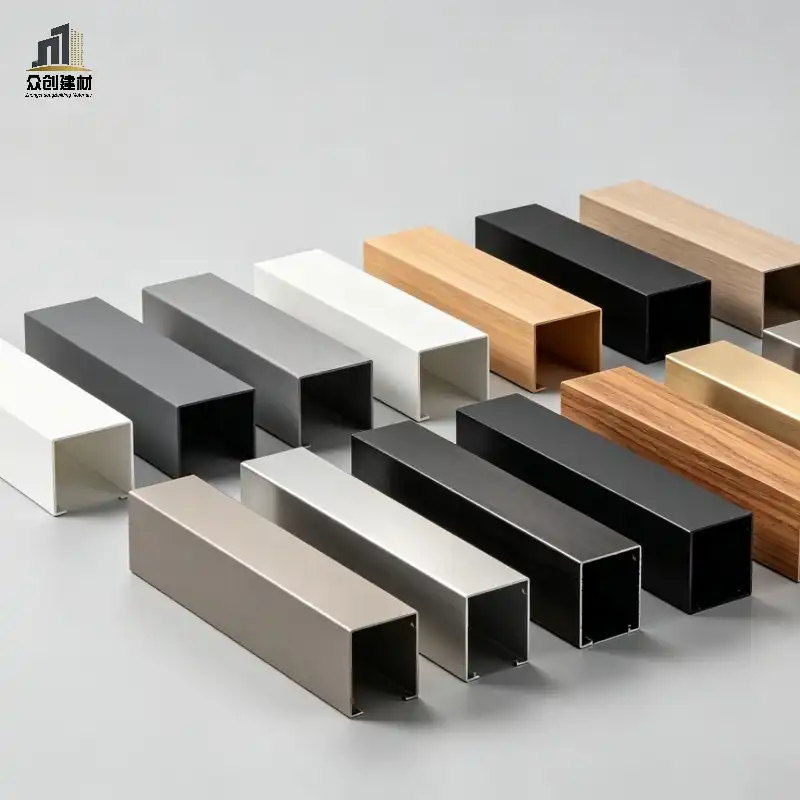
Standard anodized colors. Our standard anodized color range includes: Natural Silver, Champagne, Bronze, Dark Bronze, Black, Titanium and Rose Gold. Each color is available in multiple gloss levels from matte to high-gloss.
Surface textures. Beyond standard gloss and matte finishes, we also offer Brushed, Satin, Etched and Mirror surface textures. The fine grain of brushed surfaces further enhances metallic texture while visually concealing minor installation marks and fingerprints.
Special effects. Through specialized processes, we can also achieve dual-tone anodizing, gradient colors and pearl finishes. Dual-tone technology allows two different color tones to transition on the same panel, providing greater creative design freedom.
Color consistency. Anodized color is influenced by aluminum composition, process parameters and other factors, so slight batch-to-batch variation is possible. For projects with strict color consistency requirements, we recommend providing project color samples and conducting batch pre-production confirmation before full-scale manufacturing.
Applications
Luxury hotels and resorts. Hotel lobbies, elevator halls, corridors and guestroom bathroom walls — the metallic texture of anodized aluminum wall panels perfectly matches the luxury positioning of hotels, while their wear resistance and easy cleaning properties are ideal for high-traffic public areas.
Grade-A office buildings and corporate headquarters. Lobbies, elevator halls, conference rooms and executive office areas — the modern and professional feel of anodized aluminum wall panels aligns perfectly with the aesthetic of technology companies and financial institutions.
High-end retail and commercial spaces. Luxury brand flagships, fine dining restaurants and private clubs — the understated quality of anodizing complements brand positioning, while its wear and stain resistance stands up to heavy foot traffic.
Healthcare and education facilities. Hospital corridors, laboratories and school common areas — Class A fire rating, zero VOC emission and easy disinfection cleaning make it an ideal choice for public spaces with the highest safety and hygiene requirements.
Residential and custom private homes. Feature walls, entryways, walk-in closets and bathroom walls — anodized aluminum wall panels are increasingly used in high-end private residences, their minimalist modern texture blending perfectly with minimalist design aesthetics.
Technical Specifications
|
Item |
Specification |
|---|---|
|
Substrate Material |
3003-H14 / 5005-H14 Aluminum Alloy |
|
Panel Thickness |
1.5mm / 2.0mm / 2.5mm / 3.0mm (customizable) |
|
Standard Width |
600mm / 1000mm / 1200mm |
|
Max Length |
4000mm (customizable per project) |
|
Anodizing Type |
Type II Sulfuric Acid Anodizing (interior standard) |
|
Oxide Film Thickness |
8-15 microns |
|
Surface Gloss |
Matte (8-15 GU) / Satin (30-50 GU) / High-Gloss (80+ GU) |
|
Common Textures |
Brushed, Satin, Mirror, Etched |
|
Standard Colors |
Natural Silver, Champagne, Bronze, Dark Bronze, Black, Titanium, Rose Gold |
|
Hardness |
HV200-400 (Vickers Hardness) |
|
Fire Rating |
Class A Non-Combustible (GB 8624) |
|
Environmental Standards |
E0 / Zero VOC / 100% Recyclable |
|
Installation Methods |
Dry-hanging / Structural Adhesive / Clip-in System |
|
Reference Weight |
4.0-8.0 kg/m2 (varies with thickness) |
Installation Systems and Maintenance
Installation methods. Anodized aluminum interior wall panels primarily use three installation methods:
The first is a dry-hanging rail system — aluminum rail keels connect to the wall, and panels clip onto the keels with uniform gaps, removable and replaceable. It is suitable for large wall surfaces and areas requiring maintenance access. The second is structural adhesive bonding — neutral silicone structural adhesive directly bonds panels to the substrate wall or gypsum board, providing a clean appearance with no exposed keels. It is suitable for small decorative wall areas and irregular shapes. The third is a clip-in installation — specialized metal clips secure the panels, enabling fast installation with uniform joint spacing. It is suitable for projects with a high degree of standardization.
Joint treatment. Panel joints are typically 3-8mm wide, with either open-joint detailing (sealed with sealant) or tight-joint assembly. For premium projects, we recommend a 3-5mm fine-joint design that conveys the refinement of metal panels while accommodating thermal expansion and contraction.
Daily maintenance. Daily maintenance of anodized aluminum wall panels is extremely simple: dust and fingerprints can be removed with a soft, damp cloth or sponge. Avoid strong acid or alkaline cleaners and abrasive steel wool. For stubborn stains, gently wipe with neutral soapy water followed by a clean damp cloth. Under normal use, the surface finish remains unchanged for over 20 years.
Customization and Project Support
Color and texture customization. Beyond the standard color range, we can custom-match anodized colors based on client-provided samples or Pantone references, with a typical minimum order quantity of 500m2. For special texture requirements (such as specific brushing directions or etched patterns), sample development is available.
Profile customization. We provide right-angle folding, curved folding, R-edge treatment and custom cutting. For curved walls and column cladding projects, curved panels can be customized with a minimum bending radius of 15 times the panel thickness.
Design development service. We have a dedicated design development team that produces layout drawings, joint details and material schedules based on architect-provided CAD drawings and site dimensions. All shop drawings are confirmed with the designer and owner before factory production to ensure accurate realization of the design intent.
Sampling and prototyping. We provide standard color cards and physical samples. For new projects, we recommend 1:1 prototyping before mass production to confirm color, texture and installation effect. The sampling lead time is typically 7-10 working days.
Export services. We have supplied anodized aluminum wall panels to premium projects across multiple countries and regions, and are familiar with export packaging standards (export crates / pallets), sea freight schedules and customs documentation requirements. Our products comply with major international green building material certification standards and related test reports can be provided.
Conclusion
Anodized aluminum interior wall panels represent the premium direction of interior wall materials. They do not pursue flashy colors or patterns, but convey a design philosophy of "the longer time passes, the more refined the quality" through the texture and durability of the process itself. In this era that pursues rapid change, choosing anodizing is choosing a spatial attitude that stands the test of time.
Whether you are planning a five-star hotel, a corporate headquarters, or a private residence, anodized aluminum interior wall panels will be the most trusted finish choice for your interior design. Contact us for samples, quotations and technical support.

Frequently Asked Questions (FAQ)
Q1: What is the difference between anodized and powder coated aluminum panels?
The key difference lies in how the surface layer is formed. Anodizing uses electrochemical action to "grow" an aluminum oxide layer on the aluminum surface — the film is integral to the substrate and will never peel. Powder coating applies paint powder onto the aluminum surface and cures it under high temperature — it is an "attached" coating. Anodizing preserves native metallic texture, has higher hardness (HV200-400) and never fades. Powder coating offers broader color options and lower cost, but carries the risk of coating aging and peeling. For premium interior projects, anodizing is recommended; for large exterior walls, powder coating or PVDF fluorocarbon coating can be selected based on budget and color requirements.
Q2: Do anodized wall panels change color or fade?
Under normal indoor use conditions, anodized wall panels will not change color or fade. Their color comes from metal ion deposition in the micro-pores of the oxide film, not from applied pigments, and ultraviolet light has no degrading effect on them. Note that anodized aluminum should avoid prolonged contact with strongly alkaline substances (such as ammonia or bleach) and high-salt environments, as these may affect surface luster. Under indoor conditions, the surface finish remains essentially unchanged for over 20 years.
Q3: What oxide film thickness should I choose for interior use?
For interior decorative anodized wall panels, 8-15 microns (Type II standard) is recommended — the optimal balance of wear resistance, surface texture and cost. Below 8 microns, wear resistance may be insufficient and scratches may appear. Above 15 microns is over-spec for interior use and increases cost unnecessarily. For extremely high-traffic public areas (such as airports or subway stations), consider upgrading to 15-20 microns. Exterior applications require Type II at 15-25 microns or Type III hard anodizing.
Q4: How do I replace a damaged panel after installation?
This depends on the installation method: panels installed with a dry-hanging rail system or clip-in system can be removed and replaced individually — simply unclip the damaged panel from the keel and install a matching replacement. Panels bonded with structural adhesive are more difficult to remove, requiring careful demolition and substrate repair. We recommend reserving 5%-10% of panels from the same production batch at project handover for future maintenance. Note that slight color variation between different anodizing batches is possible, so using same-batch spare panels is recommended for replacements.
Q5: How do I clean and maintain anodized wall surfaces?
Daily cleaning is very simple: wipe with a soft, damp cloth or sponge to remove dust and fingerprints. For light stains, gently wipe with neutral soapy water (pH 6-8) and then rinse with a clean damp cloth. Strong acids, strong alkalis, bleach, steel wool or abrasive sponges must never be used, as these will damage the oxide film. Avoid cleaners containing abrasive particles. Under normal use, no waxing or special maintenance is required — one thorough cleaning per year is sufficient to keep the surface looking new.
_1782530506402.webp)
(1)_1783045836766.webp)
_1786157639392.webp)
(1)_1780970038980.webp)