_1782530506402.webp)
(1)_1783045836766.webp)
_1786157639392.webp)
(1)_1780970038980.webp)
Application of Artistic Perforated Aluminum Panels in Exhibition Design of Museums and Art Galleries
Museums and art galleries serve as key venues for cultural display and art appreciation. Indoor design here sets high standards for materials: protecting exhibits by controlling illuminance, ultraviolet radiation and humidity; delivering pleasant viewing conditions through proper acoustics, lighting and spatial atmosphere; and embodying the artistic quality and cultural connotation of the architecture itself. Artistic perforated aluminum panels have found unique application scenarios in cultural buildings, combining sound absorption, light transmission, shaping, low maintenance and cultural expression. They are increasingly favored in contemporary museum and gallery design. This paper explores application forms, design essentials and aesthetic value of artistic perforated aluminum panels in museums and art galleries.

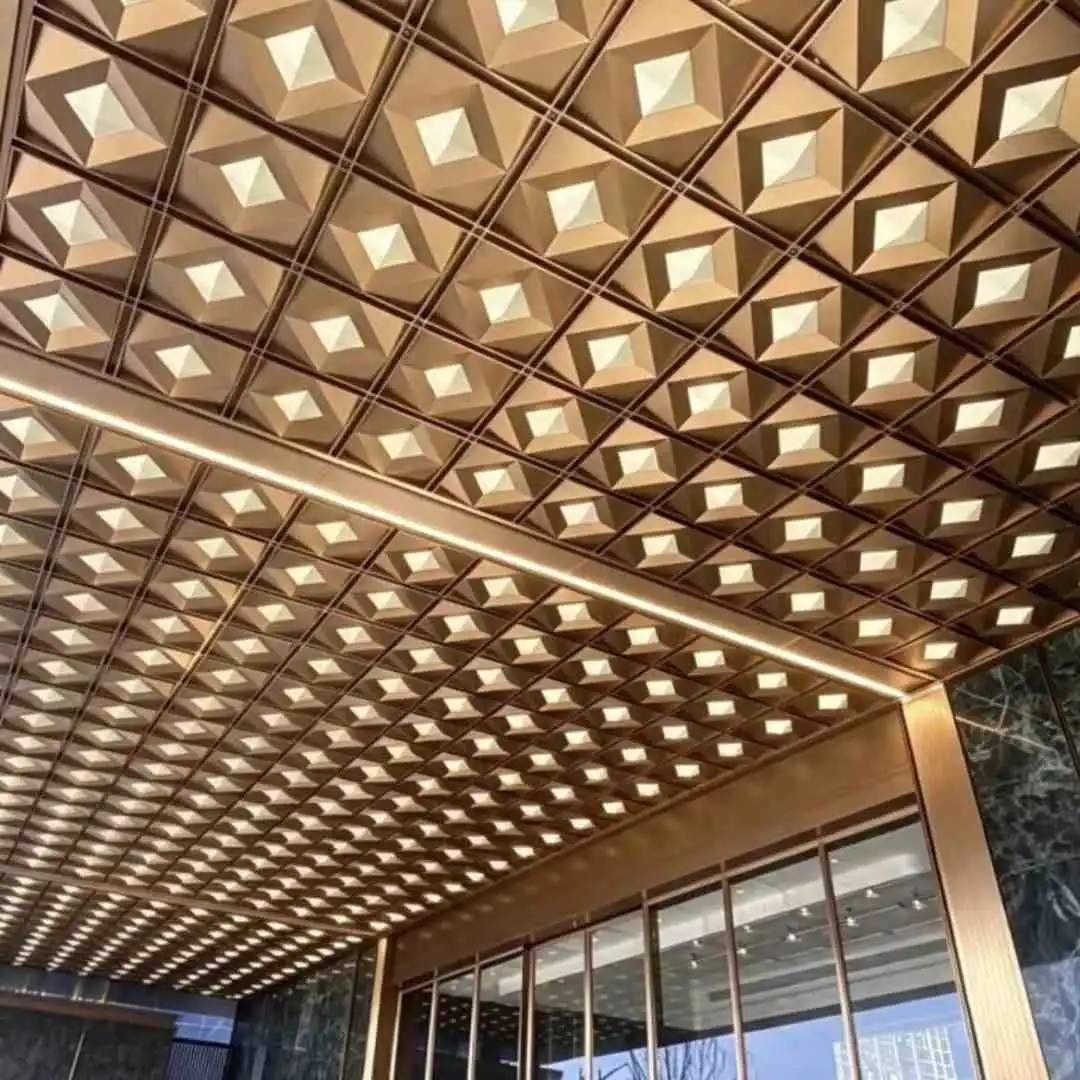
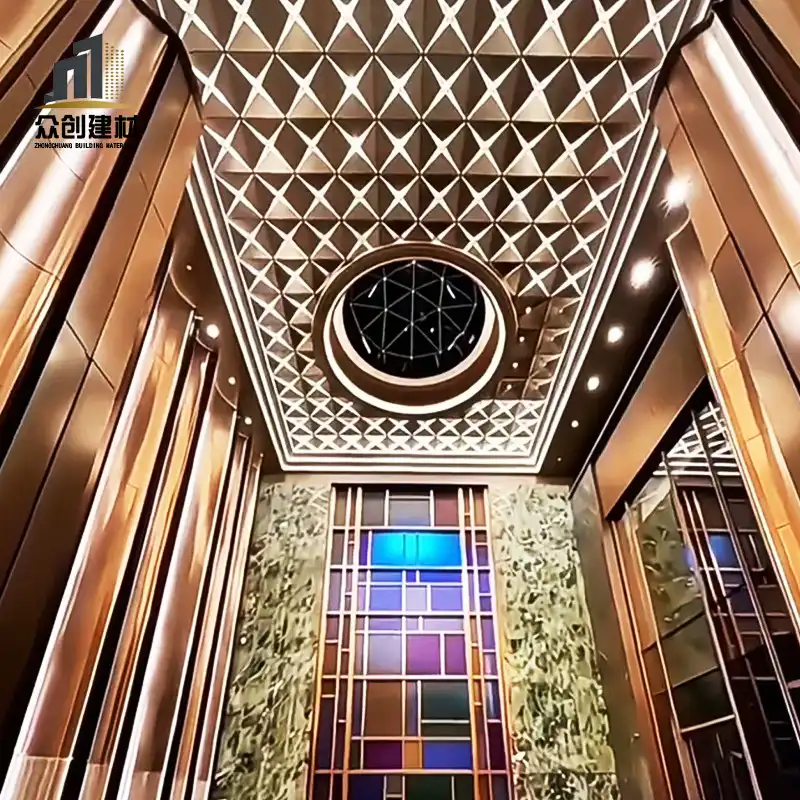
Artistic perforated aluminum panels are deployed in museums and art galleries in four major forms. The first is sound‑absorbing ceiling system for exhibition halls. Exhibition halls generally require short reverberation time to guarantee clear audio guide and quiet viewing atmosphere. Perforated aluminum ceilings paired with sound‑absorbing wool effectively absorb reverberant sound and reduce ambient noise for visitors. Compared with traditional mineral wool ceilings, perforated aluminum ceilings deliver refined appearance, superior texture and better durability. The second form is artistic feature walls and exhibition backdrops. Artistic perforated aluminum panels can act as background walls for exhibits. Perforation patterns themed on displayed content integrate the backdrop into the exhibition design and complement exhibits. For example, traditional lattice or landscape‑inspired perforation patterns suit galleries displaying ancient Chinese paintings and calligraphy, while abstract geometric patterns fit modern art exhibitions. The third form is light‑transmitting structural components. Integrated with internal lighting, perforated aluminum panels can form light‑transmitting ceiling, wall and partition structures. Soft light penetrating through holes creates distinctive spatial atmosphere and becomes the visual focal point in main halls and key exhibition rooms. The fourth form supports cultural expression at entrances and prelude halls. The entrance lobby and prelude hall create the first impression and convey the core cultural theme of the museum. Large‑scale themed walls made of artistic perforated aluminum panels interpret historical heritage and collection features via perforation patterns, immersing visitors in cultural atmosphere upon entry.
For cultural and museum buildings using perforated aluminum panels, there are special design considerations beyond decoration and sound absorption. First is lighting coordination. Museums carry strict lighting control requirements, especially for light‑sensitive exhibits such as paintings, textiles and ancient manuscripts, where illuminance and glare must be restrained. Perforated aluminum ceilings are normally integrated with lighting systems, accommodating LED spotlights and track lights. Fine perforation conceals lamps and pipelines to maintain ceiling integrity, and diffused light through holes helps moderate overall illuminance and highlight exhibits. Second is ultraviolet control. LED light sources produce minimal ultraviolet radiation, and perforated ceilings assist in building a suitable light environment for UV‑sensitive relics. Third is temperature and humidity regulation. Stable indoor temperature and humidity are required for collections, and the ventilated structure of perforated aluminum ceilings facilitates air distribution of HVAC systems to stabilize indoor conditions. Fourth is fire safety and environmental protection. Cultural buildings accommodate large crowds and precious collections. As Class A non‑combustible, non‑toxic material, perforated aluminum panels fully satisfy these strict standards. Fifth is easy cleaning and durability. Heavy daily visitor flow calls for stain‑resistant, low‑maintenance and long‑lasting materials. Perforated aluminum panels feature dense, smooth surfaces that resist dust accumulation and simplify cleaning, and metal construction guarantees long service life for permanent cultural spaces.
The cultural narrative function of artistic perforated aluminum panels is particularly valuable in exhibition design. A museum itself acts as a cultural container, and the building space is part of the exhibition. Premium museum design integrates architecture and displays to immerse visitors into cultural storytelling from the moment they enter. Artistic perforated aluminum panels undertake this narrative mission. Perforation patterns extract cultural themes, artistic elements from collections and local history, embedding cultural stories into the building fabric. In history museums, patterns derived from cultural relics form contextual backgrounds for displays. In natural science museums, perforation designs of starry skies, mountains, flora and fauna build immersive scientific scenes. In art galleries, patterns echo the artistic style of exhibitions and extend art experience into architectural space. This design philosophy of “architecture as exhibition” represents a key trend in contemporary museum architecture, and artistic perforated aluminum panels play an irreplaceable role.
Apart from exhibition rooms, artistic perforated aluminum panels are widely used in public and service zones of museums and art galleries. In rest areas and cafes, sound‑absorbing perforated aluminum ceilings suppress noise and create quiet relaxation spaces, while patterned perforated walls enhance aesthetic quality. Decorative perforated panels in cultural and creative shops and bookstores maintain consistent spatial style with the whole museum. In education rooms and lecture halls, their sound absorption meets acoustic requirements for multi‑functional events. The moisture‑resistant and easy‑to‑clean performance of perforated aluminum ceilings also suits restrooms and mechanical rooms. From entrance lobbies to exhibition halls, from public zones to auxiliary spaces, artistic perforated aluminum panels can run through the whole interior design and form a unified, culturally rich spatial experience. With the development of cultural undertakings and rising visitor expectations for cultural experience, artistic perforated aluminum panels — functional, artistic and culturally expressive — will demonstrate unique value in more museums and art galleries.