_1762768699969.webp)

_1782530506402.webp)
(1)_1783045836766.webp)
_1786157639392.webp)
(1)_1780970038980.webp)
Custom Shaped Expanded Aluminum Mesh in Architectural Decoration
Introduction
As contemporary architectural design shifts toward more organic, sculptural and parameterized forms, designers are constantly seeking materials that balance creative shape freedom, structural safety, functional performance and cost efficiency. Custom formed expanded aluminum mesh has emerged as one of the fastest-growing decorative materials for creative architecture, solving many of the limitations of traditional solid panel, stone and glass materials for irregular shapes.
Unlike flat standard mesh, custom 3D formed expanded mesh can be fabricated into almost any curved, faceted, spherical or organic shape while retaining its lightweight, ventilating and light-diffusing properties. This guide breaks down the core applications, design advantages, latest trends and practical specification tips for custom shaped expanded aluminum mesh in modern architectural decoration.

Why Custom Formed Expanded Aluminum Mesh Is Popular for Creative Architectural Design
The rapid growth in shaped expanded mesh use stems from its unique combination of benefits that no other single decorative material can match:
Nearly unlimited shape freedom: CNC roll-forming, hydraulic pressing and custom die forming allow fabrication of almost any 3D shape, from simple curves to complex organic sculptural forms.
Ultra-lightweight structural safety: Weighing only 2-4kg per square meter — roughly 1/10 the weight of solid aluminum panels and 1/20 the weight of stone — shaped mesh adds minimal structural load, even for large-scale irregular facades and ceilings.
Tunable functional performance: Mesh opening size, strand thickness and density can be adjusted to control light transmission, ventilation, sun shading and acoustic performance, all while maintaining a consistent visual appearance.
Cost efficiency for complex shapes: For curved and irregular designs, custom formed mesh costs 30-40% less than double-curvature solid aluminum panels, with faster production lead times.
Fast modular installation: Pre-fabricated numbered panels install 50% faster than site-built custom metal structures, with no on-site cutting or forming required.
Key Application Scenarios in Architectural Decoration
Irregular & Curved Facades & Curtain Walls
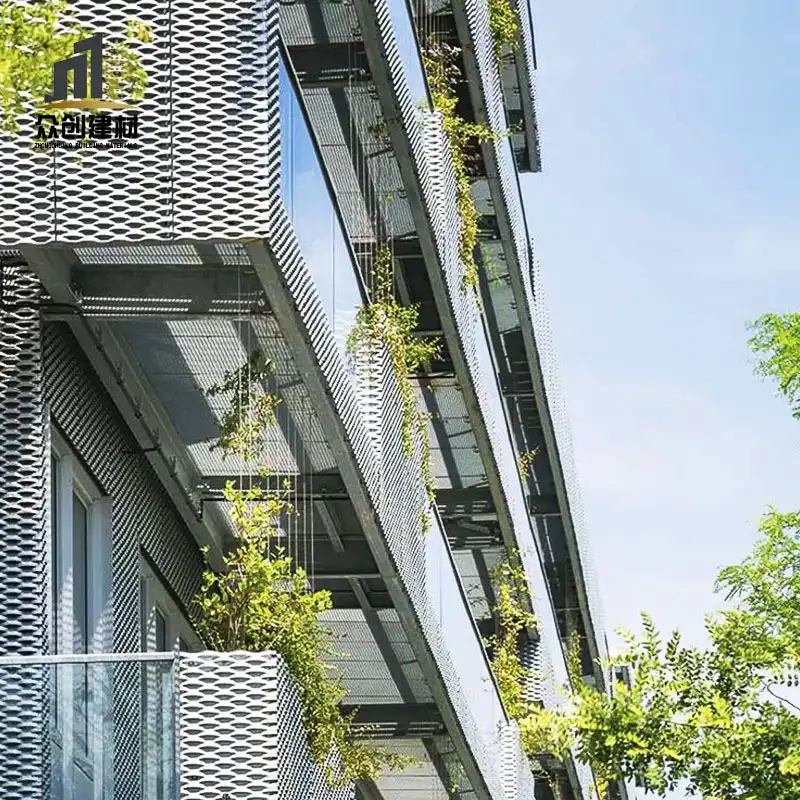
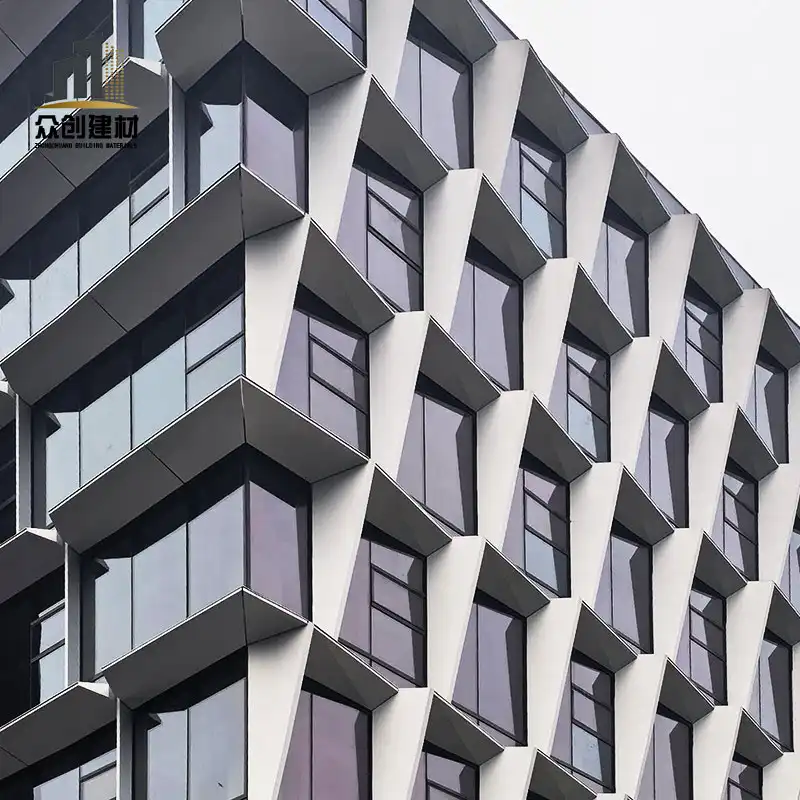
Shaped expanded mesh is one of the most popular materials for organic and curved building facades. Its lightweight nature allows large-scale curved designs without heavy structural support, while the semi-transparent mesh creates a dynamic, layered facade appearance that changes with light conditions throughout the day. It is widely used for cultural buildings, museums, retail pavilions and creative office buildings.
Creative Ceilings & Atrium Installations
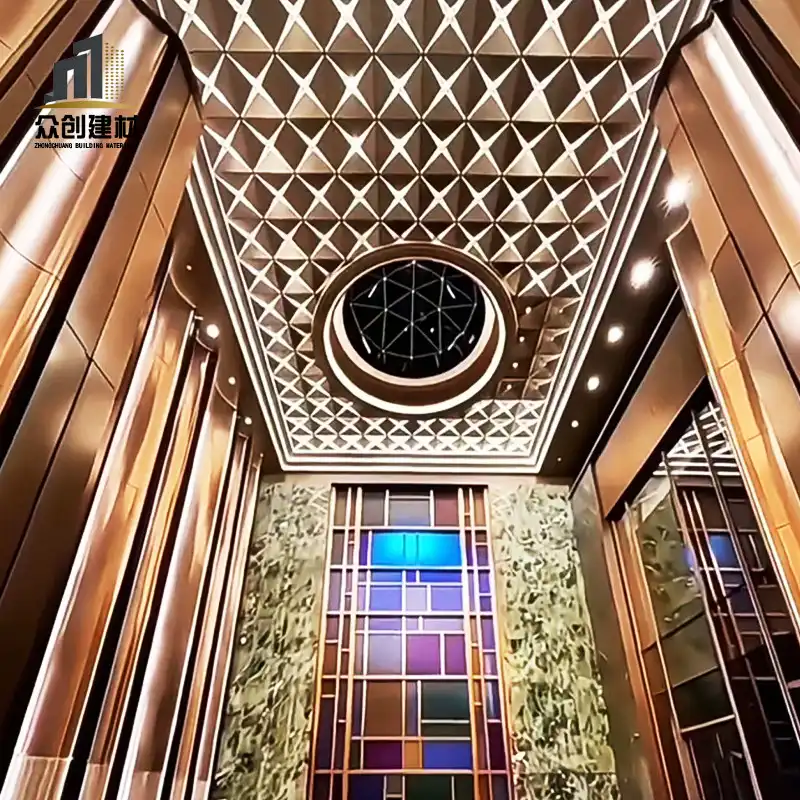
For large atriums, lobbies and public spaces, undulating and sculptural mesh ceilings deliver a dramatic, lightweight visual effect that would be impossible or prohibitively expensive with solid materials. The open mesh structure also integrates seamlessly with lighting, HVAC and fire sprinkler systems, hiding services while maintaining full functionality.
Custom Column Wraps & Spatial Sculptures
Irregular shaped mesh is ideal for wrapping columns, pillars and structural elements to transform utilitarian structure into decorative features. Organic curved, tapered and sculptural column wraps create focal points in hotel lobbies, retail spaces and exhibition halls, with integrated lighting creating dramatic glow effects.
Artistic Sun Shading Systems
Custom formed mesh sunshades combine decorative design with functional solar heat gain reduction. Irregular and organic shaped sunshades can be designed to match building geometry, reducing cooling energy use by 20-30% while adding a unique sculptural element to the building exterior.
Exhibition & Display Structures
In museums, galleries and trade show environments, custom shaped mesh creates lightweight, semi-transparent display walls, partitions and exhibition structures. The material can be easily disassembled and reused, making it ideal for temporary and traveling exhibitions.
Public Art & Landscape Furniture
Shaped expanded aluminum mesh is increasingly used for public art sculptures, landscape pavilions, seating structures and urban furniture. Its weather resistance, low maintenance and ability to create large-scale lightweight sculptural forms make it a favorite of public artists and landscape architects.

Design Advantages vs. Other Custom Shaped Materials
| Material | Shape Freedom | Weight (kg/sqm) | Relative Cost (complex shapes) | Weather Resistance | Fire Rating | Installation Speed | Light/Ventilation |
|---|---|---|---|---|---|---|---|
| Formed Expanded Aluminum Mesh | Very High | 2-4 | Medium | Excellent (20-30yr) | A2 Non-Combustible | Very Fast | Excellent (adjustable) |
| Double-Curve Solid Aluminum Panel | High | 5-8 | Very High | Excellent | A2 Non-Combustible | Medium | None (opaque) |
| Custom Cut Stone | Low | 40-60 | Extremely High | Good | A1 Non-Combustible | Very Slow | None (opaque) |
| Curved Glass | Medium | 25-30 | Very High | Excellent | A1 Non-Combustible | Slow | Good (transparent) |
| 3D Printed Polymer | Very High | 1-2 | High | Poor (UV degradation) | Flammable | Slow | Poor |
Custom expanded aluminum mesh delivers the best balance of shape freedom, cost, durability and functionality for most decorative architectural applications.
Latest Design Trends for Shaped Expanded Mesh
Parametric Organic Form Design
With the growth of parametric design tools, architects are creating increasingly complex free-form organic mesh facades and installations that would have been impossible to fabricate just a decade ago. Advanced CNC forming technology now allows cost-effective production of even the most complex parameterized shapes.
Integrated Light & Shadow Design
Designers are increasingly using shaped mesh as a light-diffusing element, with integrated LED lighting programmed to create dynamic shadow patterns that change throughout the day and night. The mesh surface acts as a projection screen for both natural and artificial light, adding a dynamic, time-based element to static architecture.
Multi-Functional Composite Design
Latest projects combine multiple functions in a single mesh system: decorative facade + sun shading + acoustic absorption + fall protection. This multi-functional approach reduces total project cost by eliminating the need for separate systems for each function.
Gradient & Custom Finish Trends
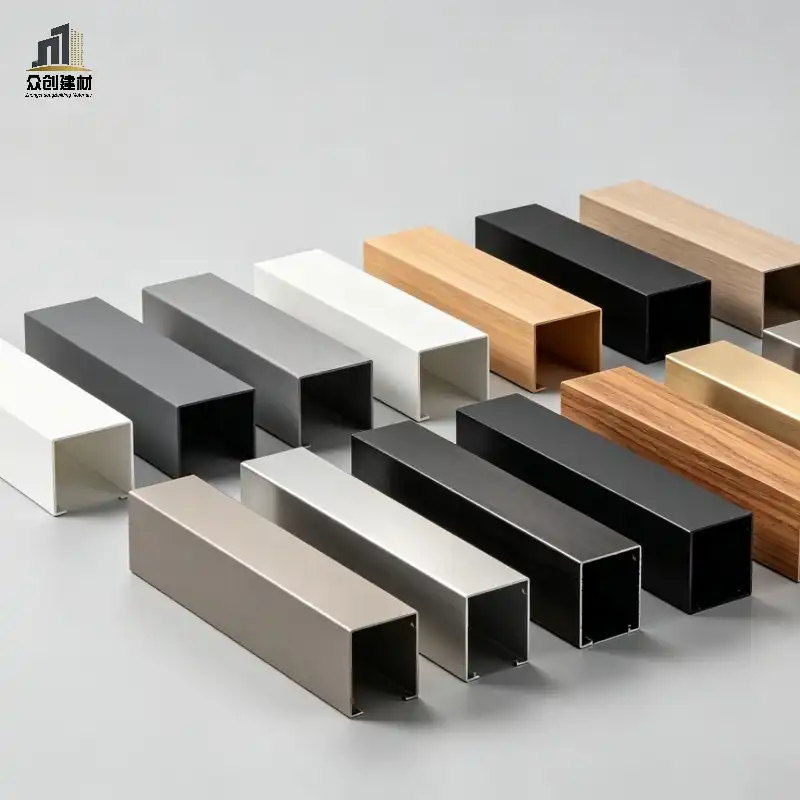
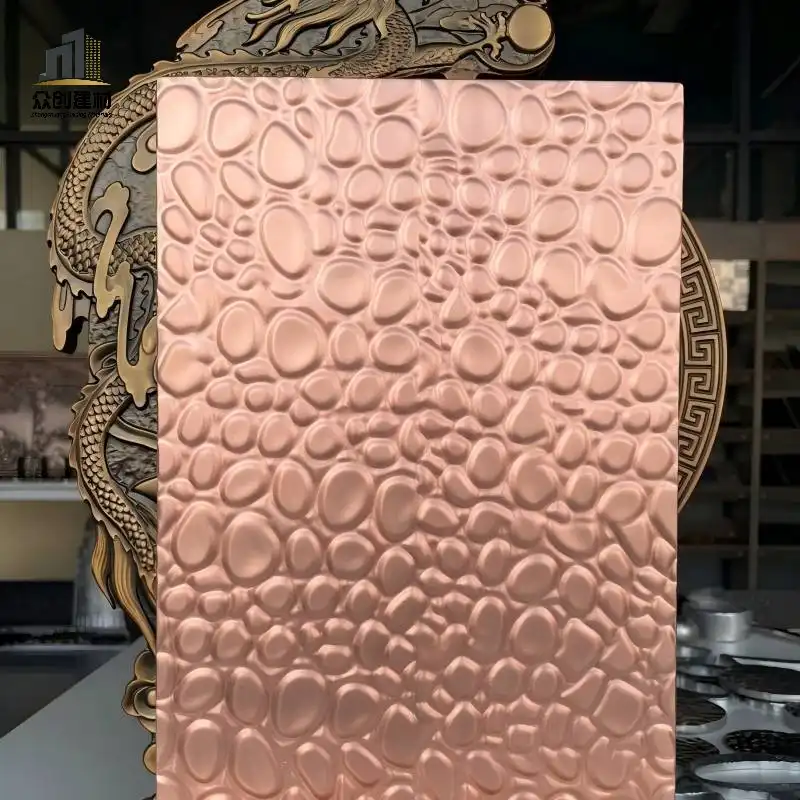
Instead of solid single colors, designers are increasingly specifying gradient color finishes, custom printed patterns and textured coatings on shaped mesh to create unique visual effects. Digital printing technology allows full-color custom graphics and patterns to be applied directly to the mesh surface.
Sustainable & Circular Design
As the architecture industry prioritizes sustainability, expanded aluminum mesh is growing in popularity due to its 100% recyclability, low embodied carbon and ability to be disassembled and reused for future projects. Its long service life also reduces lifecycle environmental impact.
Common Design & Specification Mistakes to Avoid
Mistake 1: Focusing only on shape, ignoring structural engineering
While mesh is lightweight, large-scale irregular shapes still require proper structural calculation for wind load and seismic performance. Always confirm structural calculations with an experienced supplier before finalizing design.
Mistake 2: Choosing the wrong mesh opening size
Mesh opening size affects both appearance and function: too large and the mesh looks cheap and lacks visual depth; too small and it loses ventilation and light transmission properties. Select opening size based on the project's specific functional requirements, not just aesthetic preference.
Mistake 3: Assuming forming will distort mesh openings
Low-quality mesh forming does stretch and distort holes, but precision CNC forming with custom tooling preserves uniform mesh dimensions across even complex shapes. Always request sample panels to verify mesh consistency before mass production.
Mistake 4: Trying to bend flat mesh on site
Site bending of flat mesh almost always results in uneven shapes and distorted openings. Always specify factory pre-formed modular panels for the best quality and fastest installation.
Tips for Specifying Custom Shaped Expanded Aluminum Mesh
Define functional requirements first: Start with sun shading, ventilation, acoustic or privacy requirements, then select mesh specification to match, rather than choosing based on appearance alone.
Request 1:1 scale samples: Always order a small sample of the actual formed shape and finish before approving mass production to verify both shape accuracy and mesh consistency.
Work with suppliers with 3D forming capability: Choose suppliers with dedicated CNC forming equipment and experience with complex shaped projects, not just standard flat mesh suppliers.
Involve suppliers early in design: Engage your mesh supplier during the schematic design phase to get feedback on manufacturability, cost optimization and panel breakdown strategies that can reduce project cost without compromising design intent.
Frequently Asked Questions
Q: What is the maximum size for a custom formed expanded aluminum mesh panel?
A: Standard formed panels can be produced up to 2000mm wide and 6000mm long. Larger shapes can be assembled from multiple modular panels with invisible joints.
Q: Can expanded aluminum mesh be formed into double curvature shapes?
A: Yes. Custom hydraulic die pressing can produce double curvature and spherical shapes with consistent mesh opening dimensions and full structural integrity.
Q: How much more does custom shaped mesh cost compared to flat mesh?
A: Simple single-curve shapes cost 15-25% more than flat mesh, while complex double-curve or 3D sculptural shapes cost 50-100% more depending on complexity.
Q: How long does custom shaped aluminum mesh last outdoors?
A: PVDF coated 3003 aluminum mesh lasts 20-25 years in standard outdoor environments, with 25-30 year lifespan for marine-grade 5052 alloy in coastal areas.