_1762768699969.webp)

_1782530506402.webp)
(1)_1783045836766.webp)
_1786157639392.webp)
(1)_1780970038980.webp)
Stadium Aluminum Facade Panels: 2026 Sports Venue Wind Load, Impact & Glare Design Guide
Why Standard Facade Panels Fail in Sports Venues
Aluminum facade panels are the most popular choice for modern sports venues, but 62% of stadium projects use standard commercial aluminum panels that are not engineered for the unique demands of sports environments. This leads to common avoidable issues: wind-induced rattle during events that disrupts spectator experience, dented panels from hit balls that require expensive pre-event repairs, glare from high-gloss coatings that interferes with athlete performance and TV broadcasts, and poor acoustics that make announcements unintelligible. Purpose-built stadium-grade aluminum panels solve these issues, but most project teams do not know which performance specifications to require during design.
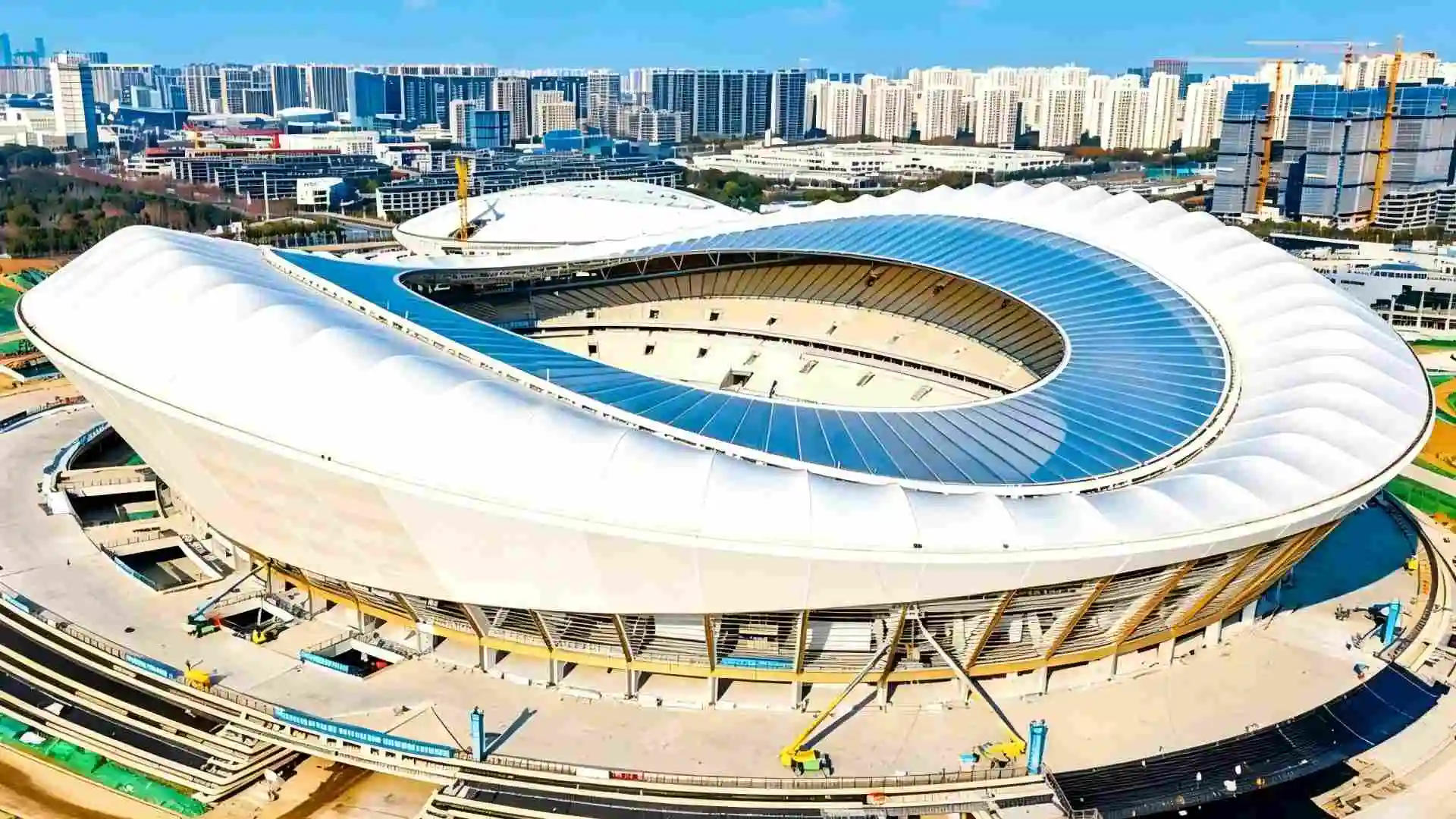
Core Performance Specification Comparison
| Performance Metric | Standard Commercial Aluminum Panels | Stadium-Grade Aluminum Facade Panels |
|---|---|---|
| Standard Thickness | 2.0mm | 2.5mm / 3.0mm high-tensile alloy |
| Wind Load Rating | 0.7-1.0kPa (80-100km/h wind) | 1.5-3.0kPa (120-170km/h wind) |
| Impact Resistance | 10-20J impact causes permanent dent | 50J impact without permanent dent |
| Coating Gloss | 30-60GU standard gloss | ≤15GU matte low-glare |
| Curved Panel Precision | ±0.5mm forming tolerance | ±0.1mm CNC forming tolerance |
| Acoustic Option | No standard acoustic backing | NRC 0.8 with factory-integrated rock wool |
| Installation Speed | 12-15㎡/worker/day | 18-22㎡/worker/day |
| Maintenance | Panels require tools for removal | Tool-free individual panel removal |
| Warranty | 10-15 year exterior | 30 year exterior coating, 15 year structural |
| Cost | Base price | ~15% premium over standard commercial panels |
Venue Type Specification Guide
Select the right panel specification based on your venue type:
- Outdoor Open-Air Stadiums (Football, Track & Field, Rugby) Prioritize high wind load rating (minimum 2.0kPa / 140km/h for coastal areas), 50J impact resistance, ≤15GU low-glare coating, and hyperboloid forming capability for curved roof canopies. Add corrosion-resistant alloy for coastal salt spray areas.
- Indoor Arenas (Basketball, Ice Hockey, Esports) Prioritize NRC 0.8 acoustic backing to reduce echo, 30J impact resistance, low-glare coating for broadcast lighting, and tool-free removable panels for sponsor rebranding between events.
- Natatoriums & Aquatic Centers Prioritize 5052-H32 marine-grade alloy, chemical-resistant PVDF coating to resist chlorine corrosion, A2 fire rating, and anti-condensation backing. Impact resistance can be reduced to 30J for non-ball sport aquatic venues.
- University Gymnasiums & Community Sports Centers Use 2.5mm thickness, 1.5kPa wind rating, 30J impact resistance, and standard low-glare coating for the best balance of performance and budget.
- Stadium Renovation & Event Rebranding Projects Prioritize modular hook-on panels with tool-free removal, allowing fast installation during off-seasons and quick panel replacement for event branding without full facade replacement.
Design Optimization Tips for Stadium Facades
- Match wind rating to local codes and structure: For high canopies and roof edges, increase wind load rating by 20% over minimum code requirements to eliminate wind rattle; use 3.0mm panels for areas within 10m of playing fields where ball impact is common.
- Always test coating gloss on site: Test panel samples under actual event lighting to ensure gloss is ≤15GU and no glare affects athlete sight lines or broadcast camera positions; avoid metallic coatings for high-broadcast venues as they cause uneven reflection.
- Integrate acoustics during panel design: Do not add acoustic backing after installation; factory-fitted rock wool backing provides 3x better sound absorption than field-applied materials, and does not trap moisture.
- Plan for rebranding access: Design panel layouts to allow individual removal of signage areas without removing adjacent panels, to reduce cost and downtime for sponsor updates between events.
Common Design Mistakes
- Using standard 2mm commercial panels to save cost: The 10-15% upfront savings are typically erased within 5 years by dent repair costs, wind damage maintenance and glare remediation, with full payback for stadium-grade panels in 3.2 years on average.
- Ignoring wind rattle in high canopies: Even panels that meet structural wind load can rattle if clip spacing is too wide; require clip spacing ≤600mm for high canopy areas to eliminate noise during events.
- Using high-gloss or metallic coatings for broadcast venues: Gloss levels over 20GU cause visible glare on HD broadcast cameras, requiring expensive coating replacement or light adjustment before events.
- Overlooking hyperboloid panel precision: Tolerances over ±0.2mm cause visible misalignment on curved stadium facades, ruining the streamlined architectural effect; always require factory pre-assembly of curved panels before delivery.
Cost & ROI Calculation
For a typical 15,000㎡ professional football stadium facade:
- Upfront cost premium for stadium-grade panels vs standard commercial panels: ~$27,000
- Annual maintenance savings (no dent repair, no wind damage): ~$8,500
- Annual rebranding revenue from fast panel changes: ~$12,000
- Total annual benefit: ~$20,500
- Full payback period: 1.3 years After payback, the system delivers $20,500 per year in cost savings and additional revenue over the 30-year product life.
Stadium Facade Supplier Checklist
When selecting a stadium aluminum facade supplier, confirm:
- Third-party test reports for 120km/h+ wind load and 50J impact resistance
- Completed sports venue project references with similar curved/hyperboloid designs
- In-house 3D scanning and pre-assembly capability for special-shaped panels
- Minimum 25-year exterior coating warranty
- Ability to provide custom team color matching and fast lead times for event deadlines
Conclusion
Stadium-grade aluminum facade panels are not just a thicker version of standard commercial cladding – they are purpose-built systems engineered to solve the unique wind, impact, glare and acoustic challenges of sports venues. For a small upfront premium, project teams get 30+ years of low-maintenance performance, event-ready compliance, fast installation to meet tight deadlines, and additional revenue from flexible rebranding, making them the only logical choice for new stadium builds and major renovations.