_1762768699969.webp)

_1782530506402.webp)
Design Application and Trends of Aluminum Suspended Ceiling in Commercial Spaces
The design core of commercial spaces lies in attracting customers, delivering brand value, and driving consumption conversion through immersive spatial experiences. As the largest continuous visual interface in commercial environments, ceiling design directly defines the overall spatial ambiance and shapes consumers’ sensory perceptions. Featuring lightweight structure, high mechanical strength, flexible modeling, rich color options and convenient maintenance, aluminum suspended ceilings have become the preferred decorative material for modern commercial ceiling systems. From large-scale shopping malls and commercial complexes to boutique brand flagship stores, catering venues and entertainment spaces, aluminum suspended ceilings diversify the visual presentation and enrich the spatial temperament of contemporary commercial scenarios.
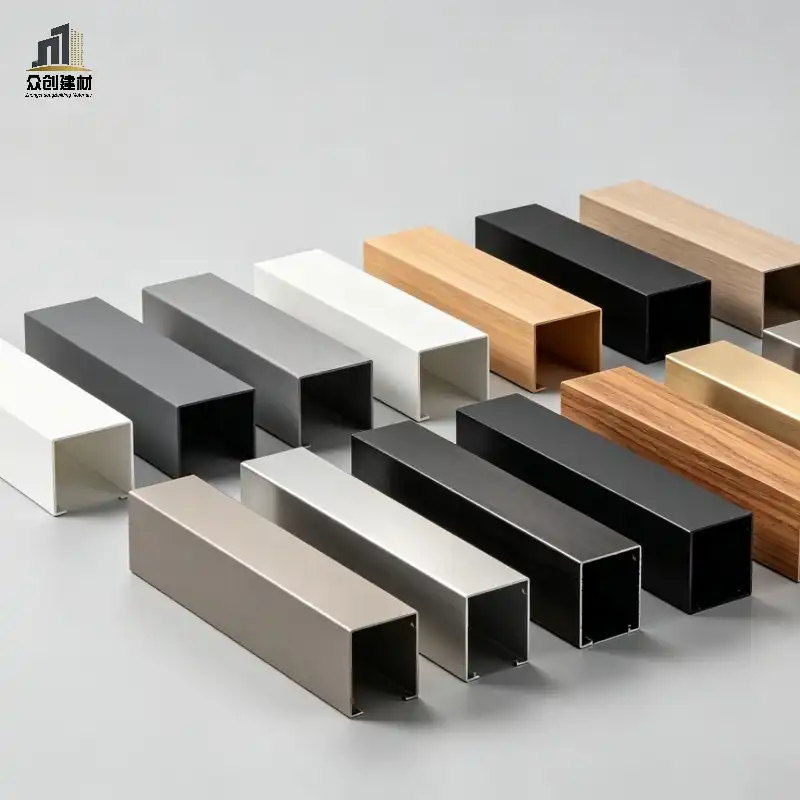
In shopping centers and commercial complexes, aluminum ceilings are mainly applied to optimize spatial guidance and unify overall atmospheric effects. Atriums, main walkways and escalator zones are high-traffic core areas where ceiling design serves as the dominant visual focus. In recent years, customized shaped aluminum ceilings have been widely adopted to create iconic spatial scenes. For instance, the atrium of many commercial complexes adopts wavy aluminum strip ceilings constructed with parametric modeling techniques. Combined with concealed linear LED light strips, the ceilings deliver dynamic light and shadow changes throughout the day, forming popular visual check-in spots. Some shopping mall main passages apply gradient perforated aluminum ceilings, with perforation density gradually increasing from entrances to atriums. Equipped with backlit colored lighting, the ceilings naturally guide pedestrian flow toward central areas while optimizing indoor acoustic performance. Aluminum grid ceilings and square tube aluminum ceilings are also extensively used for store facade decoration. Diverse arrangement combinations and color collocations create layered and distinctive street interface effects.

In brand flagship stores and retail spaces, aluminum suspended ceilings undertake core functions of brand image shaping and spatial context expression. High-end luxury brands usually adopt matte anodized aluminum ceilings or bronze brushed aluminum ceilings. Matched with delicate customized lighting, they build a low-key, exquisite and high-end commercial atmosphere. Sports brands prefer black and dark gray aluminum grid ceilings, paired with industrial exposed pipelines and dynamic lighting systems to convey vitality and athletic aesthetics. Technology brand flagship stores generally apply pure matte white aluminum square panel ceilings combined with seamless LED luminous films, creating a minimalist, futuristic and tech-oriented shopping environment. In retail scenarios, aluminum ceilings are highly integrated with lighting systems. Precisely reserved lamp positions and installation tracks enable perfect coordination between product key lighting and spatial ambient lighting, effectively highlighting product display effects and upgrading overall store texture.
Catering scenarios represent the most diversified application field of aluminum suspended ceilings, with differentiated design demands for various catering formats. Fast-food chain brands prioritize standardization, hygiene and easy maintenance, and mostly adopt white or light gray aluminum square panel ceilings. Cooperated with unified lamps and air outlet systems, such ceilings support rapid construction and convenient daily cleaning, meeting the high-frequency operation demands of chain stores. High-end restaurants and boutique catering venues focus on spatial comfort and artistic sense, commonly applying wood grain transfer aluminum ceilings, special-shaped square tube aluminum ceilings and artistic perforated aluminum ceilings. Combined with warm-toned soft lighting, they create cozy, elegant and immersive dining atmospheres. Themed restaurants and Internet-famous catering venues rely on innovative ceiling shapes and personalized colors to build unique memory points. For example, hot pot restaurants adopt curved red aluminum ceilings to simulate rising hot steam scenes, while seafood restaurants apply blue gradient perforated aluminum ceilings matched with fiber optic lights to restore underwater starry sky landscapes. In addition, the outstanding oil resistance and easy-to-clean performance of aluminum ceilings effectively resist fume erosion, maintaining long-term neat appearance especially in open kitchen areas.

Entertainment spaces such as cinemas, KTV rooms and bars have strict requirements on ceiling acoustic performance and atmospheric rendering. Cinema auditoriums require precise reverberation time control to guarantee high-fidelity sound reproduction. High-density perforated sound-absorbing aluminum ceilings matched with high-density sound-absorbing cotton are widely used, while dark surface treatment avoids light reflection interference and ensures immersive viewing experience. KTV boxes focus on flexible atmosphere switching. Aluminum starry sky ceilings and LED integrated colorful ceilings, cooperating with intelligent lighting control systems, support scene-based light adjustment adapted to different music styles. Bars and nightclubs pursue avant-garde and personalized spatial styles. Mirror aluminum ceilings and metal grid ceilings, combined with dynamic lighting and laser projection systems, create trendy, cool and immersive entertainment scenes.
The future development of aluminum suspended ceilings in commercial spaces presents four major trends: integration, intelligence, sustainability and artistry. Firstly, functional integration. Ceilings will evolve from single decorative interfaces into comprehensive integrated systems that integrate lighting, air conditioning, fire protection, audio equipment and intelligent sensors, realizing organic integration of decoration and electromechanical functions. Secondly, intellectualization. Built-in LED screens, dimmable lamps and smart sensors enable ceilings to automatically adjust light, shadow and spatial atmosphere according to pedestrian volume, time changes and activity scenarios, forming intelligent interactive spatial interfaces. Thirdly, green sustainability. The adoption of high-recycling aluminum raw materials and eco-friendly surface treatment processes, together with modular assembly and detachable reusable structures, greatly reduces construction waste and meets the development requirements of green commercial architecture. Fourthly, artistic customization. Supported by parametric design and digital manufacturing technology, aluminum suspended ceilings will serve as important artistic carriers for commercial space creation. Unique personalized shapes and dynamic light and shadow effects help build exclusive and recognizable commercial space IPs.