_1782530506402.webp)
Energy-Saving Application of Perforated Aluminum Panels in Building Sunshade Systems
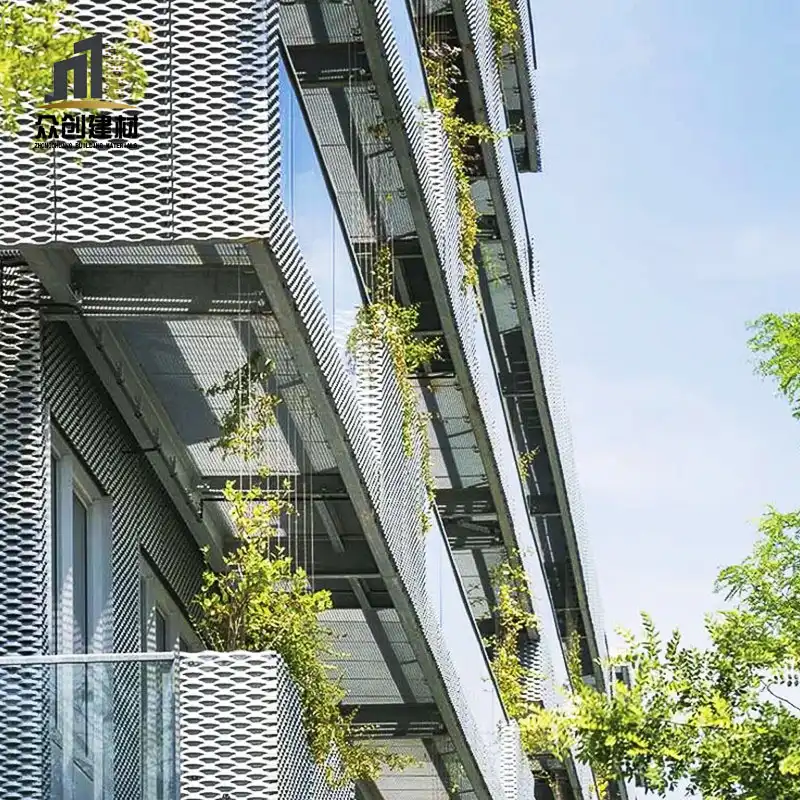
Building sunshading is an important means of building energy conservation. In hot regions and summer, solar radiation entering the room through windows is one of the main reasons causing indoor overheating and increased air conditioning energy consumption. Reasonable external sunshade design can effectively block solar radiation heat, reduce air conditioning loads, and improve indoor thermal comfort. Among many sunshade materials, perforated aluminum panels are becoming increasingly popular in building sunshade systems due to their advantages of light weight, high strength, beautiful shape, weather resistance, durability, and customizability. Compared with traditional concrete sunshades, metal louvers, glass sunshades, etc., perforated aluminum panel sunshades not only have good sunshade performance, but also have unique decorative effects and artistic expressiveness, which can improve the appearance quality of buildings while meeting energy-saving functions. This article will analyze the application value of perforated aluminum panels in building sunshade systems from the aspects of sunshade energy-saving principle, performance calculation, structural design and green building application.
The energy-saving principle of perforated aluminum panel sunshading is mainly reflected in the following aspects. The first is blocking solar radiation: perforated aluminum panels are installed outside building windows, which can directly block part of direct sunlight and reduce solar radiation heat entering the room. Since the aluminum panel surface has a certain reflectivity, it can reflect part of the solar radiation back, reducing solar heat gain. The second is ventilation and heat dissipation: unlike solid sunshades, perforated aluminum panels have a certain perforation rate that allows air to pass through. The ventilation layer formed between the sunshade and the exterior wall can timely discharge the air heated by the aluminum panel, reducing heat transfer to the room. This ventilation and heat dissipation effect greatly improves the thermal efficiency of the sunshade system, and the heat insulation effect is better than that of solid sunshades. The third is light regulation: by reasonably designing the hole diameter and perforation rate, certain natural daylight can be maintained while blocking direct sunlight, reducing the energy consumption of artificial lighting during the day. The fourth is glare control: perforated aluminum panels can convert harsh direct sunlight into soft diffused light, effectively avoiding indoor glare problems and improving the indoor light environment. It is precisely because of these comprehensive effects that the perforated aluminum panel sunshade system can simultaneously achieve the multiple goals of energy saving, comfort, and aesthetics. Research shows that reasonably designed external sunshading can reduce building air conditioning energy consumption by 20-40%, which is a cost-effective building energy-saving measure.

The performance of perforated aluminum panel sunshading is usually evaluated by shading coefficient (SC) or solar heat gain coefficient (SHGC). The smaller the shading coefficient, the better the sunshading effect. The shading performance of perforated aluminum panels is directly related to the perforation rate: the higher the perforation rate, the more solar radiation passes through, the larger the shading coefficient, and the weaker the sunshading effect; the lower the perforation rate, the smaller the shading coefficient, the stronger the sunshading effect, but at the same time the less natural light passes through. In engineering design, it is necessary to find a balance between sunshading effect and daylighting effect. Generally speaking, for south-facing windows, the perforation rate of sunshades can be slightly higher (20-30%), because the solar altitude angle is large in the south, and the blocking effect of the sunshade itself is relatively strong; for east-facing and west-facing windows, since the solar altitude angle is low in the morning and evening and sunlight easily enters the room obliquely, the perforation rate should be lower (10-15%) to enhance the sunshading effect. In addition to the perforation rate, the projection depth of the sunshade, installation angle, and surface color of the aluminum panel also affect the sunshading performance. The deeper the sunshade projects, the larger the blocking range and the better the sunshading effect, but it will affect indoor natural daylighting. The darker the surface color, the more solar radiation is absorbed. Although the reflectivity is low, the ventilation and heat dissipation are good, and the overall heat insulation effect is not necessarily poor; the lighter the surface color, the higher the reflectivity, the more solar radiation is reflected, and the better the heat insulation effect. In actual design, building energy simulation software (such as EnergyPlus, DesignBuilder, etc.) is usually used to simulate and calculate the energy consumption effects of different sunshade schemes, and the optimal sunshade design parameters are selected according to the simulation results.
The structural design of the perforated aluminum panel sunshade system needs to consider the following aspects. The first is panel design: the sunshade panel usually adopts 2.5-3.0mm thick aluminum plate, because the outdoor wind load is large and sufficient thickness and stiffness are required. The perforation rate is designed according to sunshading and daylighting requirements, generally between 10-30%. The panel can be flat, or curved, folded and other shaped panels, selected according to the building appearance design. The second is installation method: perforated aluminum panel sunshades are usually fixed on the building exterior wall through metal frames. The frames adopt aluminum alloy profiles or steel structures, connected to the main structure through embedded parts or chemical anchors. The sunshade can be fixed or adjustable (manual or electric angle adjustment). Fixed sunshades have simple structure, low cost, and little maintenance; adjustable sunshades can adjust the angle according to changes in solar altitude angle, with better sunshading effect, but higher cost and maintenance requirements. The third is waterproofing and sealing: although outdoor sunshade systems are not enclosed enclosures, rainwater drainage and wind resistance must be considered. The gap between the sunshade and the wall should be reasonably designed to avoid rain drifting directly into the window. The fixing parts of the sunshade need anti-corrosion treatment to ensure long-term use without rusting in the outdoor environment. The fourth is wind resistance design: the sunshade system bears large wind loads, especially for sunshades on high-rise buildings and open areas, wind resistance design and calculation must be carried out to ensure that the frame and panels do not fall off and get damaged in windy weather. The fifth is cleaning and maintenance: outdoor sunshades easily accumulate dust, which affects light transmission and aesthetics. The design should consider the convenience of cleaning and maintenance. For sunshade systems on high-rise buildings, special cleaning access and cleaning equipment interfaces may need to be provided.
In green building and energy-saving building evaluation systems, external sunshading is an important scoring item. China's Green Building Evaluation Standard (GB/T 50378), US LEED certification, European green building certification, etc., all regard building sunshading as an important content of building energy-saving design. Adopting perforated aluminum panel external sunshade systems can help building projects obtain higher scores in energy-saving design, indoor environmental quality and other aspects. In addition to energy-saving benefits, perforated aluminum panel sunshading also has the following additional values. The first is enhancing building facade image: perforated aluminum panel sunshades are an important part of the building facade. Through carefully designed perforation patterns and shapes, they can greatly enhance the appearance quality and artistic sense of the building, giving the building unique recognizability. The facade designs of many famous buildings extensively use perforated aluminum panel sunshade systems, perfectly combining functionality and artistry. The second is improving indoor comfort: good external sunshading can avoid local indoor overheating and glare caused by direct sunlight, making indoor temperature more uniform and light softer, significantly improving indoor thermal and visual comfort. The third is extending window life: sunshades can protect windows from direct sunlight and rain erosion, reduce the aging effect of ultraviolet rays on window frames and glass, and extend window service life. The fourth is reducing air conditioning equipment capacity: since sunshading reduces summer air conditioning loads, the installed capacity of the air conditioning system can be correspondingly reduced, reducing initial equipment investment. After comprehensive calculation, the investment in the perforated aluminum panel sunshade system can usually be recovered through energy-saving benefits within a few years, making it an economically efficient building energy-saving measure.
In practical engineering applications, perforated aluminum panel sunshading has achieved good results in a large number of building projects. In office buildings, perforated aluminum panel sunshades are often used on south-facing and west-facing exterior walls, effectively reducing summer air conditioning energy consumption while providing comfortable indoor light environments for offices, avoiding glare effects on computer work. In school buildings, installing perforated aluminum panel sunshades on classroom windows can avoid direct sunlight on blackboards and student desks, improve classroom daylighting, and protect students' vision. In residential buildings, perforated aluminum panel sunshades outside balconies and windows can both shade and insulate, and serve as decorative components to enhance residential appearance quality, while also providing certain privacy protection. In cultural buildings and museums, perforated aluminum panel sunshades can control the intensity of natural light entering the room, protecting precious exhibits and cultural relics from strong light damage, while maintaining the artistic beauty of the building facade. With the continuous improvement of people's requirements for building energy conservation and indoor environmental quality, as well as the development of parametric design and CNC processing technology, the application of perforated aluminum panel sunshade systems will become more and more widespread, and the design will become more refined. Future sunshade design will be more intelligent and dynamic, combined with sensors and automatic control systems, automatically adjusting the angle and position of the sunshade according to the sun position, weather conditions and indoor needs, achieving optimal energy saving and comfort.