_1762768699969.webp)

_1782530506402.webp)
Perforated Aluminum Panel Case Studies
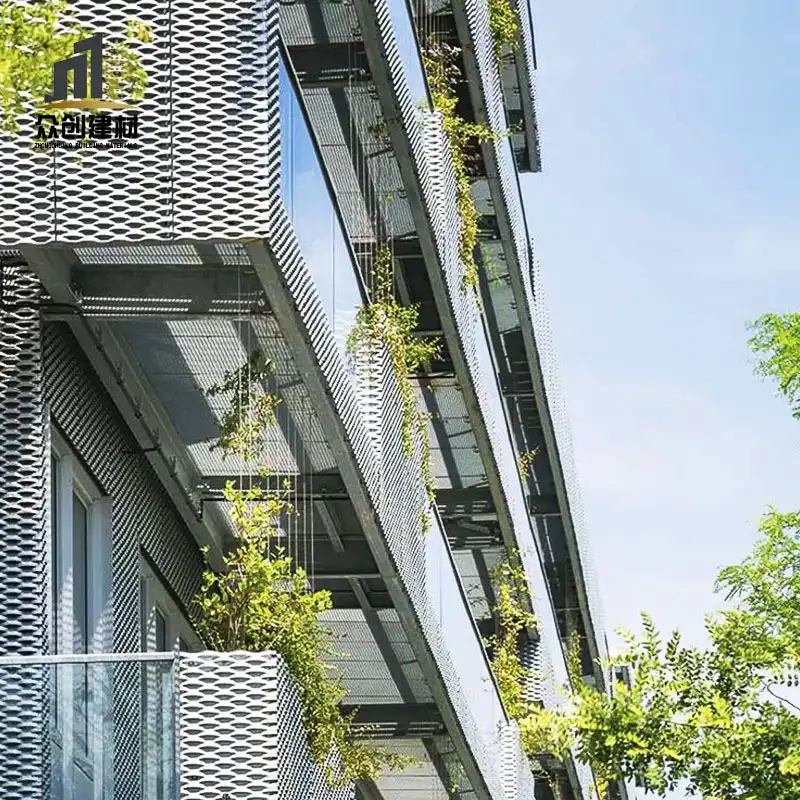
Perforated aluminum panels, as a building material combining decorative and functional properties, are continuously breaking through the monotonous expression of traditional facades through innovative processes. From color contrast to light and shadow transformation, from three-dimensional folding to graphic printing, from standard hole patterns to artistic customization, the application boundaries of perforated aluminum panels are being continuously expanded.
Our company has long been focused on the research, development and production of perforated aluminum panels. In recent years, we have completed multiple representative innovative projects. This article presents five categories of perforated aluminum panel application cases, comprehensively demonstrating the innovative expression of perforated aluminum panels in different architectural scenarios, from design concept and fabrication process to on-site results, providing more facade inspiration for architects and owners.
Dual-Color Perforated Exterior Wall: Facade Aesthetics of Color Contrast

Design concept. The design team adopted a "dual-color" concept, dividing the building facade into upper and lower color zones, the upper part is bright lemon yellow, and the lower part is deep charcoal gray. The two colors naturally transition in the middle of the facade through gradient perforation. The yellow area has a higher perforation ratio of approximately 50%, presenting a light and transparent effect; the gray area has a lower perforation ratio of approximately 25%, forming a stable base feeling. The dual variation of color and perforation ratio allows the entire facade to present rich light and shadow layers under different lighting conditions throughout the day.
Fabrication process. The project uses 2.5mm thick 3003 aluminum alloy solid panels. Both colors use PVDF fluorocarbon coating to ensure long-term outdoor use without fading. Custom aluminum profiles are used for edge trimming at the dual-color joints to ensure flat and aesthetically pleasing seams. The perforation pattern of each panel is generated through parametric software and precisely processed by CNC punching machines, ensuring natural gradient transitions without abrupt changes. Panels are installed with a dry-hanging system, with a cavity reserved at the back for ventilation and future maintenance.
Project outcome. The renovated park facade has become a visual focal point in the area. The bright dual-color design has attracted many young entrepreneurs to move in. By day, sunlight casts dappled light and shadow on the dual-color perforated facade; by night, interior light shines through the holes to create a soft glowing effect, keeping the building vibrant after dark.
Corridor Artistic Perforated Aluminum Ceiling: Light and Shadow Art in Passage Spaces

Design concept. With the theme of "flowing light and shadow," the designers adopted artistic perforated aluminum panels for the corridor ceiling, simulating the form of flowing water waves through hole pattern gradients and arrangement. At the corridor entrance, the holes are larger and more sparsely arranged; as the corridor extends, the holes gradually become smaller and denser, creating a visual rhythm that guides pedestrian flow. Warm white LED strip lights are installed behind the ceiling, and light shines through the perforations to form flowing light and shadow patterns on the walls and floor.
Fabrication process. The project uses 1.5mm thick 5005 aluminum panels with a matte white powder coating. The perforation pattern combines both round and oval hole types, achieving a natural transition from sparse to dense through parametric design. Each panel measures 600mm x 1200mm and is installed with a clip-in keel system for easy maintenance access. LED strips are installed in light troughs above the ceiling, with light reflected before passing through the perforations to avoid direct glare.
Project outcome. The renovated corridor is no longer simply a passage space but has become an immersive light and shadow art installation. As employees and visitors walk through the corridor, the light and shadow beneath their feet flow with their steps, greatly enhancing the spatial experience and memorability. The project has become a highlight space of the office building and is frequently used by clients for brand promotional photography.
Folded Perforated Aluminum Exterior Wall: Architectural Sculpture of Three-Dimensional Texture

Design concept. Drawing inspiration from traditional origami art, the designers designed the building exterior as a continuous "folded" form. Aluminum panels are bent at multiple angles to form concave and convex three-dimensional textures, with perforation processing applied on the folded surfaces. The raised folded surfaces have a higher perforation ratio, while the recessed folded surfaces have a lower perforation ratio. The light and shadow contrast enhances the three-dimensional quality of the facade. The entire facade resembles a giant metal origami sculpture, presenting completely different visual effects from different angles and under different lighting conditions.
Fabrication process. The project uses 3.0mm thick solid aluminum panels. Panels are first precisely bent to specified angles using CNC bending machines, with bend angles ranging from 90 to 150 degrees, followed by CNC perforation. Due to the complex installation angles of folded panels, the project adopts a custom three-dimensional adjustable hanger system to ensure precise control of each panel's installation angle. The surface has a silver-gray PVDF coating, with metallic luster creating rich highlight and shadow variations on the three-dimensional folded surfaces. All panels undergo 1:1 pre-assembly at the factory to ensure on-site installation precision.
Project outcome. The completed cultural exhibition center has become a city landmark with its unique folded texture. Low-angle sunlight in the early morning and evening creates strong light and shadow contrast on the folded surfaces, activating the facade like a sculpture; overhead midday light clearly reveals the perforation details. The project won the architectural facade design award of the year and has become a benchmark case for folded perforation technology.
UV-Printed Perforated Aluminum Hoarding: Image Revolution for Construction Site Barriers

Design concept. The design team combined perforated aluminum panels with UV printing technology, directly printing project renderings, brand logos and promotional copy on the perforated panel surface. The transparency of the perforations allows pedestrians to vaguely see the construction situation inside the site, increasing project transparency and trust; the exquisite UV-printed patterns turn the hoarding into an urban scenic feature rather than visual pollution. The pattern design adopts a "virtual-real combination" approach, solid printed areas display project imagery, while perforated areas provide ventilation and visual penetration.
Fabrication process. The project uses 2.0mm thick aluminum panels, first CNC perforated with 8mm hole diameter, 20mm hole spacing and approximately 12% perforation ratio, then UV flatbed printed on the surface. UV printing uses outdoor weather-resistant ink with vibrant colors and UV resistance, guaranteed against fading for 3 to 5 years. Hoarding panels adopt standardized dimensions of 1200mm x 2400mm, fixed through steel structure columns for convenient installation. After project completion, they can be dismantled and recycled for reuse.
Project outcome. This project's hoarding transformed the cluttered image of traditional construction sites and became a popular photo spot for nearby residents and passersby. The exquisite UV-printed patterns and perforated transparency not only demonstrate the developer's brand strength but also reduce the negative impact of construction on the urban landscape. At project launch, the hoarding image became clients' first impression of project quality, effectively enhancing brand premium.
Custom Artistic Hole Patterns: A Metal Canvas of Unlimited Creativity
Design concept. Custom artistic hole patterns represent the category with the greatest creative freedom in perforated aluminum panels. We can convert any pattern provided by the client, brand logos, human portraits, landscape photos, abstract art, text slogans, into perforation density maps through image grayscale processing, using variations in hole diameter and spacing to reproduce the light and shadow layers of the image. This "pixelated" perforation pattern appears as a complete image from a distance, while up close it reveals precision metal holes, combining artistic impact from afar with craftsmanship detail up close.
Fabrication process. The processing workflow for custom artistic hole patterns includes: image digitalization, converting client-provided images into grayscale perforation maps; parameter optimization, determining hole diameter range and spacing based on panel size and viewing distance; CNC fabrication, using high-precision CNC punching machines or laser cutters with a minimum hole diameter of 0.8mm; surface treatment, powder coating or PVDF coating with customizable colors. For projects requiring luminous effects, LED light sources are installed at the back, creating a glowing pattern through the holes at night. We also provide pattern design services; clients only need to provide creative concepts, and our design team can complete the entire process from concept to perforation files.
Representative cases. A coffee brand flagship store presented its coffee bean brand pattern on the exterior wall through perforation, appearing as a giant coffee bean from a distance and a precise round hole array up close; a high-end restaurant presented the chef's portrait as artistic perforation on the entrance wall, becoming the restaurant's unique identifier; a corporate club integrated key years and events of the company's development history into the ceiling design through text perforation, making the space itself a carrier of corporate culture.
Technical Strength and Quality Assurance

Although the five categories of cases above differ in process and application scenario, they all rely on our company's unified technical system and quality standards:
High-precision fabrication equipment. Equipped with multiple CNC punching machines and laser cutters, with perforation precision of plus or minus 0.1mm and minimum hole diameter of 0.8mm, supporting batch processing of complex patterns and gradient perforation.
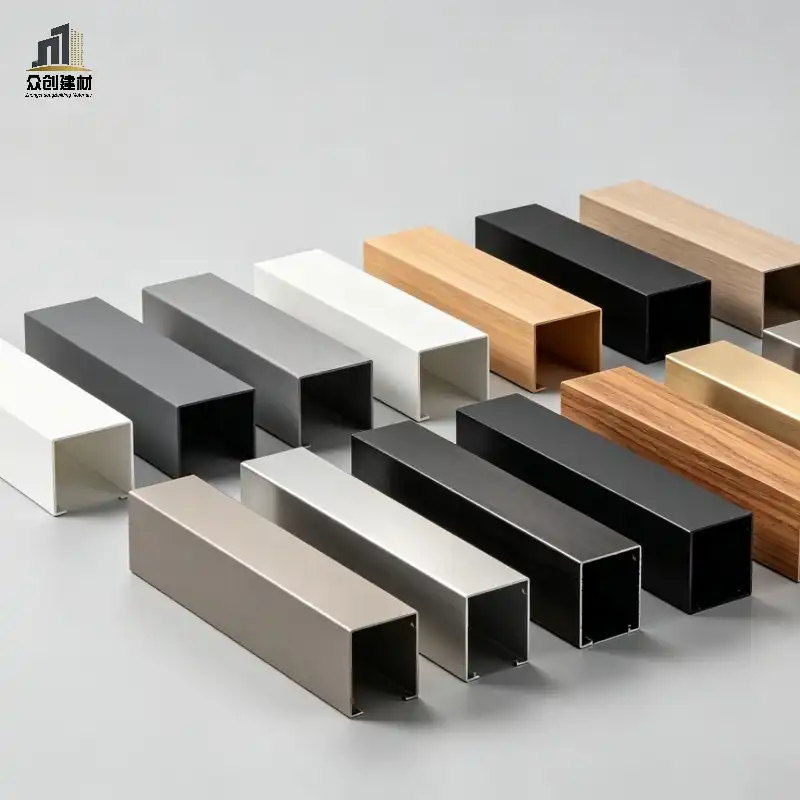
Diverse surface treatments. We offer powder coating, PVDF fluorocarbon coating, wood-grain thermal transfer, anodizing, UV printing and other surface treatment processes, with customizable colors and textures.
Strict quality control. All products undergo film thickness testing, color comparison, perforation precision inspection and pre-assembly verification before leaving the factory, ensuring every panel meets design requirements. All outdoor projects come with coating test reports and warranty commitments.
One-stop service. From design development, process selection and sample fabrication to production processing and installation guidance, we provide full-process technical support to ensure the perfect presentation of projects from concept to completion.
Project Information Summary
|
Case Type |
Application |
Core Process |
Design Highlight |
|---|---|---|---|
|
Dual-Color Perforated Facade |
Industrial Park Renovation |
Dual-color PVDF + Gradient Perforation |
Dual variation of color and perforation ratio |
|
Corridor Artistic Perforated Ceiling |
Office Corridor |
Parametric Gradient + LED Backlight |
Flowing light guiding pedestrian flow |
|
Folded Perforated Wall |
Cultural Exhibition Center |
Multi-angle Bending + Differential Perforation |
Three-dimensional origami sculptural facade |
|
UV-Printed Perforated Hoarding |
Construction Site Barrier |
Perforation + Outdoor UV Printing |
Virtual-real combined brand display |
|
Custom Artistic Hole Patterns |
Brand Stores / Restaurants / Clubs |
Image Grayscale Conversion + Precision Perforation |
Any pattern can be pixelated |
Conclusion
The appeal of perforated aluminum panels lies in their use of metal as a canvas and holes as brushstrokes, achieving almost unlimited facade expression possibilities through continuously innovative processes. From dual-color contrast to flowing corridor light, from folded three-dimensional sculpture to hoarding image upgrade, from standard hole patterns to personalized artistic patterns, perforated aluminum panels are redefining the boundaries of architectural facades.
We will continue to invest in research and development, exploring the combination of perforated aluminum panels with more new processes and materials, to provide more creative and high-quality facade solutions for clients worldwide. If you have perforated aluminum panel project requirements or creative ideas, please contact our technical team, and let us turn creativity into reality together.