_1762768699969.webp)

_1782530506402.webp)
(1)_1783045836766.webp)
_1786157639392.webp)
(1)_1780970038980.webp)
Aluminum Perforated Panel Technology and Architectural Applications
Aluminum perforated panel is a metal decorative panel made of aluminum alloy sheet as substrate, through CNC stamping or laser cutting process to process regular or irregular arranged holes on the panel surface. As an important category in building decorative materials, perforated aluminum panels, with their characteristics of light weight, high strength, corrosion resistance, easy processing and recyclability, are widely used in building exterior walls, indoor ceilings, indoor partitions, shading systems, advertising signs and other fields. Compared with traditional solid aluminum panels, perforated aluminum panels maintain the metallic decorative texture while endowing the panel with breathability, light transmission, sound absorption and other functionalities, achieving the perfect combination of decorativeness and functionality.
The substrate of perforated aluminum panels usually adopts 3003, 5005 and other rust-proof aluminum alloy grades, with thickness generally between 1.5mm and 3.0mm, selected according to application scenarios and wind load requirements. Perforation processing mainly has two process routes: CNC stamping and laser cutting. CNC stamping is the most traditional and economical perforation method, batch processing through special molds on stamping machines, suitable for mass production of standard hole diameters and hole types; laser cutting uses high-power laser beams for non-contact cutting on aluminum plates, with advantages of no tool wear, flexible hole types, high precision, suitable for small batch, multi-variety, complex hole type customized production. Both processes have their own advantages and disadvantages, and engineering practice selects according to project batch, hole type complexity and budget.

The design of holes is the core technical element of perforated aluminum panels. Hole diameter, hole spacing, perforation rate (opening rate) and hole arrangement together determine the visual effect and physical properties of the panel. Hole diameters range from 1mm to 50mm. Small hole diameters (1-3mm) are suitable for fine sound absorption and hidden decorative effects; large hole diameters (10mm or more) are suitable for ventilation and visual transparency effects. Perforation rates range from 1% to over 50%. Low perforation rates (1-5%) focus on decoration, medium perforation rates (10-25%) balance decoration and sound absorption, high perforation rates (30-50%) focus on ventilation and heat dissipation. Hole arrangement methods include equilateral triangle arrangement, square arrangement, quincunx arrangement, etc. Different arrangement methods have their own characteristics in visual density, acoustic performance and structural strength.
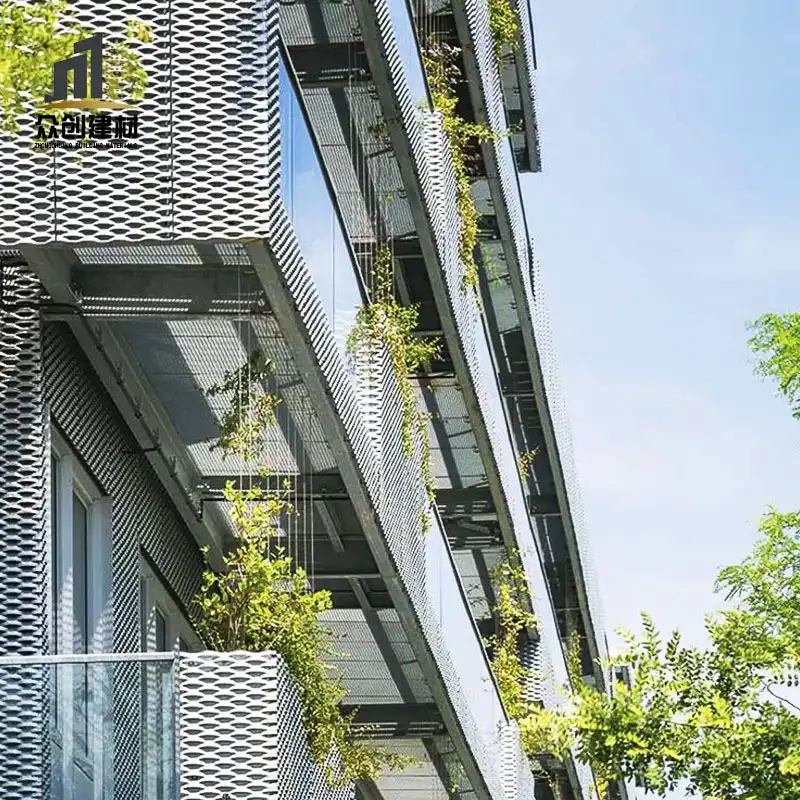
In architectural applications, the functional value of perforated aluminum panels is mainly reflected in three aspects. The first is acoustic function:配合 the sound-absorbing cotton layer on the back, perforated aluminum panels can effectively absorb indoor sound waves, reduce reverberation time, and improve the acoustic environment, which is particularly important in cinemas, concert halls, offices, subway stations and other spaces. The second is ventilation function: the perforated structure of perforated aluminum panels allows free air circulation. In data centers, underground garages, equipment rooms and other spaces requiring ventilation and heat dissipation, perforated aluminum panels are used as return air surfaces or ventilation surfaces. The third is shading function: on building exteriors, perforated aluminum panels are used as shading components, which can block direct sunlight and reduce building energy consumption while maintaining visual transparency and the rhythmic aesthetic of the building facade.
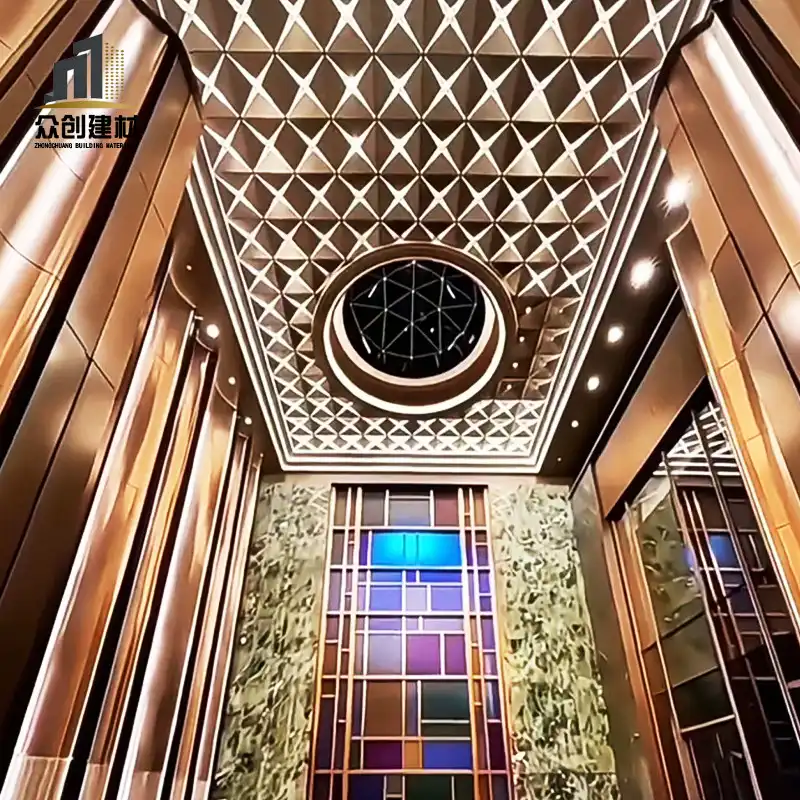
With the development of CNC processing technology and parametric design, the application of perforated aluminum panels has long surpassed the purely functional category, evolving into an important architectural artistic expression medium. From uniform regular arrangement to gradient density patterned perforation, from geometric abstract patterns to figurative image halftone expression, perforated aluminum panels are becoming important materials in building facades and indoor spaces that combine function and aesthetics. This article will systematically sort out the technical knowledge system of perforated aluminum panels, providing comprehensive professional reference for architectural designers, engineering purchasers and material procurement personnel.