_1762768699969.webp)

_1782530506402.webp)
(1)_1783045836766.webp)
_1786157639392.webp)
(1)_1780970038980.webp)
Comprehensive Analysis of Aluminum Ceiling: Material Advantages and Architectural Application Value
Aluminum ceiling is an interior and exterior decorative suspended ceiling material made of aluminum alloy sheets through bending, stamping, and surface treatment processes. Its core substrate usually adopts 3003 or 5005 series aluminum alloy, which has good ductility and corrosion resistance. With a density of only 2.7g/cm³, about one-third of steel, it can achieve excellent mechanical load-bearing capacity through structural design.
From the perspective of structural advantages, aluminum ceilings adopt modular design. Standard specifications include 300×300mm, 600×600mm, 600×1200mm, etc., which cooperate with dedicated keel systems to achieve rapid installation and disassembly. This snap-on structure not only shortens the construction period but also provides convenience for later maintenance and equipment inspection—individual panels can be independently removed without damaging the overall ceiling structure.

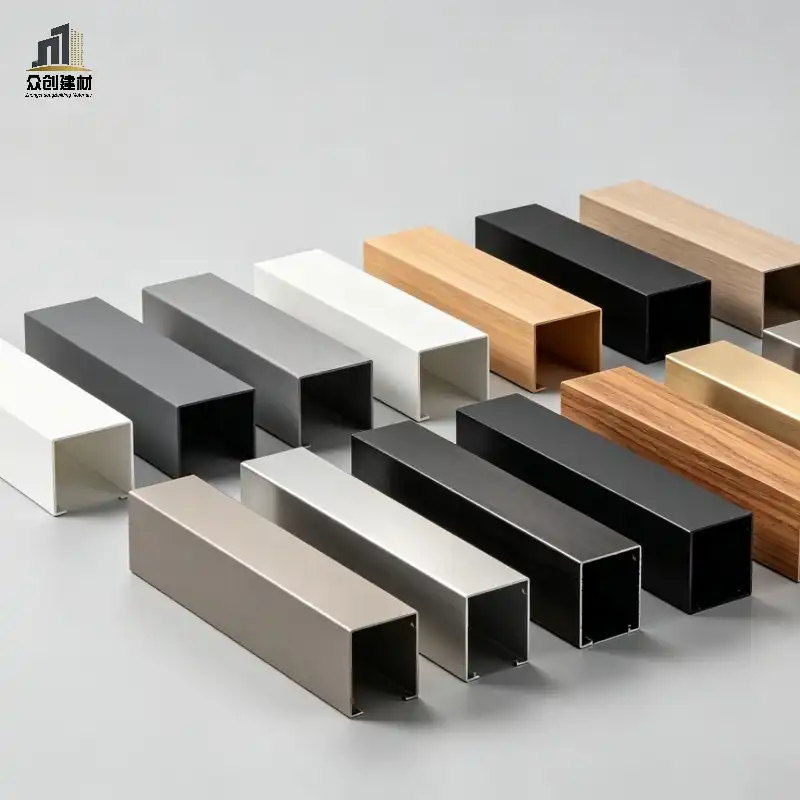
Surface treatment technology is the key link that determines the service life and decorative effect of aluminum ceilings. Mainstream processes include powder coating, fluorocarbon coating, wood grain transfer, and anodizing. Powder coating is suitable for indoor environments with rich colors and controllable costs; fluorocarbon coating has excellent weather resistance and UV resistance, making it the first choice for exterior walls and high-humidity environments; wood grain transfer technology can realistically restore solid wood texture to meet the natural texture needs of high-end interior design; anodizing forms a dense oxide film on the aluminum surface through electrochemical treatment, with high hardness and strong wear resistance.
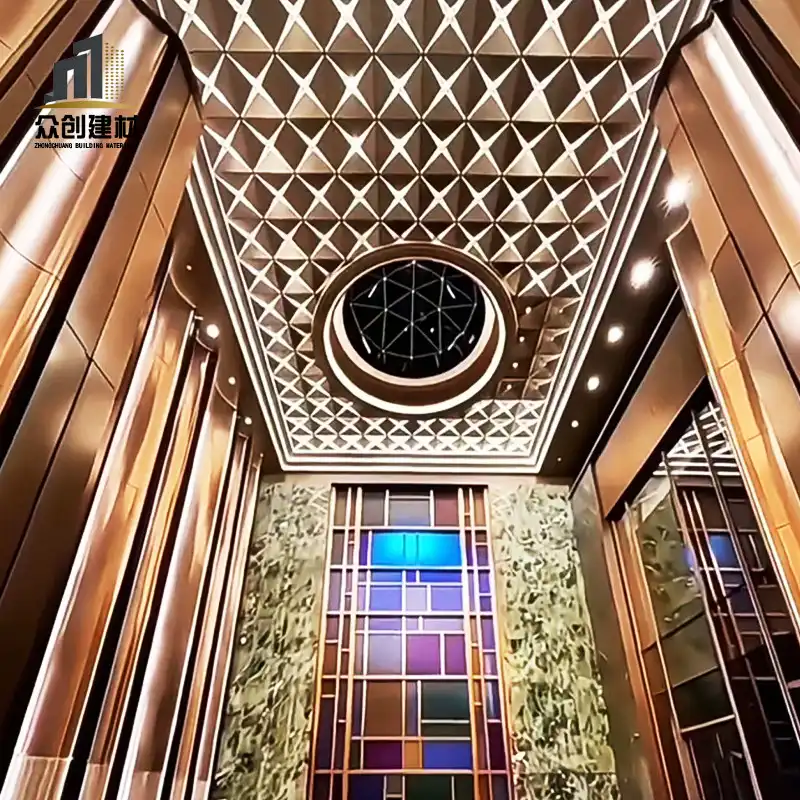
In practical applications, aluminum ceilings have become standard materials for large transportation hubs such as airports, subways, and high-speed railway stations. Taking Terminal 2 of Shanghai Pudong International Airport as an example, its departure hall adopts large-area aluminum strip ceilings with a simple and smooth overall visual effect, while effectively integrating lighting, air conditioning outlets, fire sprinklers and other electromechanical terminal equipment. In medical spaces, the antibacterial and easy-to-clean properties of aluminum ceilings make them an ideal choice for operating rooms and clean corridors; in commercial spaces, their rich modeling possibilities provide designers with unlimited creative space.
With the popularization of green building concepts, the recyclability of aluminum ceilings has also become an important advantage. The recycling rate of aluminum materials is over 95%, and the energy consumption in the recycling process is only 5% of primary aluminum production, which conforms to the industrial direction of circular economy and sustainable development. In the future, with the advancement of intelligent manufacturing technology, aluminum ceilings will develop towards customization, intelligence, and integration, further expanding their application boundaries in the field of architectural decoration.