_1762768699969.webp)

_1782530506402.webp)
(1)_1783045836766.webp)
_1786157639392.webp)
(1)_1780970038980.webp)
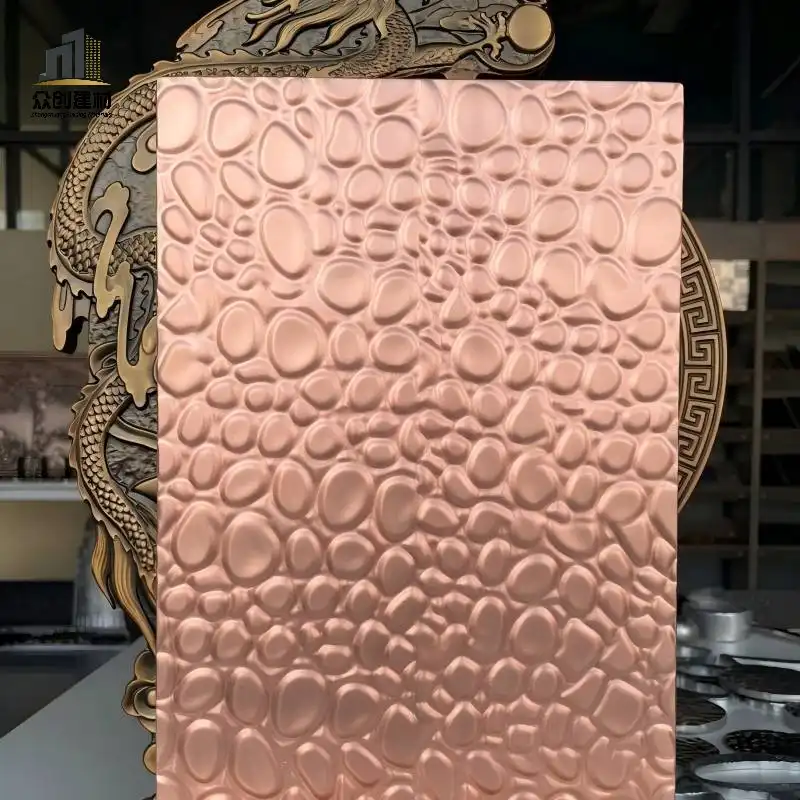
Custom 3D Embossed Aluminum Panels
Introduction
As architectural and interior design shifts from mass-produced standard materials toward personalized, project-specific surfaces, custom 3D embossed aluminum panels have become one of the fastest growing premium decorative categories. The ability to carve any pattern, logo or artwork into a durable, lightweight, fireproof aluminum surface opens up design possibilities that were previously only possible with expensive hand-carved stone or wood.
However, custom relief panels are complex custom products, and incorrect specification of pattern, depth, material thickness or coating is the leading cause of poor visual results and performance issues. This guide covers everything architects, designers and contractors need to know about specifying custom 3D embossed aluminum panels, from core parameters and pattern selection to quality standards, common mistakes and cost reference.

Why Custom 3D Embossed Aluminum Panels Are Growing in Popularity
Three key trends are driving rapid adoption of custom relief aluminum:
- Personalized design demand: Brands, hotels and cultural projects increasingly want unique, signature surfaces that tell a story, rather than generic off-the-shelf materials.
- Falling customization cost: 5-axis CNC carving and AI-assisted pattern design have reduced custom production cost by 40% over the past 5 years, making custom relief accessible to mid-range projects, not just luxury developments.
- Superior material performance: Unlike carved stone or wood, aluminum is A2 fire rated, 100% waterproof, lightweight, rot proof and requires zero maintenance, making it suitable for both interior and exterior use.
Compared to flat printed or laminated decorative panels, physical 3D relief creates genuine light-shadow depth that cannot be replicated by 2D printing, delivering a far higher perceived value at only 20-30% additional cost.
Core Customization Parameters You Need to Know
Before specifying custom embossed panels, there are four independent parameters that define the final product:
1. Pattern Type
There is no limit to pattern design, but most projects fall into one of six categories:
- Brand identity: Logos, typography, brand graphics and repeating brand patterns
- Geometric & parametric: Modern abstract geometry, parametric waves, grids and organic repeating patterns
- Natural & organic: Floral motifs, leaf patterns, landscapes, water ripples and stone texture simulation
- Cultural & traditional: Traditional cloud patterns, lattice designs, cultural symbols and heritage motifs
- Art & illustration: Custom artwork, murals, line drawings and artist collaborations
- Subtle texture: Fine hammered, linen, leather or sand texture for large area use
2. Relief Depth
Relief depth is the most important parameter for visual effect and structural performance:
- Shallow relief (0.5–3mm): Subtle, fine texture, ideal for large area walls, ceilings and exterior facades. Hides minor imperfections and works with all lighting conditions.
- Medium relief (3–8mm): The most popular all-purpose depth, with visible depth and shadow, suitable for feature walls, lobbies and retail spaces.
- Deep relief (8–20mm): Bold, sculptural effect, reserved for accent walls, art installations and small feature areas. Requires minimum 3mm panel thickness and internal stiffeners.
3. Panel Thickness & Size
- Minimum panel thickness = relief depth × 1.5 (e.g. 10mm relief requires minimum 15mm total panel thickness, or 3mm face sheet with honeycomb backing)
- Standard maximum panel size: 1500×6000mm; larger sizes require honeycomb backing for flatness
- For exterior use, minimum 2.5mm solid aluminum or 10mm honeycomb panel is recommended
4. Surface Finish
- Interior: Super durable polyester powder coat, anodized or brushed finish
- Exterior: PVDF fluorocarbon coat with UV stabilizers, minimum 20 year fade warranty
- Finish should be selected to contrast with relief: matte finishes show shadow better than high gloss, while metallic finishes enhance highlight on raised areas
Pattern Selection Guide by Application Scenario
Commercial Brand & Retail Spaces
- Recommended patterns: Brand logos, typography, repeating brand geometric patterns
- Recommended depth: Shallow to medium (1–5mm)
- Best finishes: Matte black, brand custom color, brushed metallic
- Tip: Keep patterns simple and bold for retail — fine detail will be lost when viewed from street distance.
Hotels, Hospitality & Private Clubs
- Recommended patterns: Organic art, floral motifs, subtle texture, cultural patterns
- Recommended depth: Medium (3–8mm)
- Best finishes: Antique bronze, champagne gold, warm brushed metal
- Tip: Use side wall washer lighting to maximize relief shadow; avoid flat overhead lighting which flattens texture.
Cultural & Public Buildings
- Recommended patterns: Cultural symbols, artwork murals, traditional heritage motifs
- Recommended depth: Medium to deep (5–15mm)
- Best finishes: Off-white matte, dark bronze, custom project color
- Tip: For large murals spanning multiple panels, confirm pattern alignment across seams before production.
High-End Residential
- Recommended patterns: Subtle texture, landscape scenes, minimalist geometric, floral accents
- Recommended depth: Shallow (1–4mm)
- Best finishes: Off-white, light gray, warm wood tone, light bronze
- Tip: Avoid deep relief in small rooms — it can feel oppressive and collect dust.
Exterior Facades
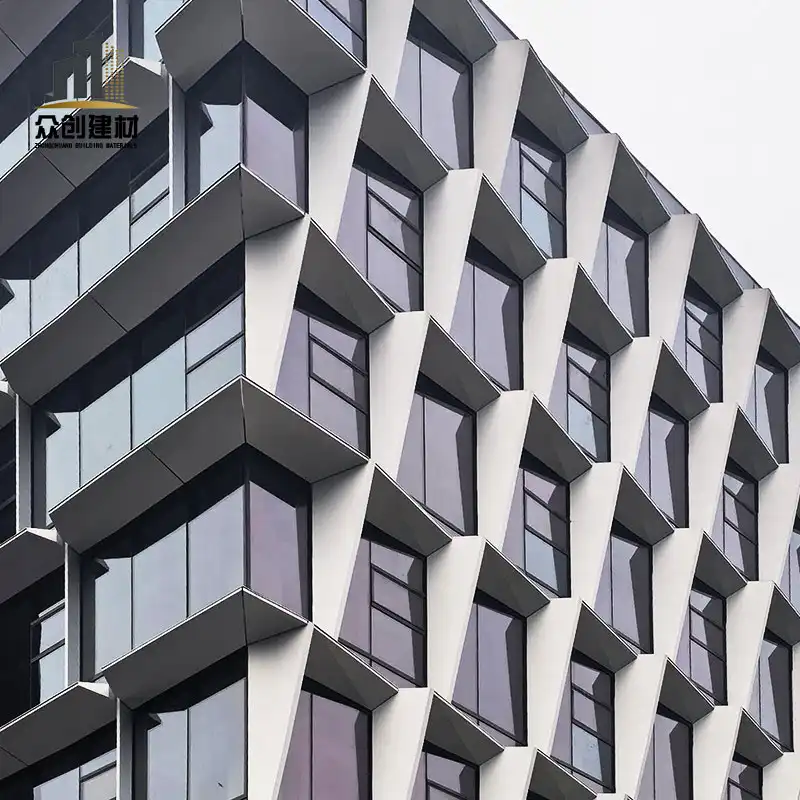
- Recommended patterns: Large scale geometric, parametric, subtle texture
- Recommended depth: Shallow to medium (2–8mm)
- Best finishes: PVDF coated gray, bronze, black, custom color
- Tip: Very deep relief on high-rise exteriors increases wind load and wind noise; always confirm structural calculation for depths over 10mm.
Process & Quality Standards: What to Inspect
When receiving custom embossed panels, check these five quality points:
- Pattern accuracy: Compare final panel to approved design drawing; deviation should be under ±0.5mm for fine detail.
- Edge finish: Carved edges should be smooth with no burrs, chipping or rough tool marks.
- Coating coverage: Recessed areas must be fully coated with no bare aluminum or uneven paint — this is the most common quality defect.
- Flatness: Large panels should sit flat with no bowing; maximum flatness tolerance is 2mm per 2m.
- Seam alignment: For multi-panel patterns, check that the pattern lines up perfectly across panel seams before installation.
Common Mistakes in Custom Relief Projects
- Specifying too much detail for shallow relief: Fine detail under 1mm will not carve clearly in 0.5mm shallow relief. Match detail size to relief depth.
- Using thin panels for deep relief: 10mm relief on 2mm solid panel will warp and rattle. Always use honeycomb backing or thick solid panel for deep relief.
- Using interior coating outdoors: Polyester interior coating will fade and chalk within 2-3 years in sunlight. Always specify PVDF for exterior.
- Ignoring lighting design: Relief texture is invisible under flat diffuse light. Always plan side or raking lighting for feature walls.
- No pattern alignment at seams: For large murals, failing to align patterns across panel seams ruins the entire effect. Confirm seam layout before production.
- Deep relief in high dust areas: Deep recesses collect dust and are hard to clean in public areas. Use shallow relief for high traffic commercial spaces.
Cost & Lead Time Reference
Custom embossed aluminum panel cost is based on four factors:
- Base material cost (panel thickness and size)
- Relief depth (deeper = more carving time = higher cost)
- Pattern complexity (high detail artwork costs more than simple geometry)
- Order quantity (small orders have higher setup cost per m²)
Typical price range:
- Simple shallow texture: 20-30% premium over standard flat aluminum panel
- Medium custom pattern: 40-70% premium
- Deep high-detail artwork: 80-150% premium
- Still 50-70% cheaper than hand carved natural stone
Typical lead time:
- Sample: 5-7 working days
- Mass production: 15-20 working days for standard orders
- Rush order: 10 working days possible for simple patterns
Frequently Asked Questions
Q: Can you carve our own artwork or photograph?
A: Yes. High resolution vector artwork works best, but we can also convert raster images or photographs into carvable relief files with AI-assisted design.
Q: What is the maximum relief depth possible?
A: Standard CNC carving achieves up to 20mm depth on 5mm solid or 25mm honeycomb panels. Custom thick panels can achieve up to 30mm for special art projects.
Q: Can custom embossed panels be used outdoors?
A: Yes, with PVDF fluorocarbon exterior coating. Exterior embossed panels carry 20 year fade and corrosion warranty.
Q: How does cost compare to carved natural stone?
A: Custom aluminum relief is 50-70% cheaper than carved stone, 5x lighter, faster to produce, and will not crack or absorb water.
Q: How long does sampling take?
A: Standard 300×300mm samples take 5-7 working days, with full size samples available in 10-12 days.