_1762768699969.webp)

_1782530506402.webp)
(1)_1783045836766.webp)
_1786157639392.webp)
(1)_1780970038980.webp)
Development Trend of Aluminum Baffle Industry in 2026: Green Building Materials and Customization Become Mainstream
Entering 2026, with the advancement of the national dual-carbon strategy, the popularization of prefabricated buildings and the consumption upgrading of the building decoration industry, the aluminum baffle industry is undergoing profound changes. Traditional standardized and mass-produced products are gradually developing towards green, customized, functional and intelligent directions. The industry concentration is constantly increasing, and the technical and brand advantages of leading enterprises are becoming increasingly prominent.
Green low-carbon is the primary trend of aluminum baffle industry development in 2026. With the full implementation of the "General Code for Energy Efficiency and Renewable Energy Application in Buildings", green building material certification has become a hard requirement for bidding of government projects and large public construction projects. More and more projects require aluminum baffle products to obtain China Green Product Certification and three-star green building material certification, and carbon emission indicators in the production process have become important bid evaluation factors. As a 100% recyclable metal material, aluminum baffles have natural green properties. Leading enterprises have begun to deploy recycled aluminum production lines, using recycled waste aluminum profiles to produce aluminum baffle products, which can reduce carbon emissions by more than 95% compared with primary aluminum production, while reducing costs by 10%-15%. Recycled aluminum baffles will become the mainstream products in the future market. In addition to the greening of materials themselves, the greening of production processes has also become an industry trend. Powder coating and fluorocarbon spraying production lines have been fully upgraded to environmentally friendly spraying lines, using RTO waste gas treatment systems to achieve near-zero VOC emissions, and wood grain transfer processes have been fully upgraded to glue-free thermal transfer technology to reduce emissions of harmful substances such as formaldehyde.
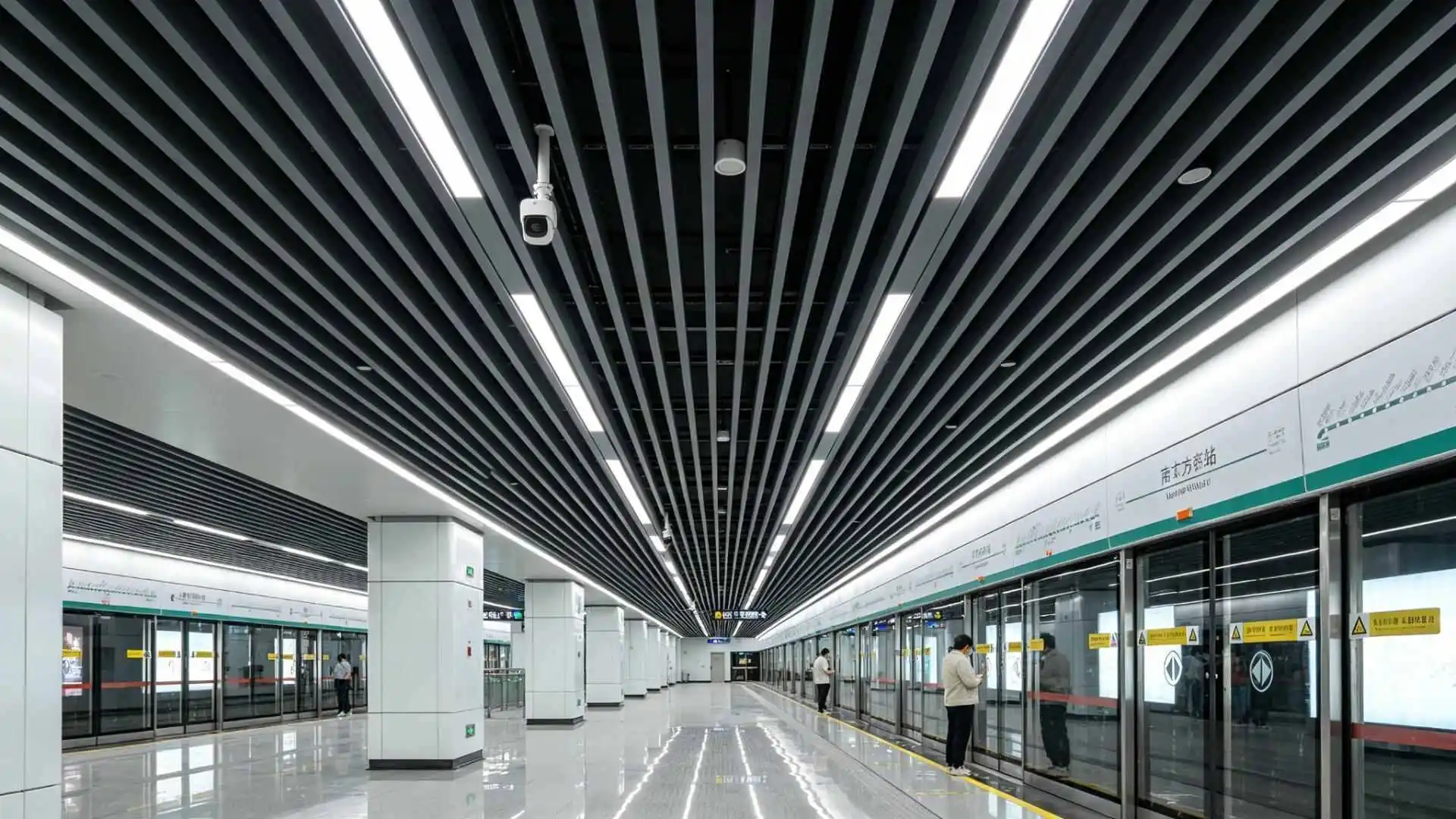
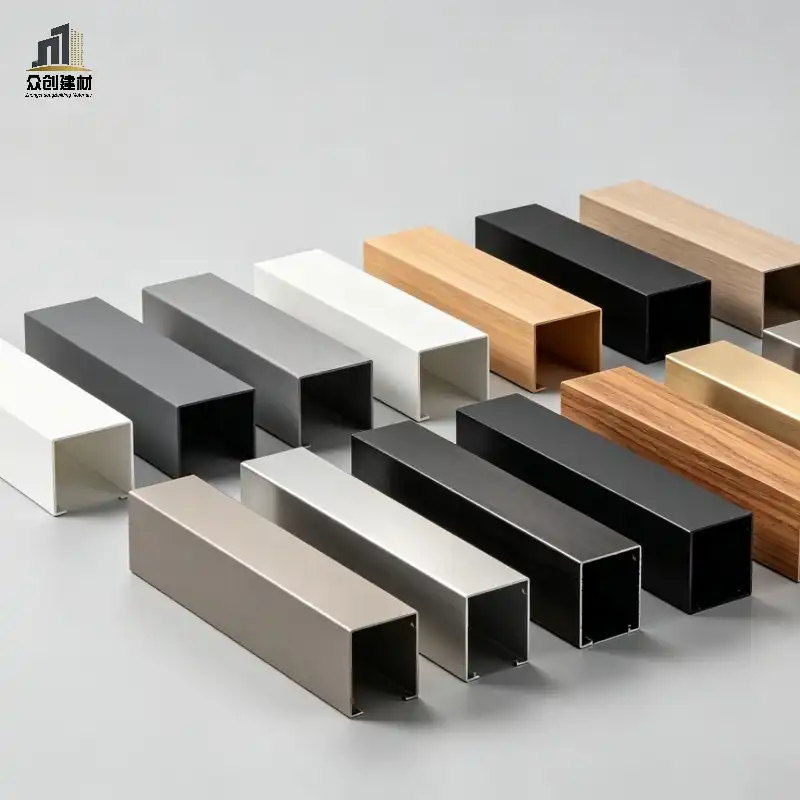
Dark gray aluminum square tube ceiling for subway platforms
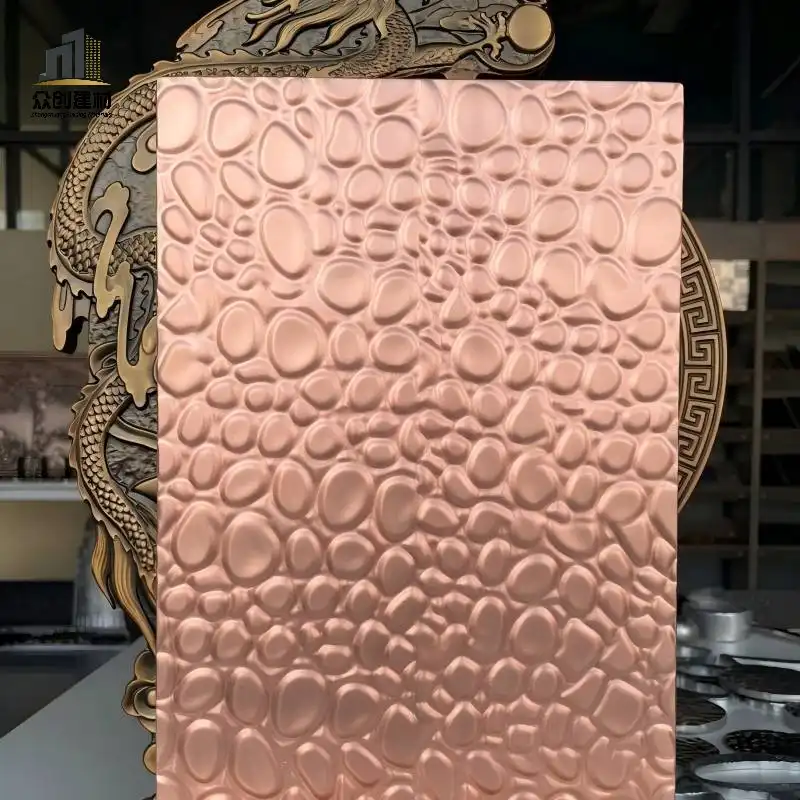
Customized design has become the core track of industry competition. The traditional aluminum baffle market is dominated by standardized products, with serious product homogeneity, fierce price competition and shrinking profit margins. With the personalized development of architectural design, more and more projects require customized aluminum baffle products with special shapes, curved surfaces, hyperboloids, gradients and artistic shapes. The profit margin of these products is 2-3 times that of standardized products, which has become the focus of competition among leading enterprises. The popularization of BIM technology and parametric design has greatly improved the design and production efficiency of customized aluminum baffles. Designers generate complex aluminum baffle shapes through parametric design software such as Rhino and Grasshopper, which directly connect with the factory's CNC production equipment, realizing that design data directly drives production. The delivery cycle of customized products has been shortened from the traditional 30-45 days to 15-20 days, and costs have also dropped significantly. In addition to shape customization, surface effect customization has also become a trend. In addition to traditional solid colors and wood grains, the demand for aluminum baffle products with special surface effects such as imitation copper, imitation rust, gradient, iridescent, luminous is growing rapidly to meet designers' pursuit of unique decorative effects.
Intelligent manufacturing has become the core driving force for industry upgrading. The traditional production mode of the aluminum baffle industry is mainly manual operation, with low production efficiency, unstable product accuracy and high labor costs. In 2026, leading enterprises have fully realized digital transformation, introduced intelligent production equipment such as CNC roll forming lines, CNC stretch bending machines, CNC welding robots, automatic spraying lines, automatic packaging lines, and established MES production management systems to realize full-process digital management from order receiving to production scheduling, processing, surface treatment, packaging and delivery. Production efficiency has increased by more than 50%, product accuracy is controlled within ±0.5mm, and on-time delivery rate has reached more than 98%. The establishment of digital warehousing and logistics systems has also greatly improved supply chain efficiency. Conventional specification products can be delivered within 72 hours, and customized products can be delivered nationwide within 10 days.
Function integration is an important direction for the development of aluminum baffle products. Traditional aluminum baffles only have basic decorative functions. Modern buildings have higher and higher functional requirements for ceiling and exterior wall systems, and aluminum baffle products are developing towards multi-function integration. Sound-absorbing aluminum baffles with integrated acoustic functions can achieve a sound absorption coefficient of more than 0.8 by designing resonant sound-absorbing cavities inside the profiles, filling sound-absorbing cotton, and pasting sound-absorbing non-woven fabric on the back, effectively solving the reverberation problem in large spaces; luminous aluminum baffles with integrated lighting functions integrate LED light strips with aluminum baffle profiles, eliminating the need for additional lamp installation and realizing the integration of decoration and lighting; aluminum baffles with integrated air purification function are coated with nano photocatalyst coating on the surface, which can decompose formaldehyde, benzene and other harmful substances in the air and play a role in purifying air; exterior wall aluminum baffles with integrated photovoltaic function combine thin-film solar cells with aluminum baffles to realize photovoltaic power generation while decorating, providing clean energy for buildings.
The continuous growth of export markets has become an important growth point for industry development. With the improvement of the global competitiveness of China's aluminum processing industry, the export volume of China's aluminum baffle products has maintained a growth rate of more than 20% for five consecutive years, and products are exported to more than 100 countries and regions around the world, including Southeast Asia, the Middle East, Africa, Europe, Australia, and North America. The rapid urbanization in emerging markets such as Southeast Asia and the Middle East has driven the rapid growth of aluminum baffle demand due to a large number of infrastructure construction; developed markets such as Europe and Australia have strong demand for green building materials, and high-quality fluorocarbon aluminum baffles and recycled aluminum baffles produced in China have gained more and more market share by virtue of their cost-performance advantages. In 2026, leading enterprises have laid out overseas markets one after another, established overseas warehouses and sales service centers, provided localized technical support and after-sales service for overseas customers, and the proportion of export business will increase from the current 15% to more than 25%.
The continuous improvement of industry concentration is an inevitable trend of market development. With the improvement of environmental protection requirements, the improvement of product standards and the improvement of customers' quality requirements, a large number of small processing plants without environmental protection qualifications, backward production equipment and unstable product quality will be gradually eliminated by the market. Market share will gradually concentrate on leading enterprises with brand advantages, technical advantages and scale advantages. The market share of the top 10 enterprises in the industry will increase from 25% in 2022 to more than 45% in 2026, and the industry will shift from price competition to quality competition, brand competition and service competition.