_1762768699969.webp)

_1782530506402.webp)
(1)_1783045836766.webp)
_1786157639392.webp)
(1)_1780970038980.webp)
Hotel Canopy Aluminum Ceiling Design Guide
What Is a Hotel Canopy Aluminum Ceiling
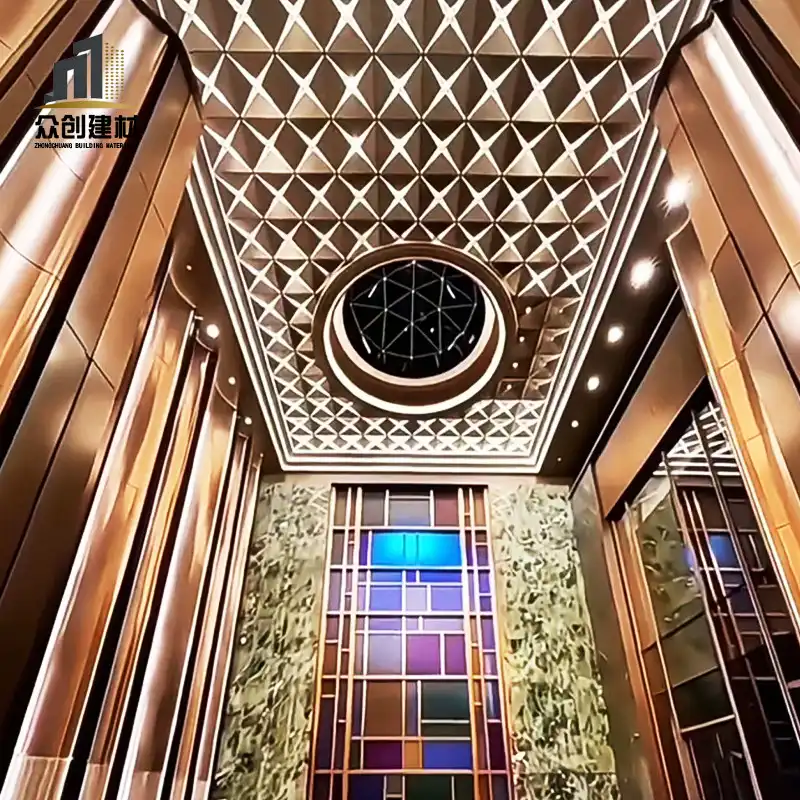
The hotel canopy (or portico) is the projecting structure above the vehicle drop-off area, and its underside — the soffit — is the very first surface guests see when they look up after exiting their car. Aluminum ceiling design refers to the various shapes and patterns formed on this soffit using aluminum alloy panels: flat ceilings, curved surfaces, slatted grilles, perforated motifs, and integrated light channels. It is one of the most expressive elements of hotel entrance design.
In international hotel design terminology, this element is commonly referred to as a hotel canopy soffit, entrance canopy ceiling, or drop-off canopy underside. As luxury hotels increasingly compete on the "first impression economy," the canopy ceiling has evolved beyond mere coverage into a primary canvas for brand expression and atmospheric lighting.
Why Aluminum Is the Only Sensible Choice
The canopy soffit is a semi-exterior zone exposed to direct sunlight, rain, and extreme temperature swings. Traditional materials such as gypsum board, calcium silicate, and wood typically delaminate, mold, or warp within 2–3 years in this location. Aluminum is the only material that simultaneously meets all five requirements:
All-Weather Durability: Non-absorbent, mold-resistant, and dimensionally stable from -40°C to 80°C.
Lightweight & Safe: At just 3–5 kg/m², aluminum panels impose a fraction of the structural load compared to stone or concrete cladding — critical for cantilevered structures.
Design Freedom: Aluminum can be brake-formed, roll-curved, and double-curved to realize virtually any design intent.
Class A Fire Resistance: Non-combustible, meeting strict fire codes for hotel entrance areas.
Near-Zero Maintenance: The dense, smooth coating is self-cleaning under rain; occasional rinsing is all that is needed.

Five Popular Ceiling Shapes
Based on recent luxury hotel projects, canopy aluminum ceiling shapes fall into five categories, each suited to a specific brand positioning:
|
Shape Type |
Visual Character |
Hotel Segment |
Key Design Notes |
|---|---|---|---|
|
Flat Panel Soffit |
Large-format panels with hairline joints |
Business hotels, premium chains |
Uniform joints; works in light or dark finishes |
|
Curved / Wavy Surface |
Flowing waves or large-radius arcs |
Design hotels, resorts |
Double-curved panels require 3D shop detailing |
|
Baffle / Slat Grid |
Linear slats with rhythmic light and shadow |
Boutique, luxury lifestyle hotels |
Pair with light channels for ambiance |
|
Artistic Perforation |
Logo or motif-driven hole patterns, translucent |
Brand hotels, themed properties |
Backlit LEDs create stunning night effect |
|
Integrated Light-Channel Flat |
Flat ceiling with recessed linear LED strips |
Minimalist modern hotels |
Align light channels with panel joints |
Panel Gauge & Structural Selection
Canopy ceilings must account for wind load, snow load, and deflection — unlike interior ceilings. Panel gauge selection is a balance of safety and cost:
1.5mm: Only suitable for small flat ceilings with steel backing; span should not exceed 1200mm.
2.0mm: The most common choice; deflection is controlled up to 1500mm panel width. The standard for most hotel canopies.
2.5mm: Recommended for large cantilevers, wide panels, or coastal high-wind regions; superior wind resistance.
3.0mm+: Reserved for double-curved shapes or extra-wide panels; requires structural engineer review.
3003 or 5005 alloy is recommended for superior corrosion resistance and formability compared to pure 1100 aluminum.
Surface Finishes & Weathering Strategy
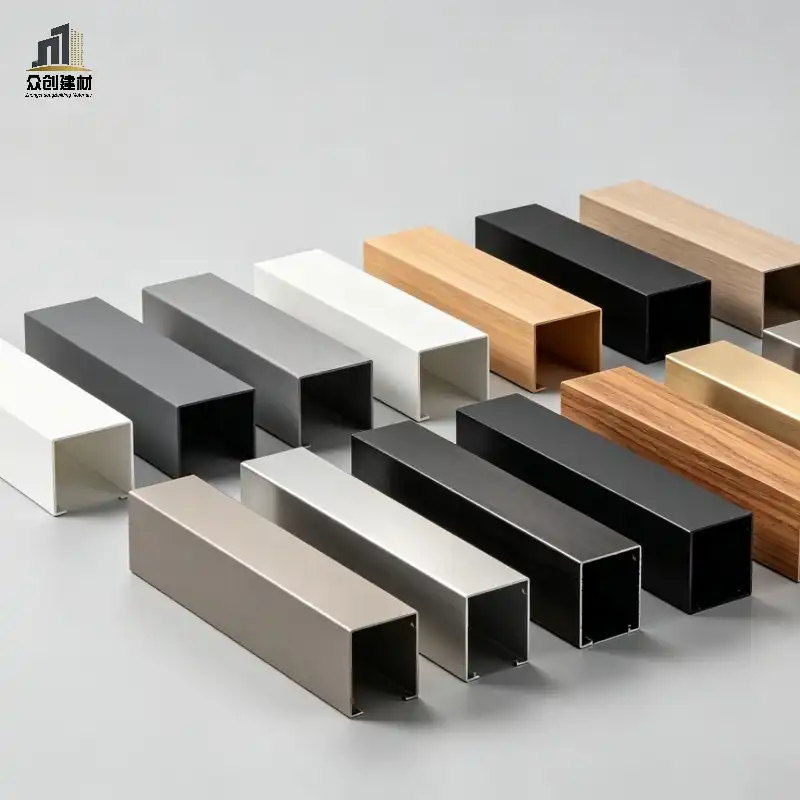
Long-term outdoor exposure demands the right coating. The finish determines how the ceiling will look 10 years from now. Three mainstream options compared:
|
Coating Type |
Warranty |
UV Resistance |
Best Climate |
Cost Level |
|---|---|---|---|---|
|
Polyester Powder (PE) |
5–10 years |
Fair |
Temperate, low-sunlight regions |
Low |
|
Fluorocarbon (PVDF) |
15–20 years |
Excellent |
Coastal, high-altitude, strong sun |
Medium–High |
|
Wood-Grain + UV Topcoat |
10–15 years |
Good |
Semi-exposed, covered canopies |
Medium |
For tropical, subtropical, or high-altitude projects, PVDF is strongly recommended. Light-colored panels can exceed 60°C under direct sun, and inferior coatings will chalk and fade rapidly.
Integrated Lighting Design
The nighttime canopy effect often matters more than the daytime one. Most guests arrive in the evening, and the lighting atmosphere shapes their first impression. Common approaches:
Linear Light Channels: LED strips recessed along panel joints or slats, creating continuous light lines — ideal for modern styles.
Backlit Perforation: Artistic perforated panels with hidden LEDs behind; a decorative pattern by day, a luminous texture by night.
Downlight Grid: Anti-glare downlights on a uniform module, providing even illumination — suited to business hotels.
Indirect Grazing Light: Light sources hidden at the ceiling edge, washing upward to create a floating effect.
Design tips: all light fixtures and drivers must have accessible access panels. Light channel interiors should be finished dark to prevent glare.
Critical Installation Details
Several installation details are prone to problems and require early coordination with curtain wall and MEP teams:
Joint Waterproofing: Panel joints should leave 3–5mm expansion gaps sealed with weatherproof silicone to prevent water ingress.
Corrosion Protection: Internal framing must be hot-dip galvanized; coastal projects should add a rust-inhibiting primer.
Access Panels: Lighting and wiring above the canopy require at least one removable panel for maintenance.
Curved Corners: Curved corner panels should be formed from a single piece to minimize joints and potential water leaks.
Junction with Curtain Wall: The transition between ceiling and side curtain walls needs custom trim to avoid cracks and shadow gaps.
Industry Trends
Based on recent updates to international hotel brand design guidelines, three trends are reshaping canopy ceiling design:
From "Covering" to "Brand Expression": More hotels translate their logo motifs into perforation patterns or light channel layouts, turning the canopy itself into a brand billboard.
From "Flat" to "Micro-Curved": Perfectly flat ceilings are giving way to subtly undulating surfaces that add flow and a sense of luxury.
From "Single Material" to "Material Mix": Aluminum ceilings are increasingly paired with wood veneer, GRG, or stretch ceilings to create richer layers.
Frequently Asked Questions
Q: Can I use standard interior aluminum baffles for the canopy ceiling?
A: Not recommended. Interior baffles typically use standard polyester coating with poor UV resistance; they will chalk and fade within 2–3 years under direct sunlight. Exterior-grade coatings (PVDF or weather-resistant polyester) are mandatory for canopy soffits.
Q: How are curved canopy ceilings priced?
A: Double-curved aluminum panels are priced based on curvature radius, developed surface area, and forming complexity. Tighter curves (smaller radius) cost more. We recommend involving the factory in the design development stage for accurate pricing.
Q: How often does a canopy ceiling need maintenance?
A: PVDF-coated panels are essentially maintenance-free — a yearly rinse with clean water is sufficient. If the coating gets scratched, repair it promptly to prevent moisture from reaching the back primer.