_1762768699969.webp)

_1782530506402.webp)
(1)_1783045836766.webp)
_1786157639392.webp)
(1)_1780970038980.webp)
How to Choose Wood‑Grain Decorative Aluminum Panels | Complete Selection Guide for Indoor & Outdoor Projects
Wood‑grain decorative aluminum panels (also referred to as wood‑look aluminum cladding) combine fire‑safety and deformation‑resistance of metal with the natural visual warmth of real timber. They are widely applied for ceiling systems, interior wall cladding, exterior facades and decorative grilles. However, inconsistent finishing quality in the market causes common field failures such as fading, film peeling and surface delusion within 1‑2 years after completion. Most failures stem from improper material selection instead of manufacturing defects. Based on real‑world project experience, this article provides practical selection standards covering surface finishes, environmental adaption, substrate specifications, texture options and quality inspection for designers, contractors and project owners.

Distinguish Two Main Finishing Technologies: Indoor vs Outdoor Grade
Two mainstream wood‑grain processes are available for aluminum panels, with huge gaps in cost and weather performance. Do not mix indoor‑grade materials for exterior applications. PVC laminated wood‑grain: PVC wood‑grain film is bonded onto aluminum sheets. It offers rich patterns at competitive prices, yet it is strictly for fully indoor use only. Direct UV exposure will trigger bubbling and delamination. Never use laminated panels for facades, canopies or semi‑open corridors. Powder‑based thermal transfer wood‑grain: Base powder coating is applied first, then wood‑grain patterns are transferred under high temperature. Patterns integrate into the coating layer with strong adhesion. Two grades are available: indoor grade and exterior UV‑resistant grade. Exterior‑grade thermal transfer wood‑grain contains anti‑UV additives to resist sunlight and rain exposure for facades and outdoor grilles.
Important tip: Some suppliers sell indoor thermal‑transfer panels as outdoor‑qualified products. Always request official weather‑resistance test reports for exterior projects.
Match Weather‑resistance Grade According to Application Scenarios
Service environment determines required anti‑aging performance.
- Fully‑indoor spaces: Office buildings, hotel guest rooms, shopping mall ceilings and interior corridors. Indoor‑grade thermal transfer or PVC lamination is acceptable. Thermal transfer is preferred for better scratch resistance.
- Semi‑outdoor areas: Covered walkways, canopies, balconies and podiums with indirect sunlight. PVC lamination is forbidden. Minimum requirement: exterior‑grade thermal transfer wood‑grain aluminum panels.
- Exterior facades & outdoor grilles: Long‑term exposure to sun, rain and temperature fluctuation. Exterior UV‑resistant thermal transfer finish is mandatory. For coastal high‑salt‑spray regions, PVDF‑base thermal transfer is recommended for enhanced corrosion resistance.
Substrate Material and Thickness Recommendations
Substrate quality directly decides flatness and anti‑deformation performance. Do not reduce thickness blindly to cut costs. ‑ Indoor ceiling: 3003‑H24 aluminum alloy, thickness 0.8‑1.2 mm, sufficient for regular dimensions. ‑ Interior wall cladding: 1.0‑1.5 mm; increase thickness for large‑size single panels. ‑ Exterior facades & outdoor grilles: Minimum thickness 1.5 mm, 3003‑H24 aluminum alloy is preferred. Larger panel formats require greater thickness to minimize warping caused by thermal expansion and contraction. Avoid recycled impure aluminum substrates, which may lead to color deviation and panel distortion. Material certificates can be requested for order verification.
How to Select Wood‑grain Patterns and Color Depth
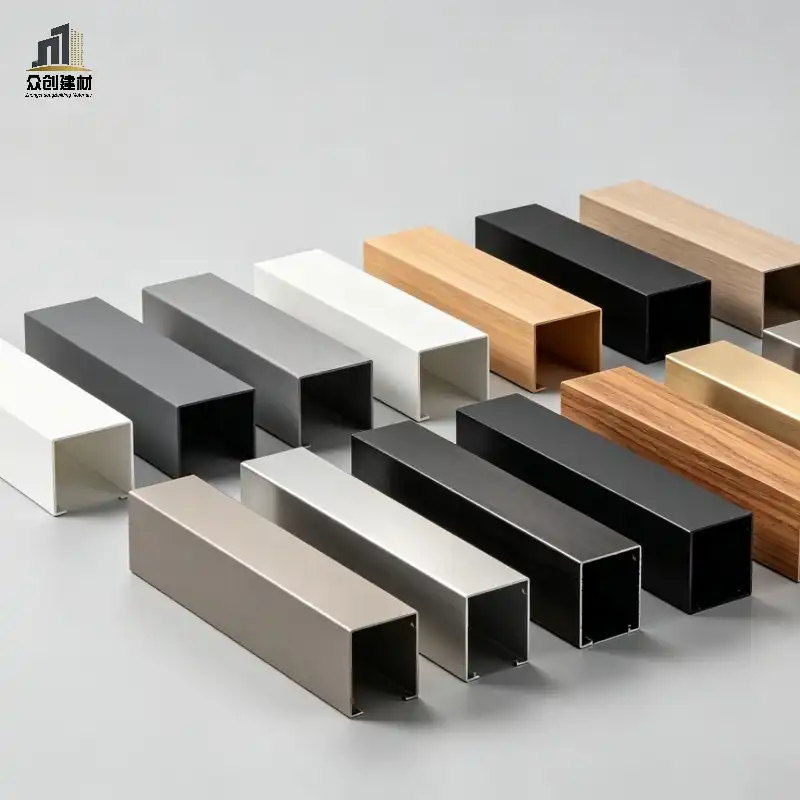
Designers often make decisions relying only on small sample chips. Visual performance will change significantly when scaled up to large wall or ceiling surfaces. ‑ Light wood grain: Modern minimalist aesthetic, bright visual effect, ideal for large‑area ceilings and office spaces. Minor dust and scratches will be more visible. ‑ Dark wood grain: Vintage, luxury and new‑Chinese style for hotel feature walls and grilles. Over‑usage in full space may bring a heavy, oppressive feeling. ‑ Pattern density: Fine compact grain fits small panel sizes. Bold large wood‑grain patterns work best for large‑format exterior cladding; small panels will cut patterns into fragmented, unattractive visuals. Practical suggestion: Besides tiny color swatches, request large physical samples and evaluate appearance under actual site lighting conditions before final confirmation.
How Installation Structure Affects Panel Selection
Even with correct material grade, improper installation will still result in project failures. ‑ Ceiling application: Standard U‑baffle or clip‑in ceiling systems work with regular indoor wood‑grain aluminum panels. Keep proper keel spacing to prevent panel sagging. ‑ Exterior curtain wall: Dry‑hanging bracket system is compulsory. Direct bonding with structural adhesive is not allowed. Adequate expansion gaps shall be reserved to accommodate aluminum thermal movement and avoid coating damage. ‑ Interior adhesive‑bonded walls: Only for flat, dry indoor substrates; not suitable for high‑humidity zones.

Quick Methods to Inspect Wood‑grain Aluminum Panel Quality
- Visual check: Natural smooth pattern transition, no spots, discoloration or bubbles. Check edges for lifting or peeling layers.
- Scratch resistance test: Gently scratch corner area. Low‑quality products will show surface delamination. Premium thermal‑transfer patterns sit within coating and will not easily rub off.
- Document verification: For outdoor orders, obtain UV‑aging and salt‑spray test reports together with material mill certificates.
Common Selection Mistakes to Avoid
‑ Mistake 1: Pick the cheapest option simply because small samples look similar. Laminated panels will rapidly fail outdoors.
‑ Mistake 2: Apply indoor‑grade wood‑grain finishes to exterior without checking weather‑resistance performance.
‑ Mistake 3: Use overly thin substrates for large‑size exterior panels, resulting in warping.
‑ Mistake 4: Finalize material only by tiny color chips without checking large‑sample real‑world visual effect.