_1762768699969.webp)

_1782530506402.webp)
(1)_1783045836766.webp)
_1786157639392.webp)
(1)_1780970038980.webp)
Manufacturing Technology of Expanded Aluminum Mesh Ceiling
Why Process Quality Determines Aluminum Mesh Ceiling Lifespan
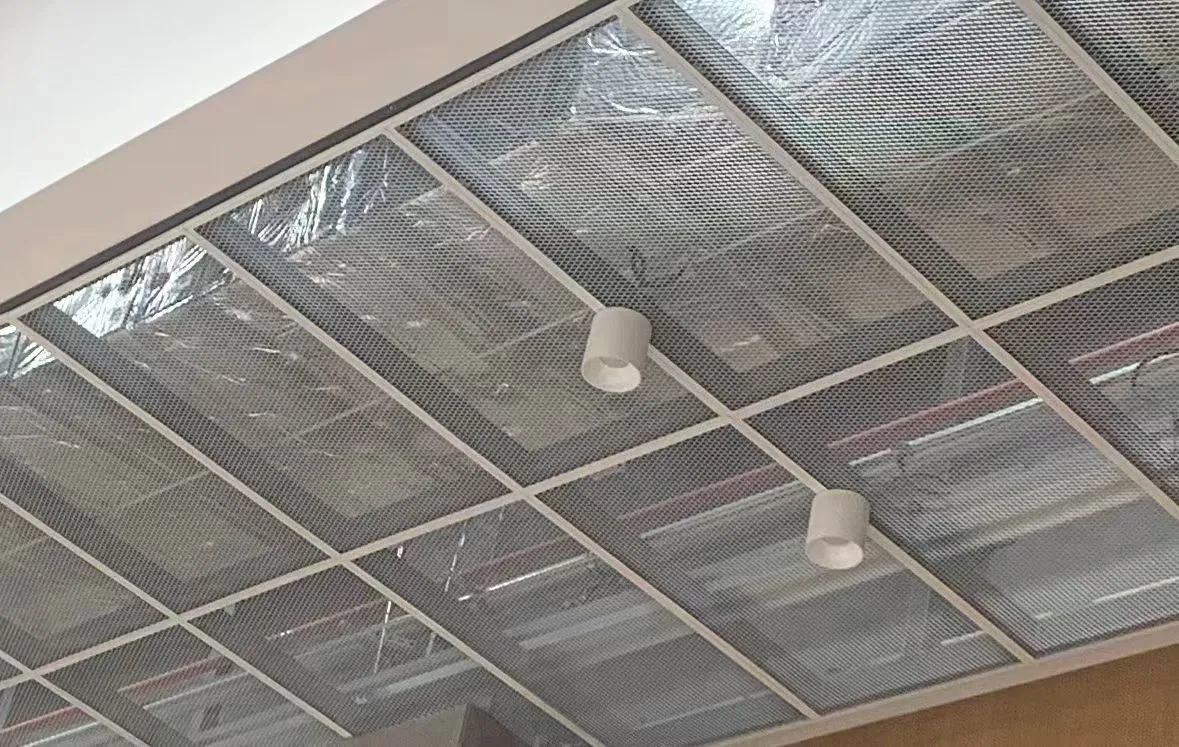
Expanded aluminum mesh ceilings have become one of the fastest growing ceiling categories in commercial and industrial construction, driven by demand for industrial aesthetic, high ventilation and low maintenance. However, many buyers only focus on price and appearance when selecting products, ignoring the core factor that determines product lifespan and safety: production process.
Data from building material testing institutions shows that aluminum mesh ceilings with poor welding process have an average service life of only 3-5 years in normal indoor environment, while one-piece stretched products with good process can serve for 15-25 years without structural problems. For public spaces with high safety requirements such as transportation hubs and large factories, process selection directly relates to long-term operation safety and maintenance cost.
Core Process Comparison: One-Piece Stretched vs Welded Spliced
The two mainstream production processes on the market have huge differences in performance, cost and application scenarios:
1. One-Piece CNC Stretching Process
- Production method: Stretching from a single whole aluminum sheet with CNC equipment, no welding
- Advantages: Zero weld joints, high structural strength, uniform stress, long service life, neat edge appearance
- Disadvantages: Higher equipment requirement, slightly higher unit price, maximum size limited by raw material sheet width
- Suitable for: Large span public spaces, coastal areas, projects with high safety requirements, long-term operation properties
2. Welded Splicing Process
- Production method: Cutting small mesh strips and welding them together to form large panels
- Advantages: Low production threshold, low initial cost, no limit on theoretical panel size
- Disadvantages: Multiple weld weak points, easy corrosion and fracture at weld positions, uneven appearance, short service life
- Suitable for: Small area temporary projects, indoor dry environment with low load requirements, short-term use scenes
For projects with service life requirement of more than 5 years, one-piece stretched process is always the more cost-effective choice when considering full life cycle cost including later maintenance and replacement.
Mesh Opening Type Selection Guide
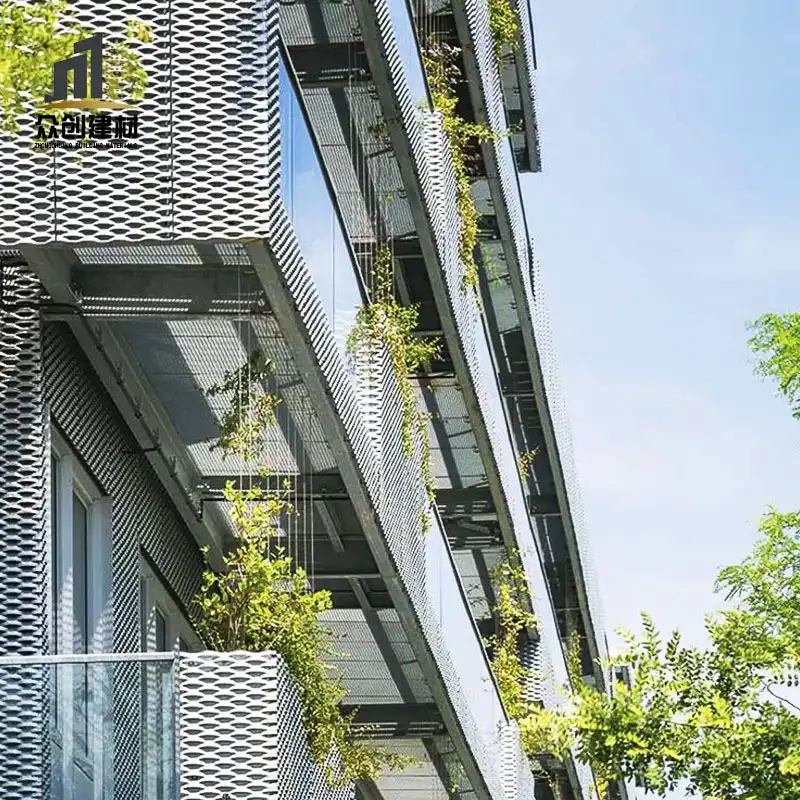
Different mesh opening shapes and sizes bring different visual effects and performance, matching different application scenarios:
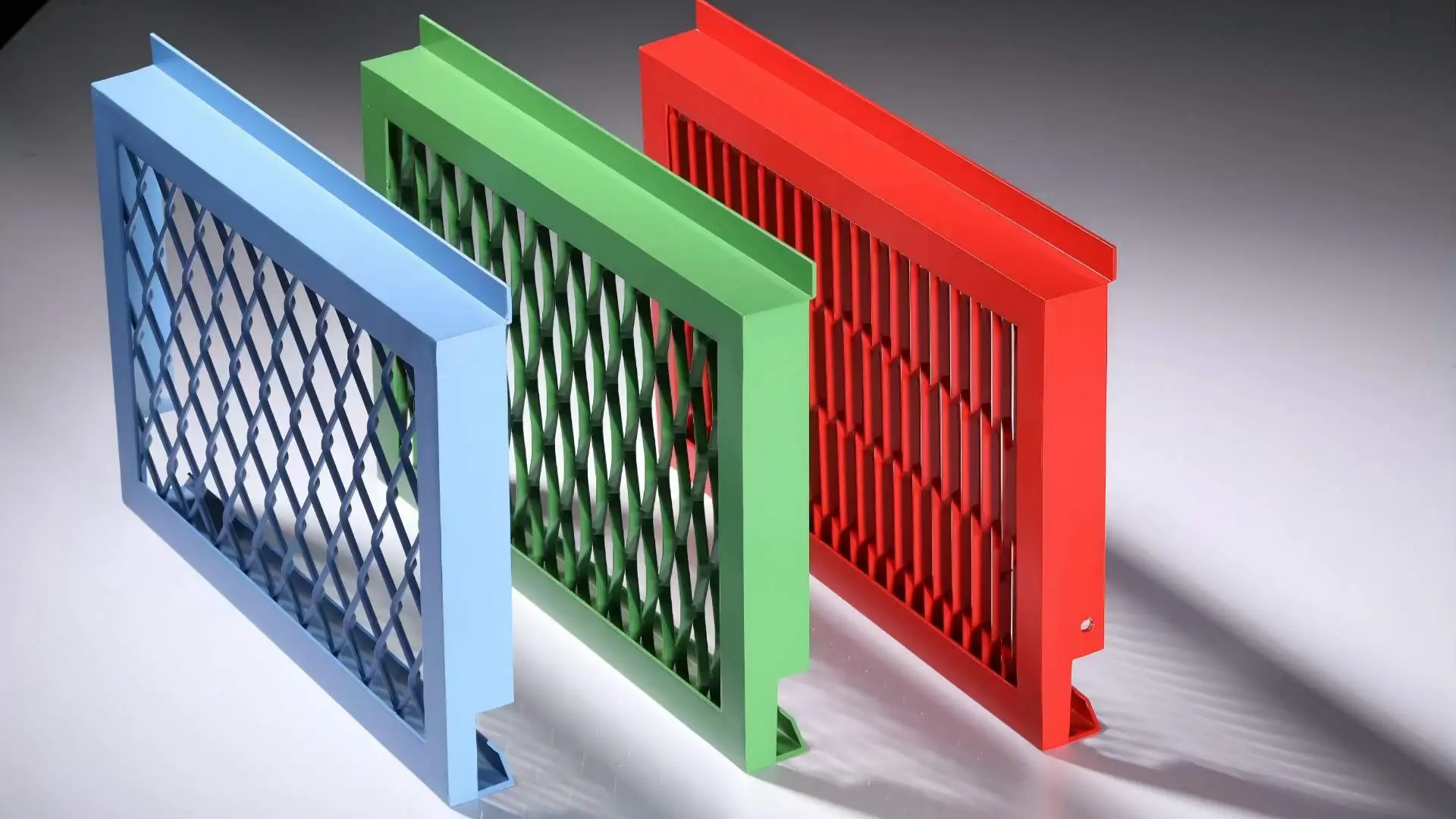
1. Diamond Mesh Opening (Most Common)
- Features: Balanced structural strength and ventilation rate, mature production process, lowest cost
- Suitable for: General industrial workshops, parking garages, equipment rooms, ordinary commercial spaces
- Recommended size: 30×60mm for general use, 40×80mm for large space with high ventilation requirement
2. Hexagonal Mesh Opening
- Features: More uniform force distribution, softer visual effect, more decorative than diamond mesh
- Suitable for: Commercial atriums, retail stores, office spaces, projects with higher aesthetic requirements
- Recommended size: 25mm side length for dense effect, 50mm side length for open effect
3. Special-Shaped Custom Mesh
- Features: Customized shape matching brand or architectural design, strong uniqueness
- Suitable for: Brand flagship stores, cultural buildings, landmark projects with special design requirements
- Note: Custom mesh requires separate mold opening, with longer production cycle and higher cost
Thickness & Span Matching Guidelines
Selecting appropriate panel thickness according to actual span is the key to ensure structural safety and control cost:
|
Panel Thickness |
Recommended Maximum Span |
Typical Application |
|
1.5mm |
≤2.5m |
Small shops, corridor ceilings, low height spaces |
|
2.0mm |
≤4m |
Ordinary offices, retail stores, standard parking garages |
|
2.5mm |
≤6m |
Industrial workshops, mall atriums, metro stations |
|
3.0mm - 4.0mm |
6m - 10m |
Large span stadiums, airport terminals, high wind load areas |
Note: For coastal areas or locations with high wind vibration, it is recommended to increase thickness by 0.5mm on the above basis to ensure structural stability.
Surface Treatment Process Selection
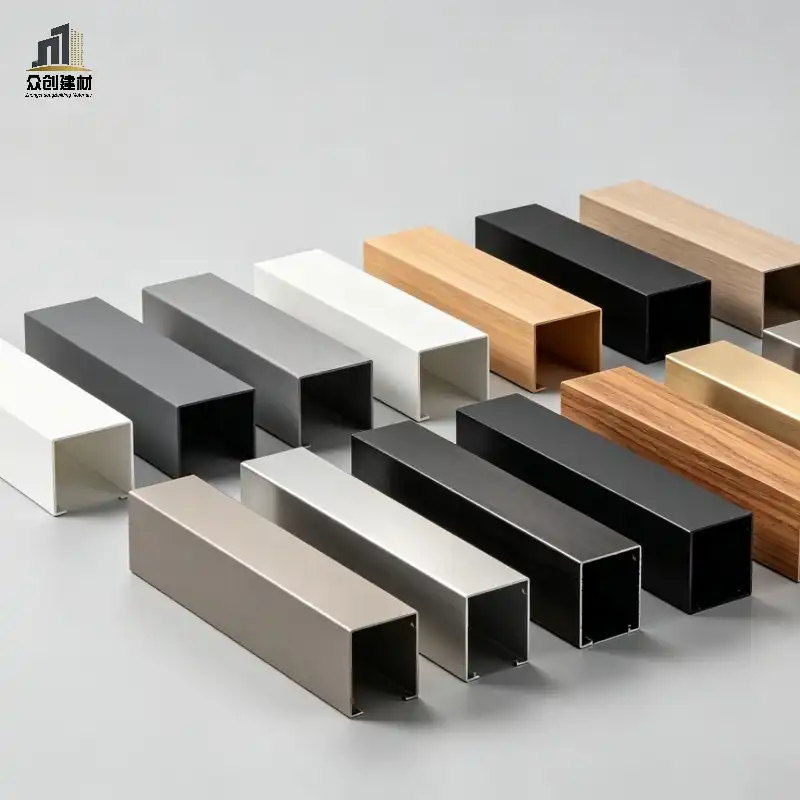
Surface treatment directly affects corrosion resistance, service life and appearance effect, and should be selected according to project environment:
1. Polyester Powder Coating
- Features: Rich color options, good indoor weather resistance, lowest cost
- Suitable for: Indoor dry environment, ordinary commercial and office projects
- Warranty: 10 years indoor
2. PVDF Fluorocarbon Coating
- Features: Excellent UV resistance and corrosion resistance, self-cleaning surface, suitable for harsh environment
- Suitable for: Coastal areas, semi-outdoor spaces, industrial areas with corrosive gas
- Warranty: 20 years outdoor
3. Anodizing
- Features: Metallic texture appearance, high hardness, wear resistance, no paint falling off problem
- Suitable for: Industrial style projects, places with high wear requirement, modern minimalist design
- Warranty: 15 years indoor / outdoor
4 Common Process Mistakes to Avoid
1. Ignoring weld quality to pursue low price
Low-priced welded mesh products usually use spot welding with insufficient solder, and do not do anti-corrosion treatment at weld positions, leading to fracture risk after 2-3 years of use.
2. Choosing too thin panels for large span
Reducing thickness to cut cost will cause panel deformation and vibration under wind or equipment vibration, affecting structural safety and generating noise.
3. Wrong surface treatment selection for harsh environment
Using ordinary powder coating in coastal or industrial areas will cause paint fading and peeling within 2-3 years, increasing later maintenance cost.
4. Over-pursuing large mesh size ignoring strength
Excessively large mesh opening reduces structural strength of the panel, and may cause deformation under load. Mesh size should match panel thickness and span.
Conclusion
Selecting the right production process, mesh type, thickness and surface treatment according to actual project environment and requirements is the key to ensure long-term safe use of aluminum mesh ceilings. For most long-term operation commercial and industrial projects, one-piece stretched aluminum mesh with appropriate thickness and surface treatment is the most cost-effective choice, delivering lower full life cycle cost and higher safety performance.