_1782530506402.webp)
(1)_1783045836766.webp)
_1786157639392.webp)
(1)_1780970038980.webp)
Modern Aluminum Clad Villa Selection Guide
Common Cladding Panel Types & Visual Features
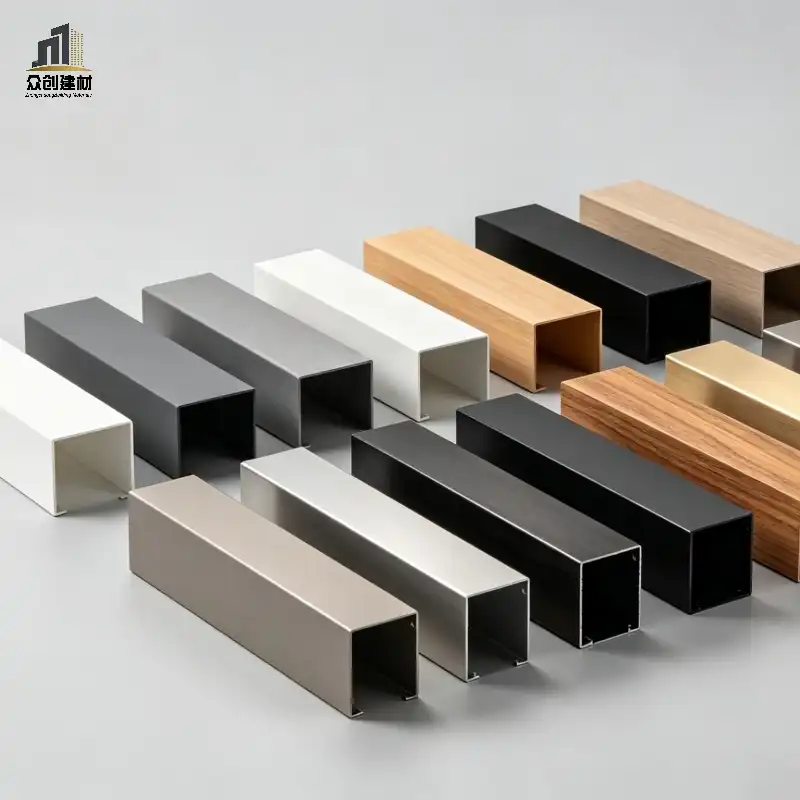
Understanding panel types is the first step in selection. Modern aluminum clad villas can be divided into the following types by panel:
|
Panel Type |
Facade Feature |
Visual Feature |
Application |
|---|---|---|---|
|
Flat aluminum panel |
Flat and sharp |
Simple modern, clean and grand |
Main facade, large areas |
|
Wave line panel |
Wavy |
Rhythmic flow, dynamic modern |
Balconies, eaves, accents |
|
Wood-grain panel |
Wood texture |
Natural warm, modern light-luxury |
Villa facades, resort villas |
|
Louver panel |
Vertical/horizontal lines |
Rich layering, solid-void contrast |
Balcony shading, facade decoration |

Aluminum Clad Villa vs. Other Facade Materials
When selecting, owners and designers typically weigh multiple options: aluminum cladding, painted walls, stone walls, and masonry walls. Key differences:
|
Dimension |
Aluminum Cladding |
Painted Walls |
Stone Walls |
Masonry Walls |
|---|---|---|---|---|
|
Facade effect |
Flat modern |
Affected by workmanship |
Grand |
Traditional |
|
Weight |
Light |
Light |
Heavy |
Heavy |
|
Durability |
20+ years |
5–8 years, needs repainting |
High |
High |
|
Installation time |
Short (factory pre-fab) |
Short |
Long (on-site dry-hung) |
Long (on-site masonry) |
|
Fire rating |
Class A |
Depends on paint |
Class A |
Class A |
|
Maintenance cost |
Low |
High (frequent repainting) |
High |
Medium |
|
Insulation & energy saving |
Strong (insulation + cavity) |
Weak |
Medium |
Medium |
Four Points of Insulation System & Energy Saving
The energy-saving effect of a modern aluminum clad villa is determined by the insulation system, ventilation cavity, finish, and workmanship. Note the following during selection:
-
Insulation Is Key: Choose rock wool or polyurethane insulation to improve thermal performance — cool in summer, warm in winter.
-
Ventilation Cavity Is Essential: The air gap formed by grids facilitates moisture drainage and insulation, preventing dampness and mold on exterior walls.
-
Seam Treatment Must Be Precise: Leave expansion gaps at panel joints filled with color-matched weatherproof sealant to prevent cracking from thermal deformation.
-
Finish Matches Climate: Choose PVDF for coastal salt-resistance; choose light colors in hot regions to reduce heat absorption.
Finish Selection Comparison
|
Finish |
Feature |
Warranty |
Style |
|---|---|---|---|
|
PVDF fluorocarbon |
Excellent weatherability, 20-year fade-free |
20 years |
Modern minimal, long-term use |
|
Wood-grain transfer |
Realistic wood texture |
15 years |
Modern light-luxury, resort villas |
|
Anodizing |
Metallic texture, wear-resistant |
15 years |
Modern minimal, sophisticated gray |
|
Brushed / sandblasted |
Fine metallic texture |
15 years |
Industrial style, distinctive facade |
Common Installation Issues & Solutions
Although aluminum clad villa installation seems straightforward, the following issues are frequently overlooked:
-
Grid Flatness: Mark and position grids along the facade at uniform spacing to ensure panel flatness.
-
Insulation Continuity: Fill insulation tightly without thermal bridges to maintain energy-saving performance.
-
Thermal Expansion: Leave expansion gaps at panel joints filled with color-matched weatherproof sealant to prevent bulging and deformation.
-
Service Openings: Reserve positions for lighting, air vents, and access hatches in advance to avoid post-cutting that damages the coating.
-
Color Consistency: Order all panels for one facade in a single batch to avoid batch-to-batch color variation.
How to Evaluate a Supplier
When selecting a villa aluminum cladding supplier, consider the following:
-
System Integration Capability: Check whether the supplier provides a complete cladding system — aluminum panels, grids, insulation, and accessories.
-
Detailed Design Capability: A professional supplier should produce facade layout and installation drawings from your renderings.
-
Complete Certifications: AAMA 2605, CE, and ISO 9001 are basic guarantees of quality.
-
Export Experience: Factories with export experience are more familiar with packaging, customs, and international logistics requirements.