_1782530506402.webp)
(1)_1783045836766.webp)
_1786157639392.webp)
(1)_1780970038980.webp)
Double-Curved Aluminum Column Cladding Selection Guide
Common Cladding Types & Visual Features
Understanding cladding types is the first step in selection. Double-curved aluminum column cladding can be divided into the following types by column and curvature:
|
Cladding Type |
Column Feature |
Curvature Process |
Visual Feature |
|---|---|---|---|
|
Double-curved round column |
Round, elliptical |
Two-way double-curved forming |
Smooth and rounded, seamless |
|
Single-curve arc column |
Arc square, rounded |
Single-curve (arc) forming |
Simple and modern, cost-effective |
|
Tapered column |
Conical, flared |
Taper + double-curved forming |
Refined taper, grand |
|
Twisted irregular column |
Twisted, spiral |
Multi-section double-curve + twist |
Artistic and dynamic, unique |

Double-Curved Aluminum vs. Other Cladding Materials
When selecting, designers typically weigh multiple options: double-curved aluminum, stone, GRG, and standard aluminum cladding. Key differences:
|
Dimension |
Double-Curved Aluminum |
Stone |
GRG |
Standard Aluminum |
|---|---|---|---|---|
|
Shaping ability |
Strong (3D double-curve) |
Medium (mostly single-curve) |
Strong (field-built) |
Weak (flat/single-curve) |
|
Weight |
Light |
Heavy |
Relatively heavy |
Light |
|
Durability |
20+ years |
High (stone) |
Cracks in 5–8 years |
15+ years |
|
Installation time |
Short (factory pre-fab) |
Long (on-site dry-hung) |
Long (on-site plastering) |
Short |
|
Fire rating |
Class A |
Class A |
Class B |
Class A |
|
Cost |
Medium-high |
High |
Medium |
Medium |
Three Points of Surface Precision and Forming
The visual of double-curved cladding is determined by surface precision, forming process, and finish. Note the following during design:
-
Surface Precision Determines Quality: Control double-curved forming precision within ±1mm to ensure continuous, smooth multi-section splicing.
-
Forming Matches Curvature: Use skin stretching for large-curvature complex surfaces; use hydroforming or stamping for standard double-curves.
-
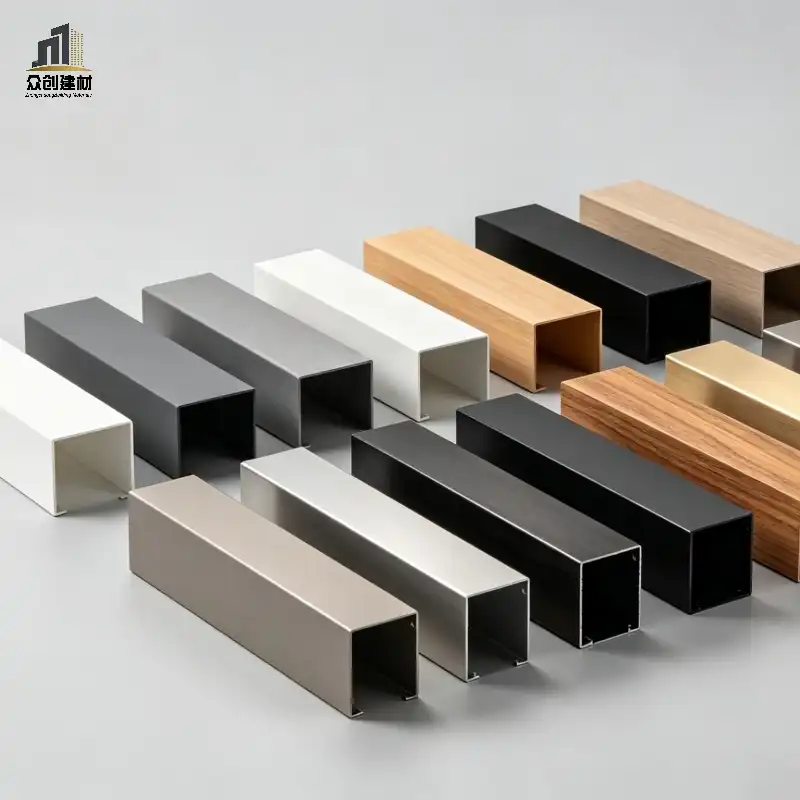
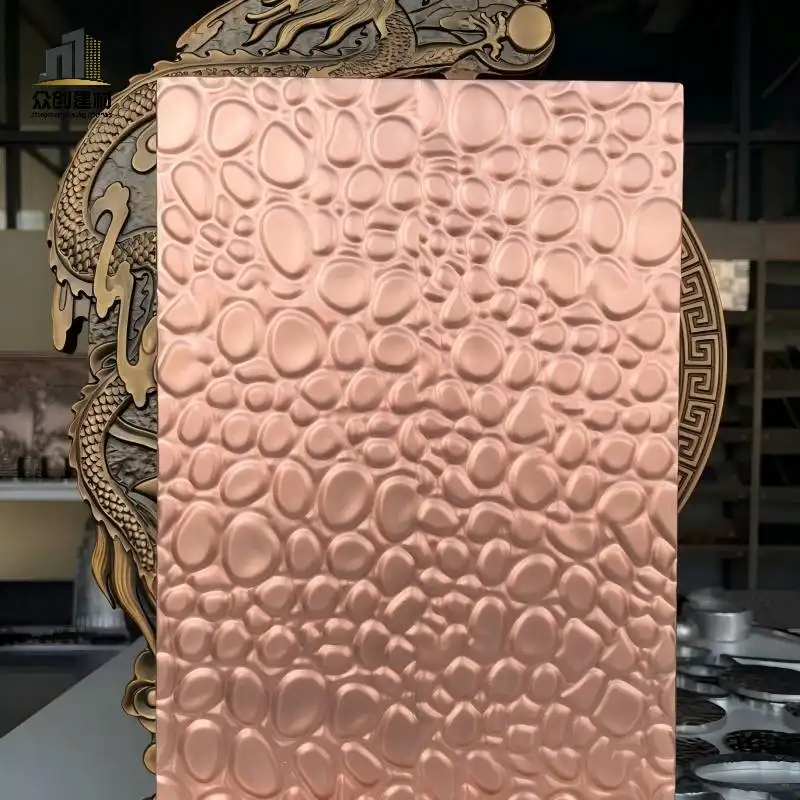
Finish Matches Style: PVDF suits long-term use, wood-grain suits warm spaces, anodizing suits minimal styles.
Double-Curvature Forming Comparison
|
Process |
Feature |
Application |
Cost |
|---|---|---|---|
|
CNC hydroforming |
High precision, batch production |
Standard double-curve, batch projects |
Medium |
|
Skin stretching |
Conforms to die, large curvature |
Complex double-curve, irregular columns |
High |
|
Stamping |
Efficient, cost-controlled |
Standard double-curve units |
Low |
Common Installation Issues & Solutions
Although double-curved cladding installation seems straightforward, the following issues are frequently overlooked:
-
Frame Fit: Fabricate curved steel frames and grids to the column curvature for precise skeleton fit.
-
Multi-Section Splicing: Tall columns are spliced in sections with precision sealant at joints for continuous, smooth lines.
-
Thermal Expansion: For spaces with large temperature differences, leave expansion gaps at panel joints filled with color-matched weatherproof sealant.
-
Service Openings: Reserve positions for lighting, air vents, and access hatches in advance to avoid post-cutting that damages the coating.
-
Color Consistency: Order all panels for one space in a single batch to avoid batch-to-batch color variation.
How to Evaluate a Supplier
When selecting a double-curved aluminum column cladding supplier, consider the following:
-
Double-Curvature Forming Capability: Check whether the supplier has CNC hydroforming and skin stretching equipment, and whether surface precision is guaranteed.
-
Detailed Design Capability: A professional supplier should produce surface development and installation drawings from your renderings.
-
Complete Certifications: AAMA 2605, CE, and ISO 9001 are basic guarantees of quality.
-
Export Experience: Factories with export experience are more familiar with packaging, customs, and international logistics requirements.