_1762768699969.webp)

_1782530506402.webp)
(1)_1783045836766.webp)
_1786157639392.webp)
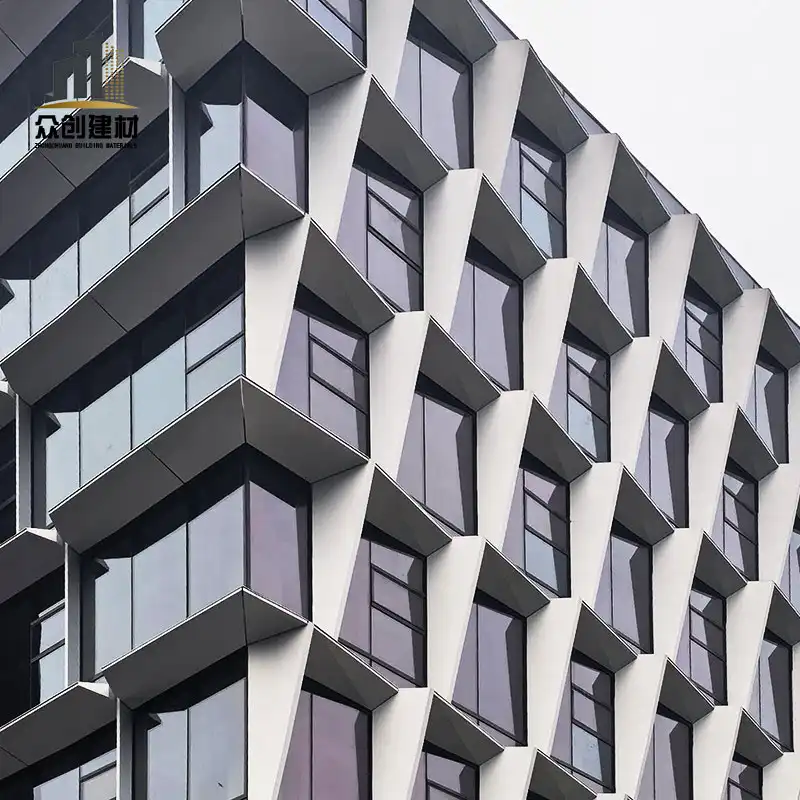
(1)_1780970038980.webp)
Self-Cleaning Nano-Coated Exterior Aluminum Wall Panels – Corrosion & Stain Resistance Redefining Facade Durability
1. Introduction: The Long-Standing Pain Point of Exterior Facade Maintenance
For commercial and public buildings, exterior wall maintenance has always been a high-cost, high-risk recurring expense. Traditional PVDF fluorocarbon and powder-coated aluminum panels, while durable, gradually accumulate dust, industrial exhaust, acid rain stains and bird droppings after 3–5 years of outdoor exposure. In coastal and industrial zones, salt spray and chemical corrosion further accelerate coating aging, leading to fading, chalking and even substrate rust, which seriously affects building appearance and shortens facade service life.
In recent years, self-cleaning nano-spray technology has emerged as a breakthrough solution for aluminum facade panels. By adding a layer of nano-scale functional coating on the surface of aluminum wall panels, it achieves long-term anti-corrosion, anti-fouling and self-cleaning effects, fundamentally reducing facade maintenance frequency and total lifecycle cost. According to 2026 global building materials market data, the demand for nano self-cleaning aluminum cladding has grown by 42% year-on-year, becoming the preferred upgrade option for high-end commercial and coastal building projects.
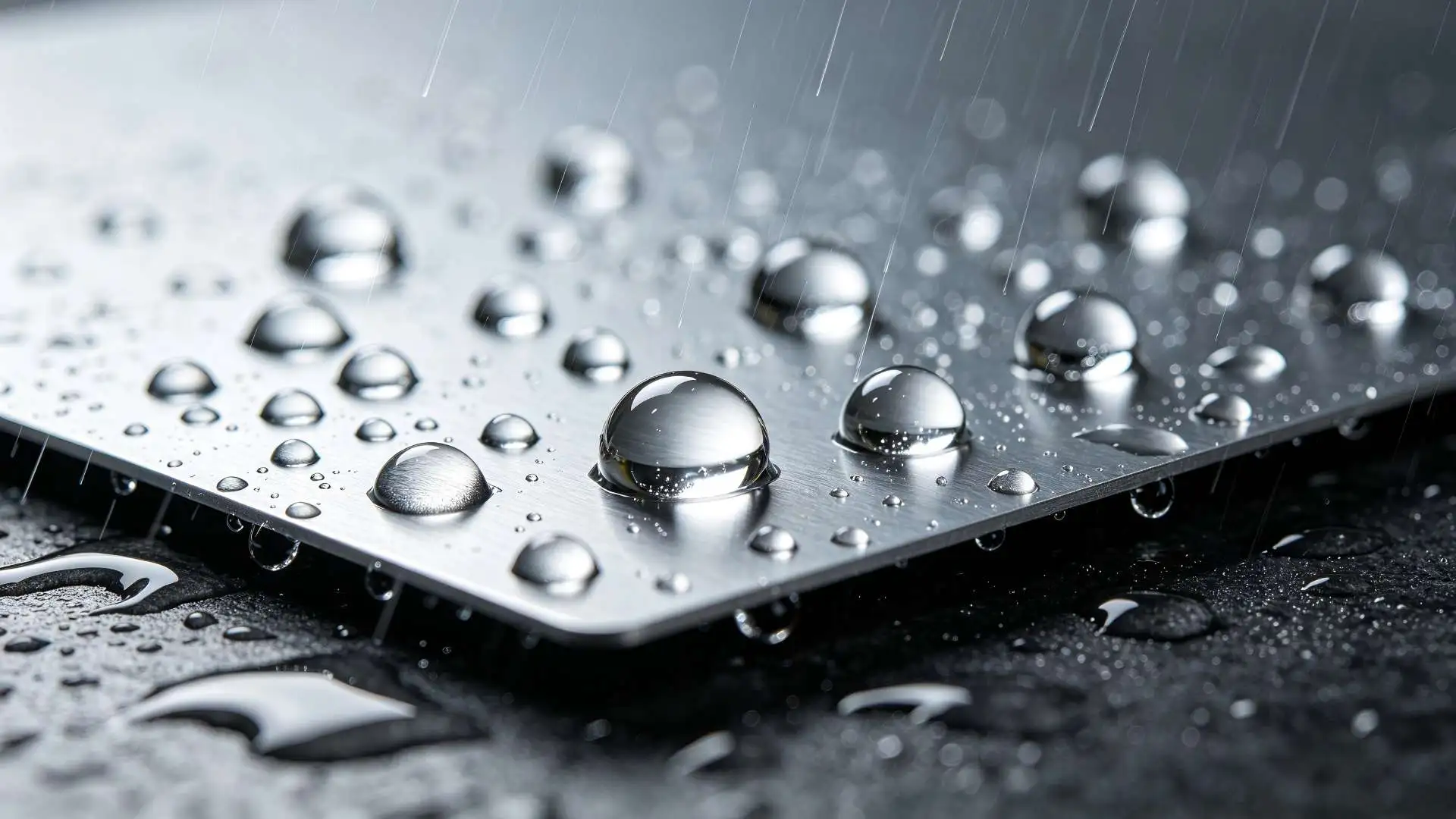
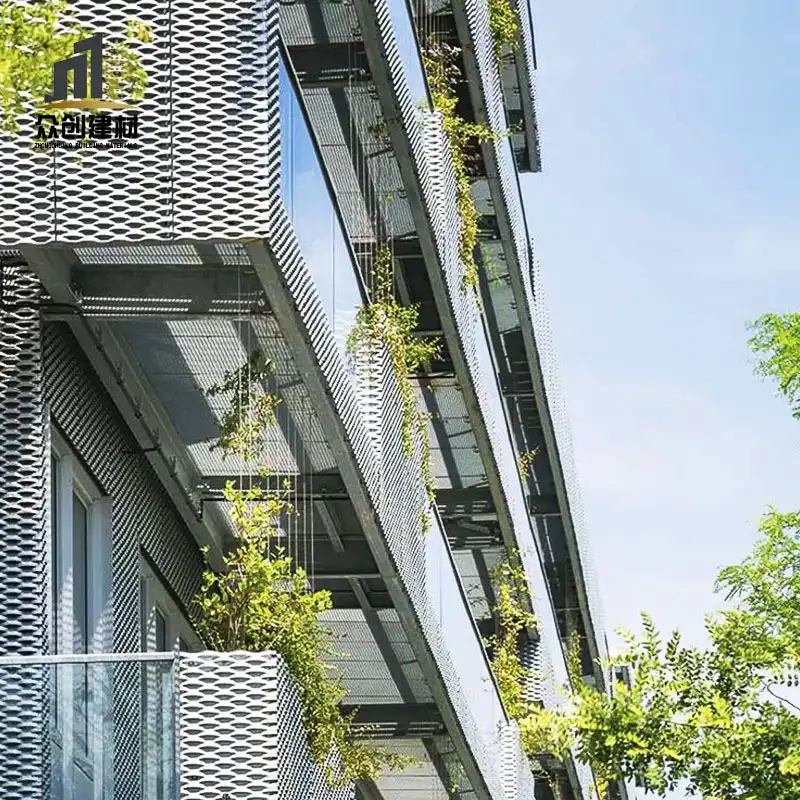
Lotus effect self-cleaning principle nano aluminum panel water contact angle
2. What Is Self-Cleaning Nano-Coated Exterior Aluminum Wall Panel?
A self-cleaning nano-coated aluminum wall panel is a high-performance exterior cladding product. Based on conventional 3003-H24 / 5052-H32 aluminum alloy substrate and PVDF fluorocarbon base coat, it is sprayed with a layer of 20–50μm thick transparent nano-functional coating through precision airless spraying process, and cured at constant temperature to form a dense, uniform nano-scale protective film on the panel surface.
Different from ordinary decorative coatings, nano-coating does not change the original color and texture of the aluminum panel, but endows the surface with super hydrophobic, oleophobic and anti-corrosion properties through micro-nano structure design, realizing the effect of "rain washing cleans the wall automatically" and "corrosive substances cannot penetrate".
3. Core Working Principle: Dual Technical Routes for Anti-Corrosion & Anti-Fouling
3.1 Super Hydrophobic Lotus Effect (Physical Self-Cleaning)
The surface of the nano-coating constructs a micro-nano rough structure similar to lotus leaves, with a water contact angle ≥ 150° and a rolling angle ≤ 10°. When rainwater falls on the panel surface, it forms spherical water droplets instead of spreading into a water film. As the water droplets roll down, they adsorb and take away dust, stains and floating dirt on the surface, achieving automatic cleaning with rainfall.
3.2 Photocatalytic Degradation (Chemical Self-Cleaning)
Nano-titanium dioxide (TiO₂) is added to the coating formula. Under ultraviolet irradiation, it generates strong oxidizing free radicals, which can actively decompose organic pollutants such as industrial exhaust, oil fume and bird droppings attached to the surface, turning them into small molecular substances that are easily washed away by rainwater. This effect is especially suitable for areas with serious air pollution.
3.3 Barrier Anti-Corrosion Mechanism
The dense nano-coating forms an impermeable physical barrier on the aluminum panel surface, completely blocking the penetration of corrosive media such as salt spray, acid rain, alkali and industrial chemicals. Compared with ordinary PVDF coatings, the anti-corrosion performance is improved by more than 2 times, effectively preventing substrate corrosion and coating peeling.
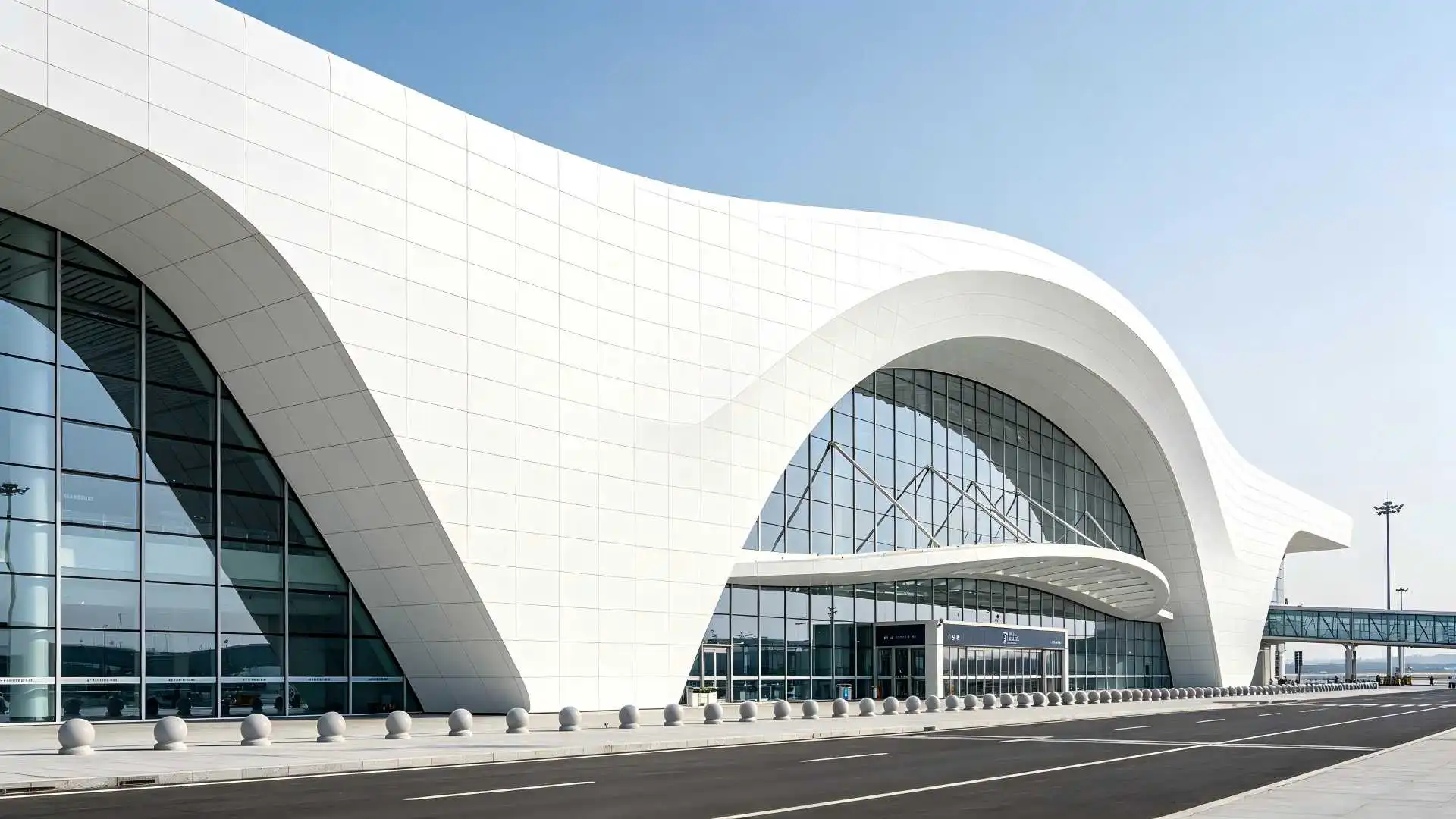
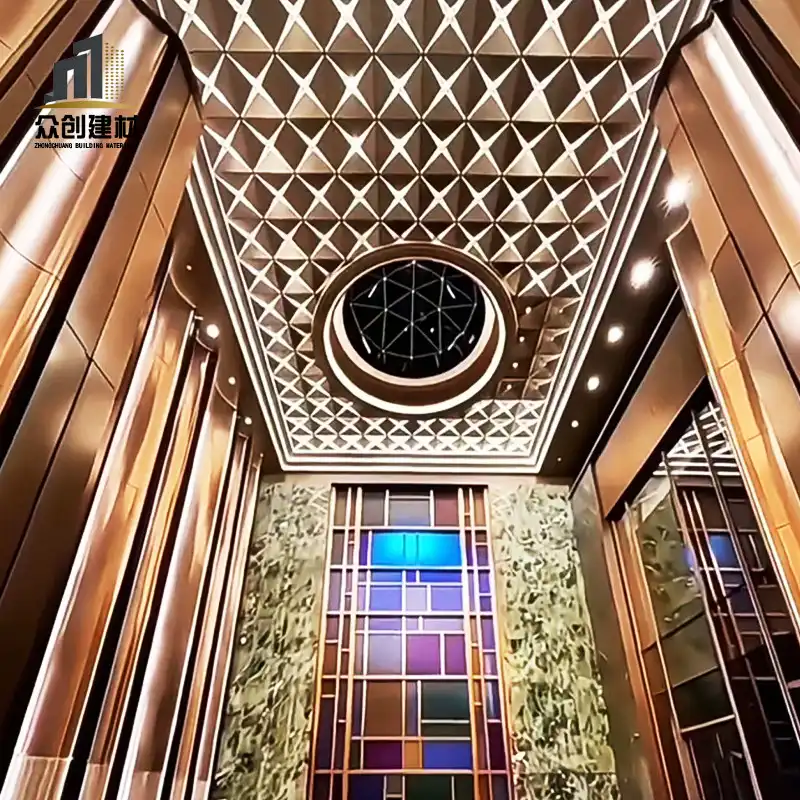
Airport terminal self-cleaning nano aluminum cladding public building
4. 7 Core Advantages Over Traditional Facade Coatings
Excellent Anti-Fouling Performance Super hydrophobic and oleophobic surface repels dust, oil stains, graffiti and bird droppings. Daily stains can be washed away automatically by rainwater, without manual frequent cleaning. The anti-fouling durability lasts for more than 10 years.
Long-Lasting Anti-Corrosion Protection Dense nano barrier layer resists salt spray, acid rain, alkali and industrial corrosion. The neutral salt spray resistance reaches 3000+ hours, which is 2–3 times that of ordinary PVDF coatings, especially suitable for coastal high-salt fog areas and industrial parks.
60%+ Reduction in Lifecycle Maintenance Cost No need for regular high-altitude wall cleaning, which reduces maintenance cost by more than 60% within 10 years, and avoids safety risks of high-altitude operation. For super high-rise buildings, the cost saving effect is more significant.
Enhanced Weather & UV Resistance The nano-coating has excellent anti-ultraviolet and anti-aging properties, which can slow down the fading and chalking of the base PVDF coating, and extend the outdoor color fastness warranty from 20 years to 25–30 years.
Transparent Coating, No Impact on Aesthetics The nano-coating is a fully transparent film layer, which does not change the original color, gloss and texture of the aluminum panel, and can be applied to panels of any color and finish without affecting the architectural design effect.
Eco-Friendly & Non-Toxic The nano-coating formula does not contain heavy metals, formaldehyde or VOCs, meets LEED green building certification standards, and has no pollution to the environment and human body.
Scratch & Wear Resistant The cured nano-coating has a hardness of 4H–6H, which resists daily wind sand abrasion and slight scratch, and is not easy to be damaged during transportation and installation.
5. Core Performance Indicators & Industry Standards
| Performance Item | Technical Index | Relevant Standard |
|---|---|---|
| Water Contact Angle | ≥ 150° | GB/T 30447, ISO 27448 |
| Rolling Angle | ≤ 10° | ISO 19403 |
| Neutral Salt Spray Resistance | ≥ 3000h | ASTM B117, ISO 9227 |
| Artificial Accelerated Aging | ≥ 3000h no chalking, no cracking | ASTM G154, ISO 11507 |
| Coating Hardness | 4H – 6H | ASTM D3363 |
| Anti-Fouling Grade | Level 1 (highest) | GB/T 9780 |
| Fire Rating | A2-s1,d0 non-combustible | EN 13501, GB 8624 |
| VOC Content | ≤ 10g/L | EPA 24, GB 18581 |
6. Typical Application Scenarios
Coastal Buildings: High-rise residences, commercial complexes, resort hotels in coastal cities, solving the problem of salt spray corrosion and salt frost staining
Industrial Zone Projects: Factory buildings, office buildings and supporting facilities in chemical industrial parks and heavy industrial areas, resisting industrial exhaust and acid-base corrosion
Super High-Rise Landmarks: 100m+ super high-rise office buildings and skyscrapers, reducing high-altitude cleaning costs and safety risks
Transportation Hubs: Airports, high-speed railway stations, metro stations and ports, with large passenger flow and high pollution, reducing daily maintenance frequency
Municipal Public Buildings: Libraries, museums, stadiums and government buildings, maintaining long-term clean appearance and reducing municipal maintenance expenditure
Commercial Complexes: Shopping malls, star hotels and business centers, improving brand image and reducing property operation costs
7. Construction & Maintenance Best Practices
Construction Requirements
The base PVDF coating must be fully cured before nano-spray construction, and the surface must be clean, oil-free and dust-free
Professional airless spraying equipment shall be used to ensure uniform coating thickness of 20–50μm, no missing spray or sagging
Construction shall be carried out in an environment with temperature 5–35℃ and relative humidity ≤ 80%, avoiding construction in rainy, foggy or strong wind weather
After spraying, it shall be cured at constant temperature according to process requirements to ensure full cross-linking and curing of the coating
Daily Maintenance Notes
Do not use sharp hard objects to scratch the panel surface, so as not to damage the nano-coating structure
For local stains, wipe with clean water and neutral detergent. Do not use strong acid, strong alkali or abrasive cleaning agents
Do not use high-pressure water gun to wash the panel surface for a long time, so as not to affect the coating adhesion
Check the coating integrity once a year. If local damage is found, touch up repair in time to avoid corrosion expansion
8. Future Development Trends
Dual-Function Composite Coating: Combine super hydrophobic physical self-cleaning and photocatalytic chemical self-cleaning to achieve better anti-fouling effect in both rainy and sunny days
Self-Healing Nano Coating: Add microcapsule repair factor to the coating. When the coating is slightly scratched, the repair factor automatically flows out to repair the damaged part, prolonging service life
Multi-Functional Integration: Add antibacterial, antiviral, heat insulation and noise reduction functions on the basis of self-cleaning and anti-corrosion, to realize one coating with multiple effects
Solvent-Free Environmental Protection Formula: Develop water-based and solvent-free nano coating to further reduce VOC emission and meet higher green building requirements
9. Conclusion
Self-cleaning nano-sprayed aluminum wall panels fundamentally solve the two major pain points of traditional aluminum facade: high maintenance cost and poor corrosion resistance. With the continuous upgrading of nano-material technology and the reduction of production cost, this product will gradually become the standard configuration of high-end exterior wall projects, especially in coastal, industrial and super high-rise building scenarios, with very broad application prospects.
For architects and developers, choosing nano self-cleaning aluminum panels not only improves the long-term appearance of the building, but also greatly reduces the total lifecycle cost, which is a cost-effective long-term investment.