_1782530506402.webp)
(1)_1783045836766.webp)
_1786157639392.webp)
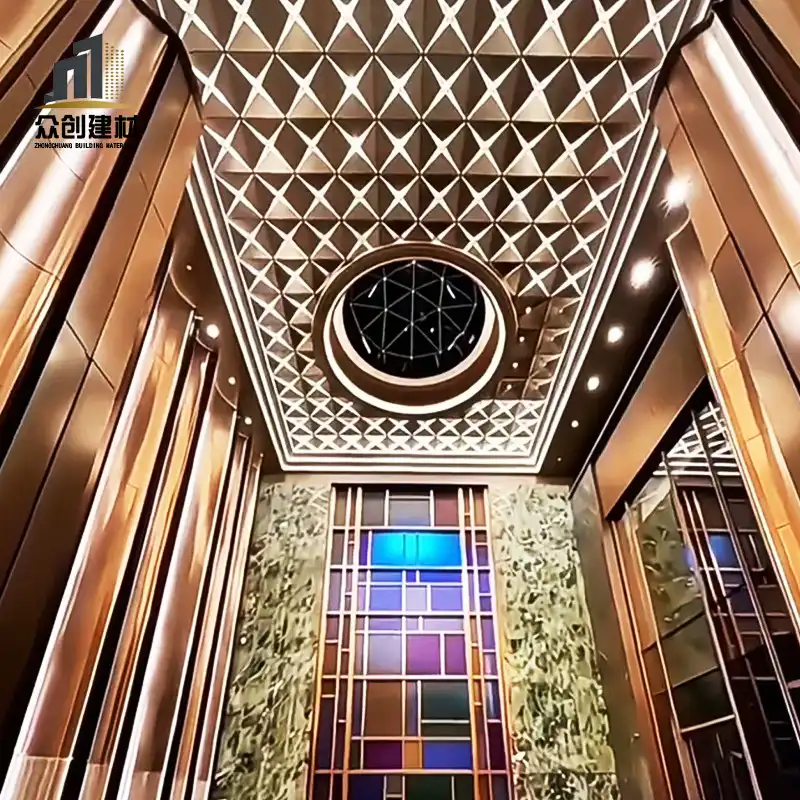
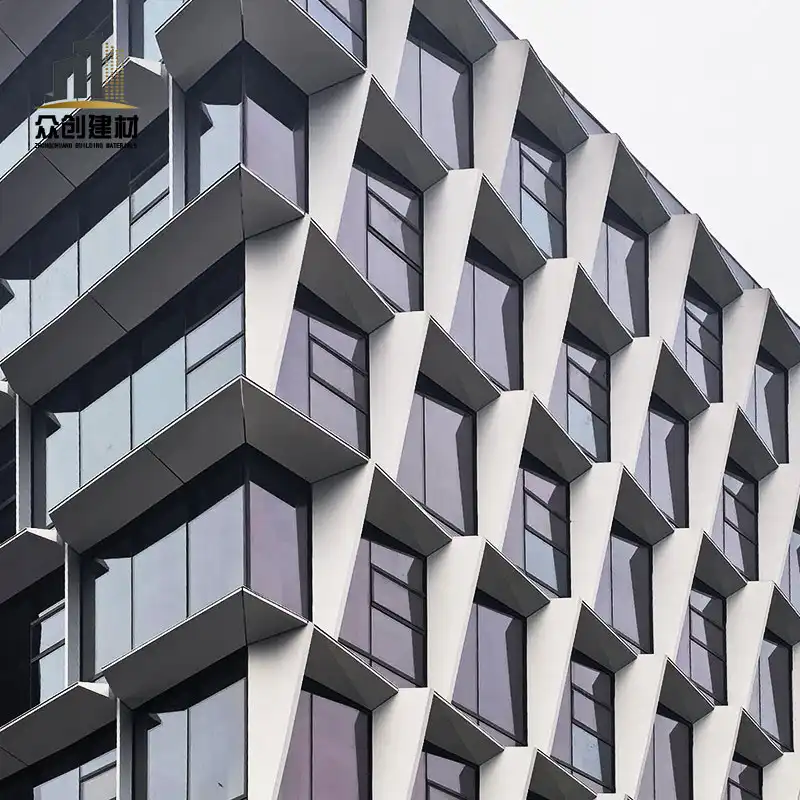
(1)_1780970038980.webp)
Shaped Ceiling Aluminum Panel Selection Guide
Four Categories of 2026 Shaped Designs
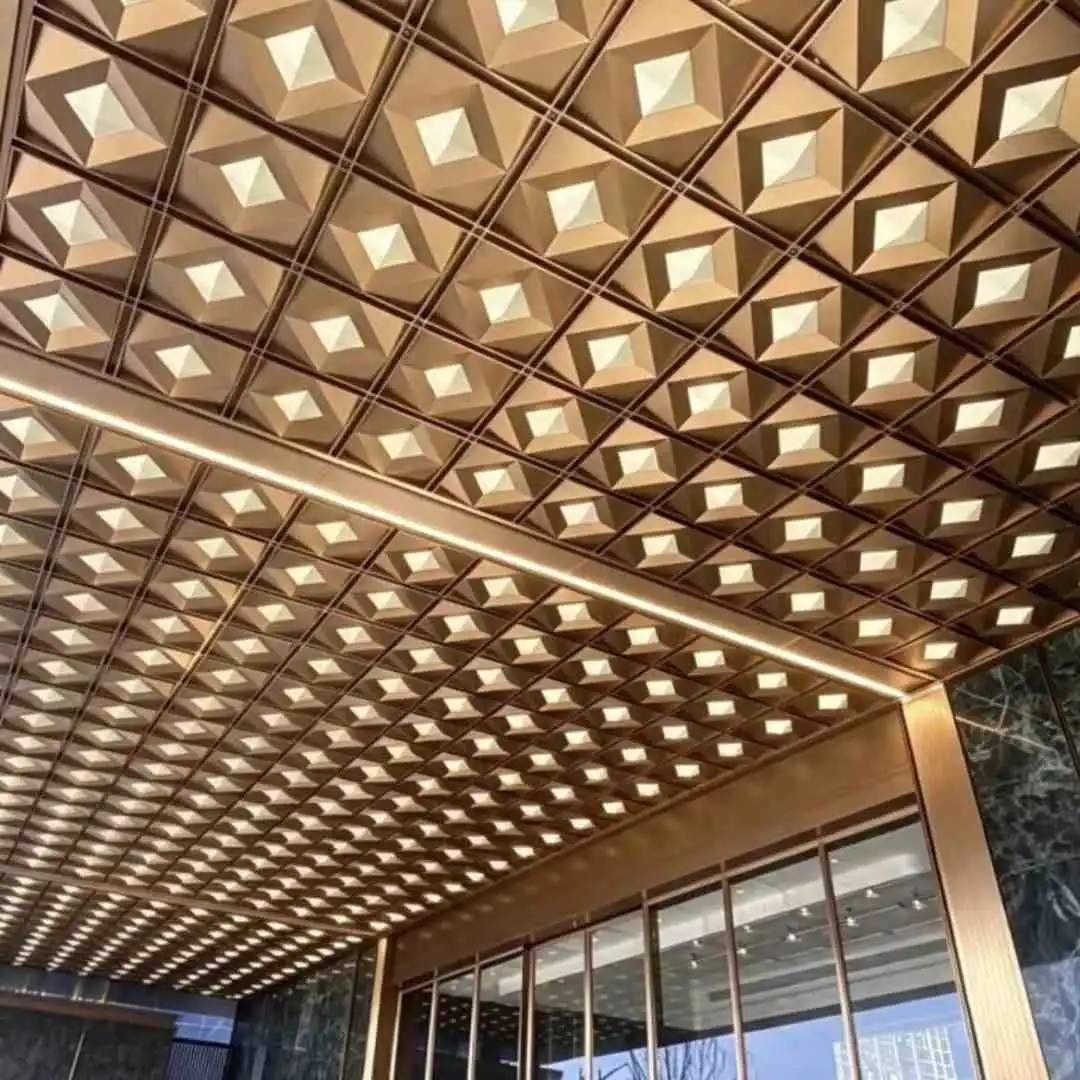
Understanding shape categories is the first step in selection. 2026 shaped ceiling aluminum panels can be divided into four types by shaping process and design language:
|
Type |
Shape Feature |
Visual Feature |
Application |
|---|---|---|---|
|
Free-form curved |
Large-arc surfaces, streamlined |
Flowing and modern, futuristic |
Lobbies, atriums, airports |
|
Perforated light & shadow |
Perforated lattice, honeycomb mesh |
Light interplay, open breathing |
Showrooms, commercial spaces, corridors |
|
Wave |
Wavy, continuous surfaces |
Rhythmic flow, dynamic |
Commercial spaces, stadiums |
|
Minimal geometry |
Polygons, layered splicing |
Rational order, clear layering |
Office spaces, brand stores |
Shaped Aluminum vs. Plasterboard vs. Standard Panel
When designing ceiling shapes, designers typically weigh three options: shaped aluminum, plasterboard, and standard aluminum panel. Key differences:
|
Dimension |
Shaped Aluminum |
Plasterboard |
Standard Panel |
|---|---|---|---|
|
Shaping ability |
Strong (CNC any shape) |
Strong (field-built) |
Weak (mostly flat) |
|
Weight |
Light |
Heavy |
Light |
|
Durability |
20+ years |
Cracks in 5–8 years |
15+ years |
|
Installation time |
Short (factory pre-fab) |
Long (on-site plastering) |
Short |
|
Fire rating |
Class A |
Class B |
Class A |
|
Cost |
Medium-high |
Medium |
Low |

Three Points of Shape Design
The visual of shaped ceiling aluminum panel is determined by shape, perforation, and color scheme. Note the following during design:
-
Shape Determines Style: Curves create flow, geometry creates order, waves create dynamism — choose based on spatial positioning.
-
Perforation Considers Acoustics: Lattice shapes with acoustic insulation improve acoustics, but choose perforation ratio and hole shape based on space needs.
-
Span Requires Load Consideration: Large-span shaped panels need reinforced grids and hangers to ensure stability.
Surface Coating Selection Guide
The coating of shaped ceiling panel determines spatial texture and service life. Three mainstream options:
|
Coating |
Warranty |
Best Environment |
Recommended For |
|---|---|---|---|
|
PVDF Fluorocarbon |
20 years |
Interior/exterior, coastal |
Lobbies, long-term use spaces |
|
Wood-Grain + UV |
15 years |
Interior, design-driven |
Clubs, hotels, residences |
|
Powder Coating |
10 years |
Interior, low sunlight |
Budget-sensitive projects |
Common Installation Issues & Solutions
Although shaped ceiling panel installation seems straightforward, the following issues are frequently overlooked:
-
Grid Levelness: Ceiling flatness depends on grid installation precision — calibrate grid level and spacing before installation.
-
Shape Splicing: Complex shaped panels need continuous splicing with dedicated connectors to ensure complete, smooth shapes.
-
Thermal Expansion: For spaces with large temperature differences, leave expansion gaps at panel joints filled with color-matched weatherproof sealant.
-
Service Openings: Reserve positions for lighting, air vents, and access hatches in advance to avoid post-cutting that damages the coating.
-
Color Consistency: Order all panels for one space in a single batch to avoid batch-to-batch color variation.
How to Evaluate a Supplier
When selecting a shaped ceiling aluminum panel supplier, consider the following:
-
CNC Fabrication Capability: Check whether the supplier has CNC bending machines, perforation presses, and welding processes, and whether shape precision is guaranteed.
-
Detailed Design Capability: A professional supplier should produce shape development and installation drawings from your ceiling renderings.
-
Complete Certifications: AAMA 2605, CE, and ISO 9001 are basic guarantees of quality.
-
Export Experience: Factories with export experience are more familiar with packaging, customs, and international logistics requirements.