_1762768699969.webp)

_1782530506402.webp)
(1)_1783045836766.webp)
_1786157639392.webp)
(1)_1780970038980.webp)
Why Custom Metal Ceilings Are Replacing Traditional Materials
Introduction
Ceilings are no longer just the "fifth wall" that hides MEP services — they have become a core design element that defines the atmosphere, acoustics and functionality of modern spaces. Driven by demand for customization, durability and sustainable design, custom aluminum ceiling panels have become the fastest growing ceiling category worldwide, with market demand growing 95% year over year in the first half of 2026.
This guide covers the latest global aluminum ceiling design trends, how to select the right system for different spaces, a full comparison with traditional ceiling materials, common selection mistakes to avoid, and the future of integrated smart ceiling systems.

2026 Global Aluminum Ceiling Design Trends
Five key trends are shaping the aluminum ceiling market in 2026:
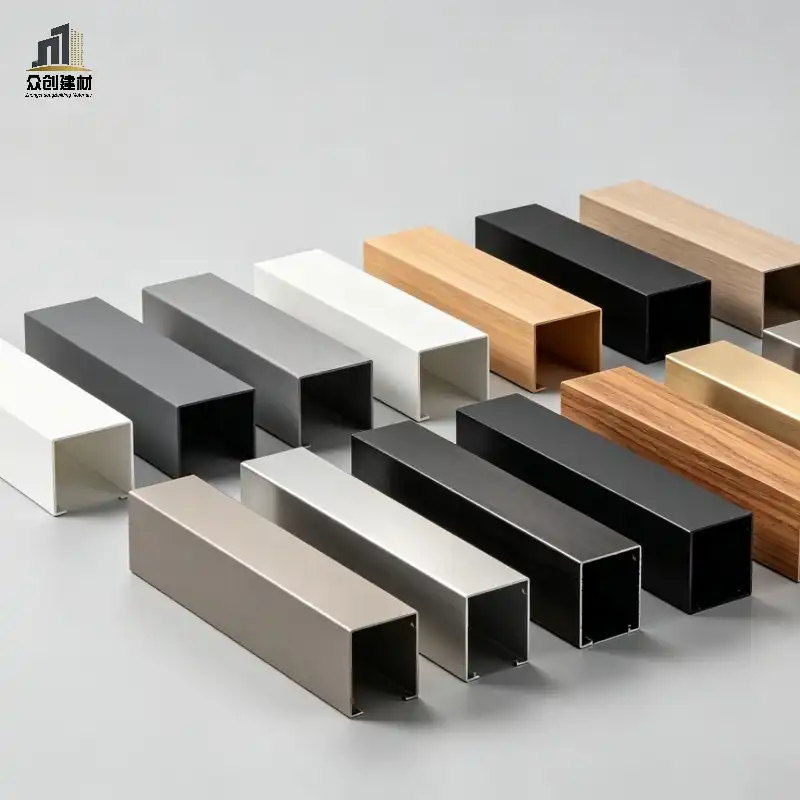
- Full customization is the new standard: Designers no longer accept one-size-fits-all 600×600mm panels. Custom sizes from 300×300mm up to 1200×2400mm, custom colors, patterns and perforations are now expected, even for mid-range projects.
- Integrated all-in-one systems: Ceilings are increasingly designed as complete systems with pre-integrated LED lighting, air vents, sprinklers, speakers and sensors, eliminating visible cut edges and on-site modification.
- Natural texture demand: Wood grain, stone grain and concrete effect aluminum ceilings are growing 120% year over year, as designers seek the warm look of natural materials with the durability of metal.
- Acoustic performance as standard: 68% of new commercial projects now specify perforated acoustic aluminum ceilings, as open plan offices and public spaces prioritize noise control and speech intelligibility.
- Sustainability requirements: 100% recyclable aluminum ceilings with zero VOC emissions are now specified for 72% of LEED-targeted projects, replacing non-recyclable mineral fiber and PVC.
How to Choose the Right Aluminum Ceiling for Different Spaces
Commercial Offices & Co-working Spaces
- Recommended: 600×1200mm perforated acoustic panels, white or light grey, NRC 0.7-0.9
- Why: Open offices need noise reduction to improve focus and speech intelligibility. Larger 600×1200mm panels reduce visible grid lines for a cleaner look, and integrated LED panels provide uniform glare-free lighting.
- Avoid: Small 300×300mm panels in large open areas, which create a busy, fragmented look.
Retail, Restaurants & Hospitality
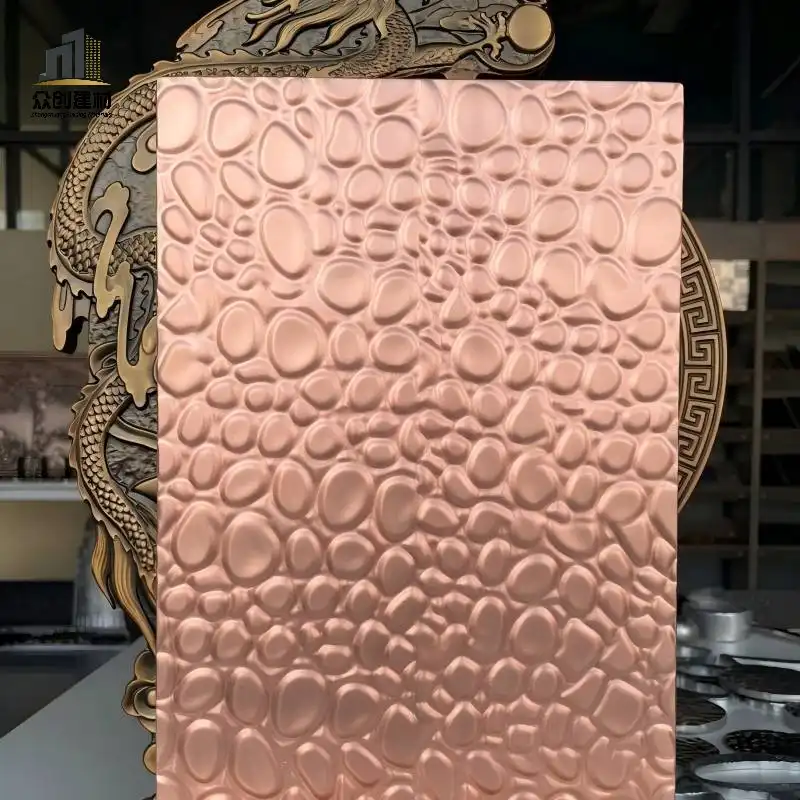
- Recommended: Custom size flat or 3D textured panels, brand colors or wood grain finishes
- Why: Retail and dining spaces use ceilings to reinforce brand identity and create atmosphere. Custom colors, patterns and 3D textures create memorable spaces, while stain-resistant, easy-clean surfaces stand up to high traffic and food service use.
- Avoid: Standard white office panels in high-end retail, which look generic and fail to support brand experience.
Hotels, Resorts & Private Clubs
- Recommended: Wood grain or 3D textured panels, concealed grid system for seamless look
- Why: Hospitality spaces need a premium, residential feel. Wood grain and warm tones create intimacy, while concealed grids deliver a seamless, high-end finish. Moisture-resistant panels are essential for bathrooms and pool areas.
- Avoid: Exposed T-bar grids in guest rooms and lobbies, which look institutional.
Healthcare, Education & Public Buildings
- Recommended: 600×600mm flat panels with anti-bacterial powder coating, A2 fire rated
- Why: Public buildings require strict fire safety, hygiene and low maintenance. Anti-bacterial, mold-resistant, easy-clean surfaces meet healthcare standards, while A2 fire rating satisfies all global building codes.
- Avoid: Porous materials like mineral fiber, which absorb moisture, grow bacteria and are hard to clean.
Transportation & Infrastructure
- Recommended: 600×1200mm thick gauge (0.8-1.0mm) perforated panels, PVDF coating
- Why: Airports, subway stations and parking garages need high impact resistance, fire safety and ultra-low maintenance. Thicker panels resist damage from luggage and equipment, while PVDF coating resists dirt, UV and pollutants.
- Avoid: Thin 0.5mm panels, which dent easily in high-traffic transit spaces.
High-End Residential
- Recommended: 300×300mm or custom size panels, wood grain, matte white or metallic finishes
- Why: Residential kitchens, bathrooms and balconies need waterproof, mold-resistant ceilings that look premium. Aluminum outperforms gypsum and PVC in wet areas, with a modern, clean appearance.
- Avoid: Large commercial-style panels in small residential rooms, which look out of proportion.
Aluminum vs Traditional Ceiling Materials: Full Comparison
| Feature | Aluminum Ceiling | Gypsum Board | Mineral Fiber | PVC Ceiling |
|---|---|---|---|---|
| Fire Rating | A2 Non-Combustible | B1 Combustible | B/B2 Combustible | B2 Combustible |
| Moisture Resistance | 100% Waterproof, mold proof | Warps/molds in wet areas | Absorbs moisture, sags | Water resistant but brittle |
| Service Life | 20+ years | 5-10 years (cracks/sags) | 3-7 years (stains/sags) | 5-8 years (yellows/brittles) |
| Maintenance | Zero, wipe clean | Needs repainting | Cannot be cleaned, replace when stained | Wipe clean but yellows over time |
| Customization | Any size, color, pattern, 3D shape | Limited, on-site fabrication | Limited standard sizes/colors | Limited standard sizes/colors |
| Weight | 2-4kg/m² | 8-12kg/m² | 3-5kg/m² | 2-3kg/m² |
| Recyclability | 100% Recyclable | Not recyclable | Not recyclable | Not recyclable |
| Total Lifecycle Cost | Lowest | Medium | Highest (frequent replacement) | Medium |
Common Aluminum Ceiling Selection Mistakes & How to Avoid Them
- Choosing panels that are too thin: 0.5mm panels may look fine on paper but dent easily and sag over time. Use minimum 0.6mm for commercial spaces, 0.8-1.0mm for high-traffic public areas.
- Using interior coating in wet or outdoor areas: Standard polyester powder coating will fade and chalk in high-UV or wet environments. Always use PVDF fluorocarbon coating for exterior or high-moisture areas.
- Ignoring acoustic needs: Flat aluminum panels reflect sound, which can make open offices and restaurants noisy and echoey. Always specify perforated panels with acoustic backing for spaces where noise control matters.
- Wrong installation system for the design: Exposed T-bar grids are cost-effective but look institutional. Use concealed grid systems for high-end spaces where a seamless look is required.
- Mismatched panel size and space proportion: Large 1200×2400mm panels look out of place in small rooms, while 300×300mm panels look busy in large open areas. Match panel size to room scale.
- Forgetting integration planning: Ordering panels without planning for lights, vents and sprinklers leads to messy on-site cutting. Always provide MEP layouts to the manufacturer for pre-cut openings.
Future Outlook: Smart & Integrated Ceiling Systems
The next generation of aluminum ceilings will be fully integrated smart systems:
- Built-in sensors for occupancy, temperature, air quality and lighting control
- Integrated air purification and ventilation within the ceiling plenum
- Tunable white and circadian rhythm lighting for office and healthcare spaces
- BIM-integrated design and manufacturing, with panels produced directly from Revit models
- Carbon-negative aluminum production using 100% renewable energy
These systems will transform ceilings from passive surfaces into active, functional components of smart, sustainable buildings.
Frequently Asked Questions
Q: What is the most popular standard size for aluminum ceilings?
A: 600×600mm and 600×1200mm are the most widely used, accounting for over 70% of commercial projects. Custom sizes are available for any project requirement.
Q: Are aluminum ceilings more expensive than gypsum?
A: Upfront cost is 10-20% higher than basic gypsum, but with 20+ year life and zero maintenance, total lifecycle cost is 30-40% lower. For wet areas or projects requiring custom design, aluminum is often cost-comparable or cheaper.
Q: Can aluminum ceilings be used outdoors?
A: Yes, with PVDF fluorocarbon coating. Exterior-grade aluminum ceilings are used for canopies, eaves and outdoor covered areas, with 20-year fade warranty.
Q: Is installation difficult? Can local contractors install?
A: No. Standard T-bar grid systems are simple to install for any commercial ceiling contractor. Manufacturers provide layout drawings, installation instructions and technical support.
Q: How long do aluminum ceilings last?
A: Interior polyester powder coated panels last 15+ years. Exterior PVDF coated panels last 20+ years without fading, chalking or corrosion.