_1762768699969.webp)

_1782530506402.webp)
Application Advantages and Design Key Points of Groove-Shaped Aluminum Baffles in Curtain Wall Systems
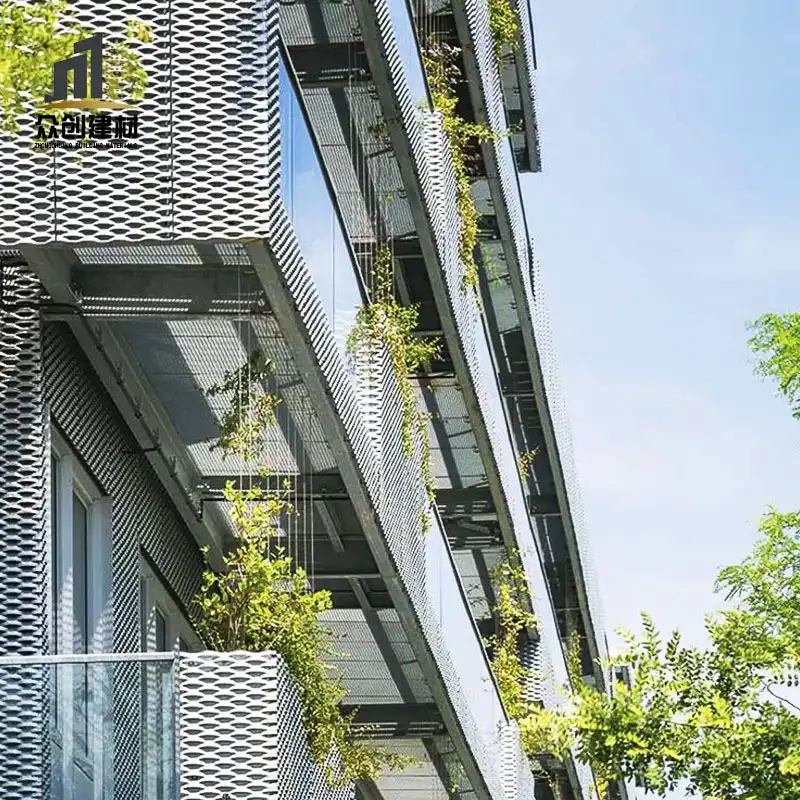
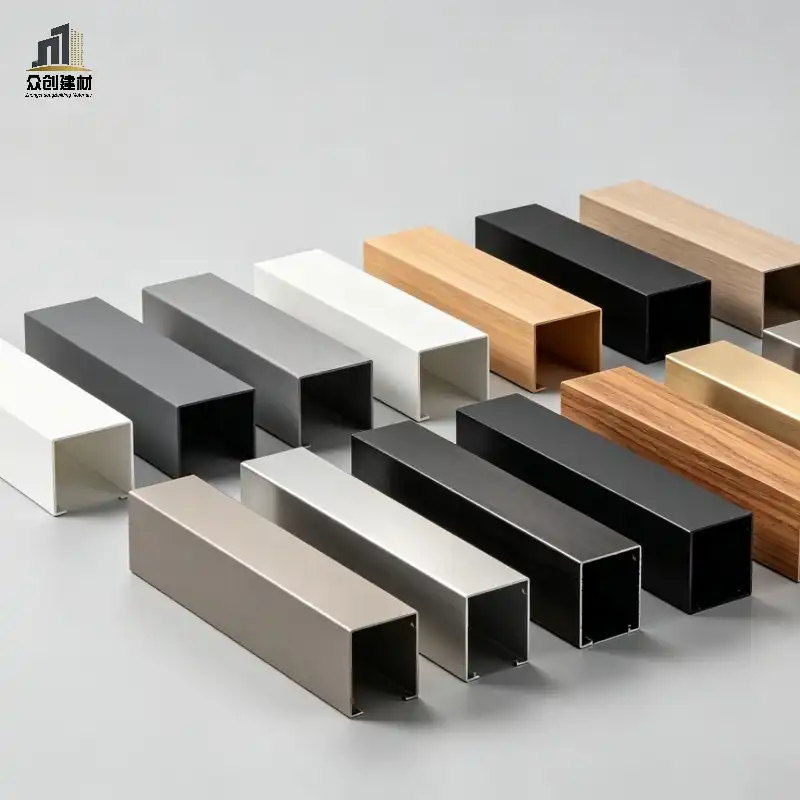
Groove-shaped aluminum baffle curtain wall is a kind of open building curtain wall system that has developed rapidly in recent years. Compared with traditional glass curtain walls and aluminum veneer curtain walls, groove-shaped aluminum baffle curtain walls have unique visual effects and excellent performance, and have been increasingly used in commercial buildings, office buildings and cultural buildings. The cross-section of groove-shaped aluminum baffle has C-shaped installation grooves, with high structural strength and convenient installation, which is especially suitable for use as curtain wall decorative material.
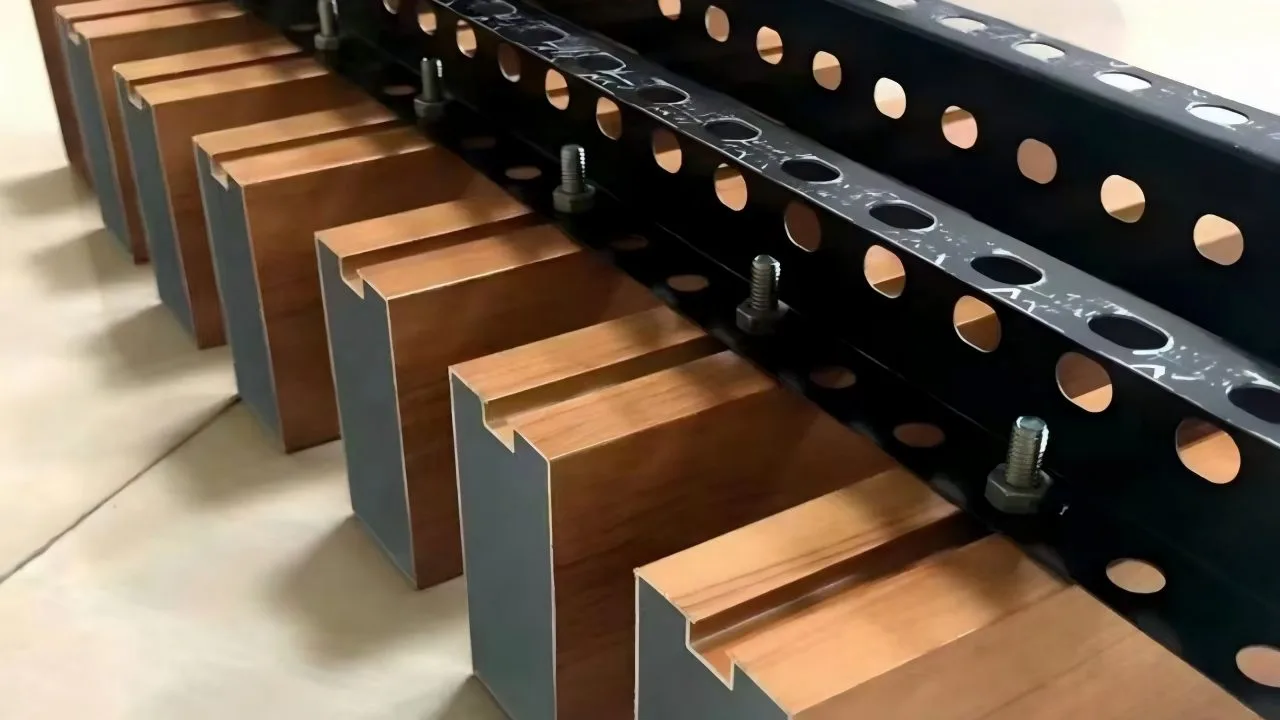
Channel-type aluminum square tubes feature simple and convenient installation.
The core advantages of groove-shaped aluminum baffle curtain walls are reflected in many aspects. First is the visual effect advantage. Groove-shaped aluminum baffles are arranged vertically or horizontally to form strong line sense and rhythm sense. Different combinations of width, depth and spacing can realize ever-changing facade effects. It is unified as a whole from a distance, with rich layers from a close view. The light and shadow effect changes with the sun angle, making the building facade dynamic. Second is the performance advantage. The open structure allows the building to breathe freely, effectively reducing the surface temperature of the curtain wall and reducing the heat island effect. According to tests, the air temperature behind the aluminum baffle curtain wall in summer is 5-8℃ lower than that of aluminum veneer curtain wall, which can effectively reduce building air conditioning energy consumption; at the same time, aluminum baffle curtain wall has good sunshade effect, and the spacing and depth of baffles can be designed according to the local solar altitude angle to achieve the best sunshade effect and reduce solar radiation heat gain. Third is the economic advantage. Groove-shaped aluminum baffle curtain wall is light in weight, only 8-15kg per square meter, far lower than stone curtain wall and aluminum veneer curtain wall, with low load requirements on the main structure, which can greatly reduce the main structure cost; at the same time, the installation speed is fast, the construction period is short, and the comprehensive cost is 20%-30% lower than aluminum veneer curtain wall. Fourth is the maintenance advantage. Aluminum baffle curtain wall has good ventilation, is not easy to accumulate dust, and has strong self-cleaning ability. Fluorocarbon surface treated aluminum baffles do not need cleaning for 10 years, with extremely low maintenance cost. Damaged single baffle can be replaced separately without affecting the overall facade.
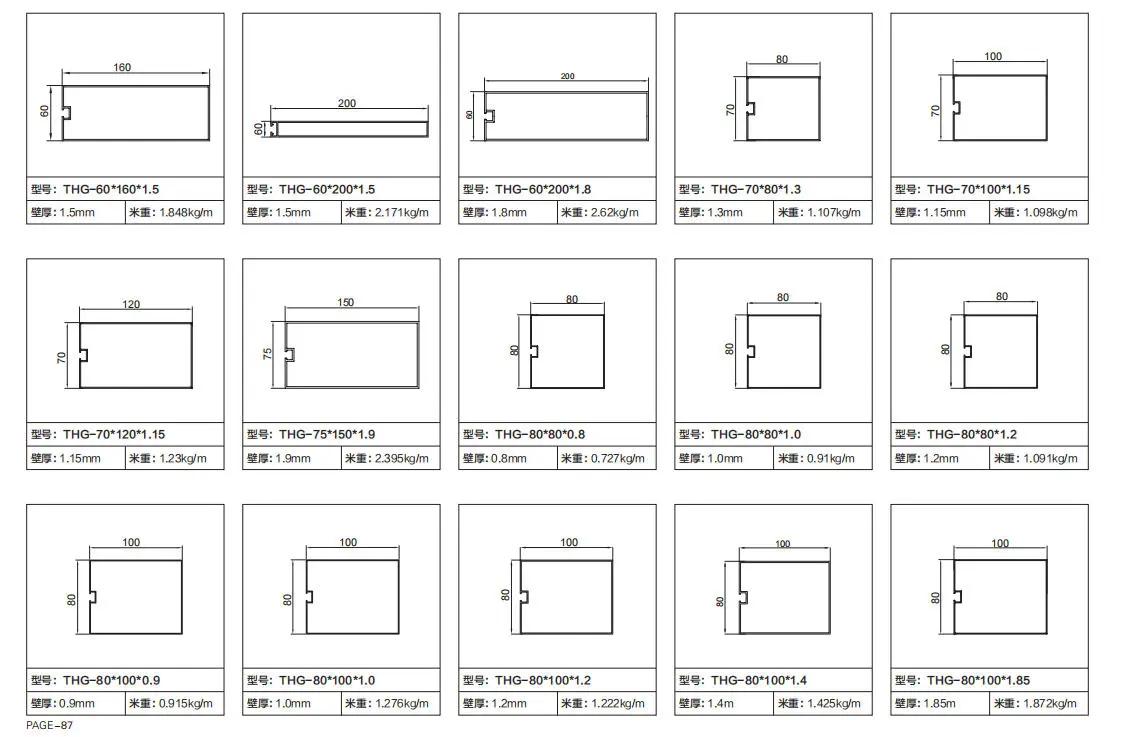
Sections of Channel-type Aluminum Square Tubes in Various Specifications
The structural design of groove-shaped aluminum baffle curtain wall is the core to ensure safety. The curtain wall system usually adopts the structural form of horizontal hidden and vertical exposed. The columns adopt 6063-T5 aluminum alloy columns or hot-dip galvanized steel columns, and the column spacing is calculated and determined according to building floor height and wind load, usually 1200mm-1500mm; the beams adopt special aluminum alloy beams, connected to the columns through stainless steel bolts, and the beam spacing is determined according to the length of aluminum baffles, usually not exceeding 2000mm. Groove-shaped aluminum baffles are connected to the beams through stainless steel spring clips or stainless steel bolts. Each baffle is provided with at least two connection points, and the connection points adopt floating connection structure, allowing the baffle to expand and contract along the length direction to avoid deformation caused by temperature stress. Wind load calculation is the key point of groove-shaped aluminum baffle curtain wall design. It is necessary to calculate the standard value of wind load according to the basic wind pressure, ground roughness, building height and shape coefficient of the project location, check the strength and deflection of baffles, the baffle deflection does not exceed L/180, and the bearing capacity of connection nodes must meet the strength requirements under wind load. For coastal areas and super high-rise buildings, wind tunnel tests are also required to verify the wind resistance performance of the curtain wall system.
Waterproof design is the key to groove-shaped aluminum baffle curtain wall. Groove-shaped aluminum baffle curtain wall belongs to open curtain wall, rainwater will enter the interior of the curtain wall through the gaps between baffles, so two waterproof layers must be set. The first waterproof layer is the aluminum baffle itself. By rationally designing the cross-section shape and overlapping method of the baffles, most of the rainwater is discharged along the baffle surface, minimizing the amount of rainwater entering the interior; the second waterproof layer is the waterproof back plate set behind the baffles. The waterproof back plate usually adopts 1.5mm thick fluorocarbon aluminum veneer or galvanized steel plate, and weather-resistant sealant is used between plates to form a complete waterproof layer. A 50-100mm ventilation layer is reserved between the back plate and the main structure. Rainwater entering the back plate flows along the back plate to the drainage gutter of each floor and is discharged in an organized manner through drainage holes. The setting of the ventilation layer can effectively take away the moisture between the back plate and the wall, avoid the insulation layer from getting damp, and at the same time reduce the temperature of the curtain wall in summer and reduce heat transfer.
In terms of thermal design, the insulation layer of groove-shaped aluminum baffle curtain wall is set between the waterproof back plate and the main structure. The insulation material usually adopts Class A non-combustible rock wool board, and the thickness is calculated and determined according to building energy-saving requirements, usually 50mm-100mm. Due to the existence of the ventilation layer, the thermal insulation performance of aluminum baffle curtain wall is better than closed aluminum veneer curtain wall. In summer, solar radiation is blocked by baffles, most of the heat is taken away by the air in the ventilation layer, and the heat transferred to the room is greatly reduced; in winter, the insulation layer effectively prevents indoor heat from transferring outward, with significant energy-saving effect. For cold areas, a vapor barrier can also be set behind the waterproof back plate to prevent indoor water vapor from penetrating into the insulation layer and causing condensation in winter.
In terms of node design, several key nodes need to be focused on: first, corner nodes. Aluminum baffles at building corners usually adopt 45-degree miter joints or special corner profiles to ensure straight lines at corners and uniform gaps; second, edge closing nodes. Edge closing at the top, bottom, window sides, entrances and other positions of the curtain wall should adopt special edge closing profiles to ensure beautiful closing and good waterproof treatment at the same time; third, deformation joint nodes. Special deformation joint cover plates should be set at building deformation joint positions to allow building deformation while maintaining facade beauty; fourth, lightning protection nodes. Aluminum baffle curtain walls should be reliably connected with the lightning protection system of the main structure to form a complete lightning protection system. The setting of air terminals, down conductors and grounding devices must meet the requirements of lightning protection specifications.
In terms of material selection, the thickness of groove-shaped aluminum baffles for curtain walls is not less than 1.5mm. When the baffle height exceeds 200mm or the building height exceeds 50 meters, the thickness is not less than 2.0mm. The material is 3003-H24 or 5005-H24 aluminum alloy, and the surface treatment adopts three-coat two-bake fluorocarbon spraying, complying with AAMA 2605 standard. All connecting bolts and pendants are made of 304 stainless steel to avoid electrochemical corrosion caused by contact between different metals. The sealant adopts neutral weather-resistant silicone sealant, which is compatible with contact materials to avoid polluting the surface of aluminum baffles.