_1762768699969.webp)

_1782530506402.webp)
Comparison of Fluorocarbon Coating and Powder Coating Processes for Aluminum Ceilings
Surface treatment is critical in determining the service life, decorative appearance and environmental adaptability of aluminum ceilings. Among available surface‑treatment technologies, fluorocarbon coating and powder coating are the two most widely adopted mainstream options. Many buyers struggle to distinguish between them and establish appropriate selection criteria during procurement. This article provides a multi‑dimensional, in‑depth comparative analysis of fluorocarbon and powder coatings from the perspectives of chemical composition, process mechanism, performance metrics, applicable scenarios and cost, to help readers make informed decisions tailored to specific project requirements.
Fundamental compositional differences exist between fluorocarbon and powder coatings. The primary component of fluorocarbon (PVDF) coating is polyvinylidene‑fluoride resin, a fluorine‑containing polymer. The F‑C bond within its molecular structure features an extremely high bond energy of 485 kJ/mol — one of the highest among known chemical bonds — which delivers outstanding weather resistance, corrosion resistance and chemical stability. High‑quality fluorocarbon coatings normally contain no less than 70 % PVDF resin; premium grades can exceed 80 %. The remaining constituents include metallic pigments (aluminum powder, copper powder, etc.), ceramic pigments and minor additives.

Powder coatings are mainly based on polyester or polyurethane resin, compounded with pigments, fillers, curing agents, levelling agents and other additives to form dry powder material. Polyester powder coatings offer good decorative effects and mechanical properties, yet they contain no fluorine in their resin structure. Consequently, their weather resistance and corrosion resistance are substantially inferior to those of fluorocarbon coatings.
In terms of process principles and workflow, the two technologies share certain similarities while retaining key distinctions. Powder coating uses electrostatic spraying: negatively‑charged powder particles are attracted onto the grounded aluminum substrate by an electrostatic spray gun. The workpiece is then transferred to a curing oven at 180‑200 °C and baked for 15‑20 minutes. The powder melts, levels out and cross‑links to form a uniform, compact coating. Powder coating is typically a single‑coat system (a primer may be applied in some cases), with a dry‑film thickness of 60‑80 μm.
Fluorocarbon coating generally adopts a three‑coat system: primer + topcoat + clear varnish. First, an epoxy or polyester primer is sprayed to boost adhesion and anti‑corrosion performance. Next, the fluorocarbon topcoat is applied to deliver colour and weather protection. Finally, a transparent fluorocarbon varnish is sprayed to enhance gloss, outdoor durability and scratch resistance. Each layer requires intermediate baking and curing, making the overall procedure far more complex than powder coating. Total dry‑film thickness for fluorocarbon systems usually ranges from 30‑50 μm (primer: 5‑10 μm; topcoat: 20‑25 μm; varnish:10‑15 μm). Even though its total film thickness is lower than powder coating, fluorocarbon resin’s superior intrinsic properties provide far better substrate protection.
In performance testing, fluorocarbon coating shows decisive advantages in weather resistance, corrosion resistance and chemical resistance. Weather resistance represents the largest performance gap between the two materials. After more than 10 years of outdoor exposure, fluorocarbon coatings retain acceptable appearance, with colour difference ΔE ≤ 5, chalking grade 0‑1 and gloss‑retention rate ≥ 80 % (gloss loss ≤ 20 %). By contrast, polyester powder coatings develop obvious gloss fading, discoloration and chalking after only 3‑5 years of outdoor exposure; degradation accelerates under strong‑UV conditions such as high‑altitude or tropical regions.
In artificial accelerated ageing tests, fluorocarbon coatings achieve over 1000 hours of QUV ageing, while conventional powder coatings typically reach only 300‑500 hours. For corrosion performance, fluorocarbon coatings pass 1000‑3000 hours of neutral salt‑spray testing without red‑rust formation; standard powder coatings usually achieve 300‑500 hours. In coastal salt‑fog zones and industrially polluted areas, fluorocarbon‑coated components can deliver a service life 3‑5 times longer than powder‑coated equivalents. Regarding chemical resistance, fluorocarbon coatings withstand attack by acids, alkalis, salts and organic solvents. Powder coatings exhibit relatively poor chemical resistance; prolonged contact with certain chemicals may cause coating softening, discoloration or delamination.
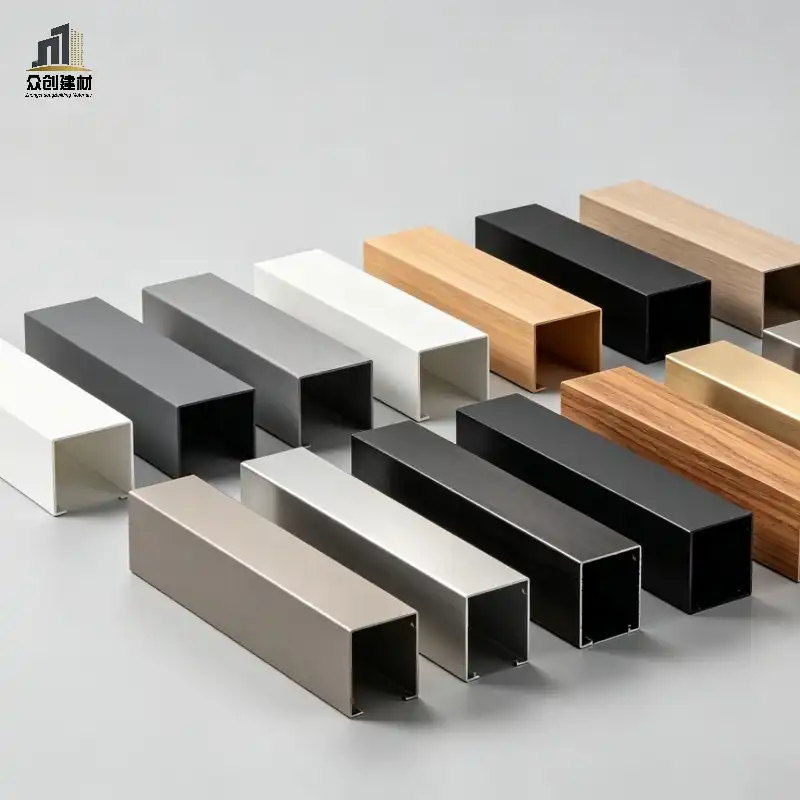
Each system has unique merits in decorative appearance and colour selection. Powder coating provides an extensive colour library, covering thousands of standard RAL and Pantone shades, plus custom‑formulated special colours upon request. It can produce matte, semi‑gloss and high‑gloss finishes, as well as special textures including sand grain, wrinkle and metallic sparkle via texture‑modifying additives. Powder coating features good colour consistency and low batch‑to‑batch variation, making it well‑suited for large‑scale projects requiring uniform colour.
Fluorocarbon coating also offers abundant colour options, with particularly impressive metallic and pearlescent effects. Metallic pigments (aluminum flake, copper powder, mica powder, etc.) encapsulated within transparent fluorocarbon resin create vivid three‑dimensional metallic lustre and colour‑travel effects that are difficult for powder coating to replicate. Fluorocarbon surfaces are smooth and fine‑textured, delivering a high‑end automotive‑paint‑style finish ideal for premium‑grade buildings. Nevertheless, controlling batch‑to‑batch colour difference is more challenging for fluorocarbon coatings — especially for metallic and light‑colour variants. Strict batch management is essential for large‑area projects to guarantee colour consistency.
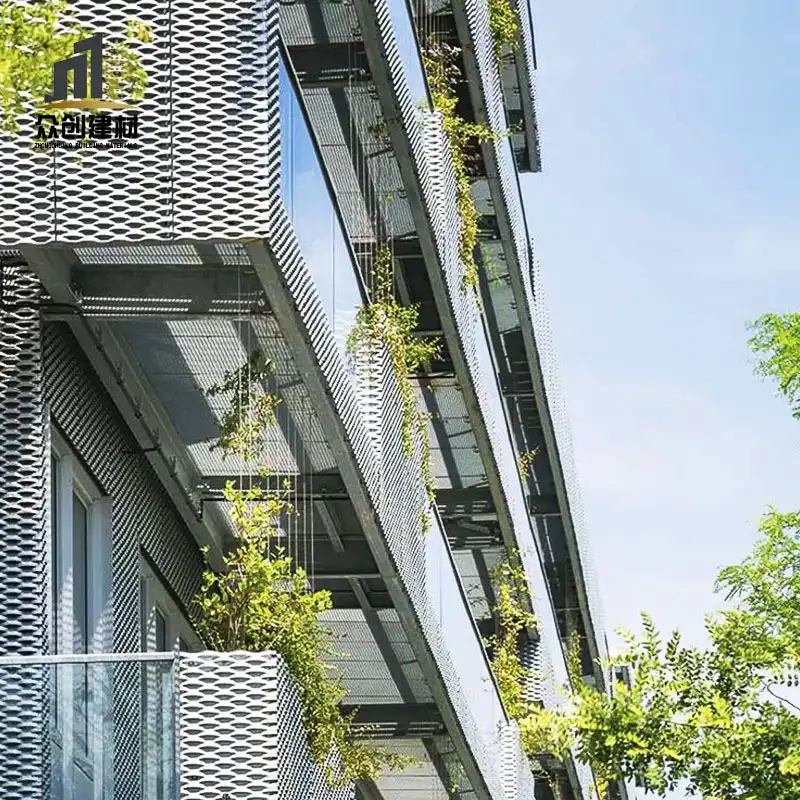
Application‑wise, selection depends primarily on service environment and project positioning. Preferred for fluorocarbon coating: building exterior facades (aluminum veneers, external sun‑shades, etc.), coastal‑zone buildings, structures in industrially polluted regions, high‑rise buildings, and public buildings demanding long‑term durability (airports, high‑speed‑rail stations, museums, etc.), as well as external façades and key interior zones of premium commercial buildings.
Preferred for powder coating: ceilings and wall panels for ordinary indoor environments (offices, shopping malls, schools, hospitals, etc.), indoor decorative components, cost‑sensitive large‑volume projects, and spaces with short‑service cycles or planned periodic refurbishment.
It is worth noting that fluorocarbon coating is still recommended even for indoor locations exposed to high humidity (swimming pools, bathrooms), heavy grease fumes (kitchens), or corrosive atmospheres (chemical plants, laboratories), to secure long‑term performance. For high‑end interior projects such as five‑star hotels, luxury retail outlets and Grade‑A office lobbies, owners often specify fluorocarbon coating to achieve superior surface texture and extended service life, despite indoor conditions.
From a cost perspective, fluorocarbon coating carries noticeably higher processing costs than powder coating. Taking standard 600 × 600 mm aluminum ceiling panels as an example, powder‑coating surface treatment generally costs RMB 15‑30 per square metre, whereas fluorocarbon coating ranges from RMB 60‑120 per square metre — roughly 3‑4 times higher. The cost gap originates from multiple factors: PVDF fluorocarbon resin raw‑material costs are approximately 5‑8 times those of polyester resin; the three‑coat fluorocarbon system consumes more raw material and labour‑hours; tighter process‑control requirements lead to relatively lower production yield; and colour‑matching plus batch‑quality management incur extra expenses for fluorocarbon products.
From a whole‑life‑cycle standpoint, despite higher upfront expenditure, fluorocarbon coating delivers 15‑20 years service life together with minimal maintenance. For outdoor and harsh‑environment applications, its annualised total cost may actually be lower than powder coating, which requires refurbishment every 5‑8 years. Accordingly, fluorocarbon coating frequently represents the more economical option for long‑service‑life key buildings.
In engineering procurement, verifying genuine coating quality is essential, as some unethical suppliers pass off powder coating as fluorocarbon to cut corners. Practical verification approaches include:
Review test reports: Request third‑party authoritative test certificates. Pay close attention to critical parameters including PVDF resin content (minimum ≥ 70 %), weather resistance and salt‑spray performance.
Dry‑film thickness measurement: Use a coating thickness gauge on‑site. Typical fluorocarbon total film thickness: 30‑50 μm; powder‑coating thickness: 60‑80 μm.
MEK solvent‑rub test: Rub the surface with cotton swabs saturated with methyl‑ethyl‑ketone (MEK) or acetone. Genuine fluorocarbon coating withstands more than 100 double rubs without obvious discoloration or coating removal. Ordinary powder coating will suffer coating degradation after only 20‑50 rubs.
Visual inspection: Fluorocarbon surfaces feel smoother and finer; metallic colours show pronounced colour‑travel effects. Powder‑coated metallic finishes tend to appear comparatively flat or dull.
These checks can effectively identify coating type and safeguard project quality.
General selection recommendations:
Specify fluorocarbon coating for all outdoor and harsh‑environment applications.
Select powder coating for ordinary indoor spaces for optimal cost‑performance.
Choose fluorocarbon coating for premium‑grade interiors or indoor locations requiring exceptional durability.
For semi‑outdoor projects with budget constraints yet moderate weather‑resistance requirements, super‑durable polyester powder coating may be considered (performance sits between standard polyester powder and fluorocarbon).
Whichever system is adopted, buyers should require full product specifications, test reports and formal quality guarantees from suppliers. Key parameters — coating type, resin content, dry‑film thickness and warranty period — must be clearly stipulated within contracts to ensure delivered products satisfy design requirements.