_1762768699969.webp)

_1782530506402.webp)
Hotel Canopy Aluminum Ceiling Design
As a vehicle pulls up to a hotel drop-off area, the canopy ceiling overhead is becoming the new battleground for brand competition. Over the past decade, hotel design focus has shifted from the lobby to the entrance — a space where guests spend only about 30 seconds, yet which shapes their very first judgment of the property's quality, aesthetic, and service. And aluminum ceiling design is proving to be the most expressive weapon in this "first impression war."
From international brands like Marriott and Hilton to boutique design hotels, an increasing number of projects are upgrading the canopy (or portico) underside from a plain flat ceiling to an artistic composition of curved surfaces, perforated patterns, and integrated lighting. This trend is driven by the convergence of three forces: aluminum fabrication technology, lighting innovation, and brand marketing strategy.
From "Flat Covering" to "The Fifth Elevation"
Traditional hotel canopy undersides were typically gypsum board painted white, serving a purely functional role. In recent luxury projects, however, the canopy ceiling has been elevated to the same design importance as the building facade — referred to in the industry as the building's "fifth elevation."
Three core reasons are driving this shift:
Social Media Amplification: The first shot guests take after getting out of the car is an upward selfie of the canopy ceiling. A design-forward ceiling naturally becomes shareable content on social platforms.
Brand Differentiation: Generic stone lobbies can no longer distinguish one brand from another. The canopy ceiling is becoming a low-cost, high-recognition vehicle for brand expression.
Nighttime Economy: Most guests arrive in the evening, and a richly lit canopy ceiling directly determines the nighttime arrival experience.

Three Design Trends Reshaping Canopy Ceilings
Based on 2024-2025 openings of luxury hotel projects, three clear trends are emerging in canopy aluminum ceiling design:
|
Trend |
Typical Approach |
Brand Profile |
Impact |
|---|---|---|---|
|
Brand Motif Perforation |
Logo or brand motif translated into perforation patterns with backlighting |
Luxury Collection, Aman-style boutique hotels |
Highly recognizable at night |
|
Micro-Curved Fluid Form |
Large-radius curved aluminum panels in continuous flowing arrangement |
W Hotels, IHG design-forward brands |
Highly photogenic |
|
Multi-Material Layering |
Aluminum ceiling combined with wood veneer, stretch film, LED screens |
Waldorf, Four Seasons and ultra-luxury brands |
Rich texture, strong premium positioning |
How Aluminum Enables Bolder Designs
The richness of canopy ceiling design would not be possible without breakthroughs in aluminum fabrication. Compared with traditional materials, aluminum panels unleash designer imagination in three dimensions:
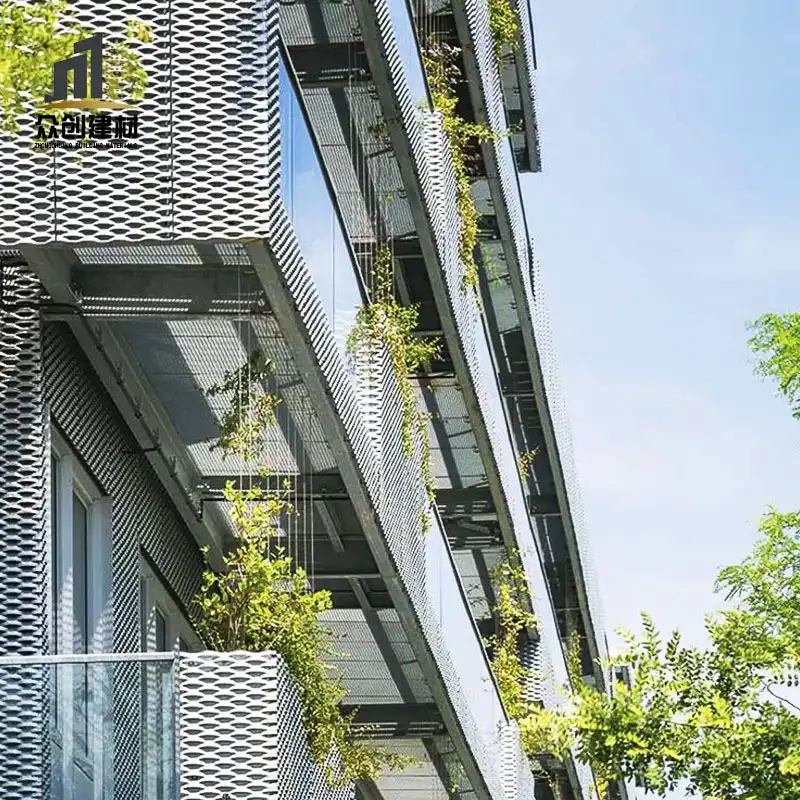
Double-Curvature Forming: Through CNC roll-forming and stretch bending, aluminum panels can achieve continuous curves with radii as tight as 300mm, perfectly matching fluid architectural languages.
Precision Perforation: Laser perforation accuracy reaches ±0.5mm, with hole diameters freely combined from Ø1.0mm to Ø20mm. Complex brand motifs are no longer limited by manufacturing constraints.
Integrated Prefabrication: Light channels, electrical cutouts, and HVAC openings can all be prefabricated in the factory, leaving only hanging installation on site — drastically reducing construction time.
At just 3–5 kg/m², aluminum panels are also structurally friendly for cantilevered canopies — a key reason architects now dare to design complex shapes over drop-off zones.

Lighting: Bringing the Canopy Ceiling to Life
If shape is the skeleton of a canopy ceiling, lighting is its soul. Modern hotel canopy lighting design has evolved from simple "illumination" to "narrative":
Indirect Grazing Light: Light sources hidden at the canopy edge, casting upward diffusion to create a floating, ethereal effect.
Backlit Perforation: Brand motifs glow softly from behind, creating a unique visual memory at night.
Linear Light Strip Rhythm: LED strips along baffles or panel joints guide the eye toward the hotel entrance, reinforcing arrival ceremony.
Project feedback indicates that lighting accounts for 15%–25% of total canopy ceiling cost, yet contributes over 50% of the first-impression value — making it one of the highest-return design investments.
Project Lessons from the Field
Looking at representative projects delivered over the past two years, canopy aluminum ceiling design has formed clear market segments:
Ultra-luxury Resorts: Tend toward double-curved panels with wood-grain transfer printing, emphasizing natural materials that blend with the resort environment.
Urban Business Hotels: Tend toward flat PVDF-coated panels with linear light channels, prioritizing clean aesthetics and budget control.
Boutique Design Hotels: Tend toward artistic perforation with brand logos, emphasizing individuality and social-media buzz.
Across all segments, aluminum has become the de facto standard material for canopy ceilings, thanks to its design freedom and weather resistance.
Looking Ahead: Smart & Sustainable
Looking forward, hotel canopy aluminum ceiling design is extending in two directions:
Smart Sensor Lighting: Integrated with vehicle recognition, canopy lighting can automatically adjust brightness and color temperature based on weather, time of day, or VIP arrival — delivering a personalized arrival experience.
Sustainable Materials: Recycled aluminum content is rising. Some brand hotels now require canopy aluminum to contain 75%+ recycled material, aligning with green building certifications.
The canopy ceiling — once an overlooked "fifth elevation" — is becoming one of the most worthwhile detail investments in hotel design. For hotel owners, a well-designed aluminum canopy ceiling may be the highest-return marketing investment available.