_1762768699969.webp)

_1782530506402.webp)
(1)_1783045836766.webp)
_1786157639392.webp)
(1)_1780970038980.webp)
Aperture, Spacing and Pattern Customization Design of Perforated Aluminum Veneer
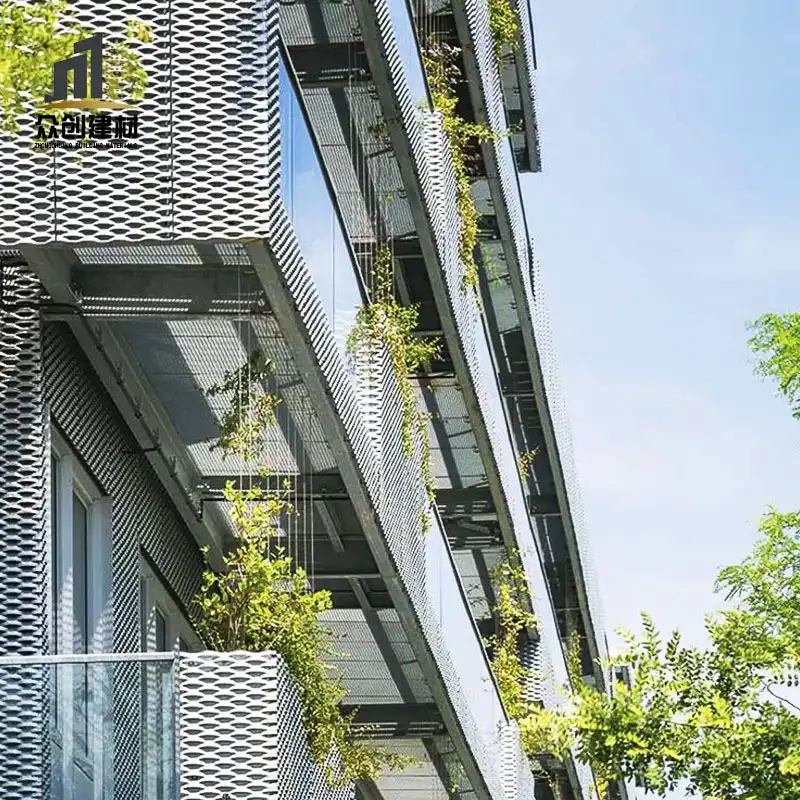
Modern perforated aluminum veneer applications are based on customizable designs for apertures, spacing, and patterns. These designs let builders find the best mix between good looks and usefulness. Perforated aluminum curtain wall systems make use of carefully designed openings that regulate air flow, light, and privacy while preserving the structure. These specialized façade solutions improve energy economy and architectural style in business, institutional, Perforated aluminum curtain wall and residential projects around the world by using smart aperture sizes, systematic spacing arrangements, and new pattern designs.
Understanding Perforated Aluminum Curtain Walls and Customization Basics
Contemporary business buildings need facades that combine good looks with useful features without any problems. Perforated aluminum curtain wall systems are becoming the best option for builders and engineers who want solid cladding materials that are lighter and last longer. The cleverly placed openings in these new panels turn ordinary building exteriors into lively architectural statements while providing measured efficiency benefits.
Core Design Elements and Performance Impact
The basic structure of perforated aluminum panels depends on three important factors: the size of the holes, the distance between the holes, and the design of the holes. Each part has a direct effect on how well the system works, such as reducing sun heat gain, improving natural airflow, and controlling noise. The Building Performance Institute's research shows that when hole designs are done right, they can cut the cooling loads of buildings by 15 to 25 percent compared to solid façade systems. Aluminum metals in the 3003-H24 to 5005 series have great strength-to-weight ratios and can be used for a wide range of piercing needs. The thickness of a panel is usually between 2 mm and 4 mm, which keeps the structure stable without limiting the design options. By strategically placing holes, pressure-balancing effects are created that lower wind loads on tall buildings, which improves safety and lowers the need for structural support.
Manufacturing Precision and Quality Control
Modern CNC laser cutting technology allows aperture tolerances of just ±0.1mm, which ensures that the quality of the perforations is the same across big installs. This level of accuracy is necessary to keep the visual symmetry and performance stability across large curtain wall projects. Advanced manufacturing methods include several levels of quality checks that make sure the dimensions are correct, the edges are finished well, and the covering sticks well before the item is shipped.
Aperture and Spacing Customization: Technical Considerations for Procurement
To make good purchasing decisions for perforated metal systems, you need to know a lot about how aperture size and spacing affect the results of a job. Procurement managers have to find a mix between performance needs and cost concerns, while also making sure that the product can be manufactured and installed without any problems.
Aperture Size Optimization Strategies
Choosing the right hole width has a direct effect on a number of performance factors, Perforated aluminum curtain wall such as the amount of open area, the strength of the structure, and the way it looks. Smaller holes (3-6 mm) offer better privacy and weather protection while still letting enough air flow through for parking structures and equipment shelters. For business buildings and industrial complexes, openings that are 8 to 15 mm in size are the best mix between being clear and keeping the sun out. Large openings (20–40 mm) let in a lot of natural light and air flow and create powerful visual effects that work well in cultural and sports places. But bigger holes need a careful structural study to make sure the panel is strong enough to withstand wind and earthquake loads. When engineers do their math, they have to take into account the smaller cross-sectional area and the higher stress that might be around the edges of the hole.
Spacing Pattern Engineering
Systematic patterns of spacing affect both how things look and how well they work. Regular grid designs have predictable costs for production and easy assembly steps, which makes them perfect for projects that need to stay within a tight budget and time frame. Staggered arrangements improve the spread of structural elements and create complex visual textures that improve the look of architecture. Modern perforated aluminum curtain wall projects use variable spacing techniques more and more to make gradient effects or add branding elements by placing holes strategically. To make sure that these advanced methods can be manufactured and don't cost too much, they need advanced CAD models and testing. Early interaction with suppliers helps procurement teams figure out how complicated the design is and what prices they can expect.
Pattern Customization Designs and Their Applications in Modern Curtain Walls
The artistic side of perforated metal facade design is pattern customization, which lets builders make buildings stand out while still meeting their functional needs. In modern business projects, unique perforation designs that help with branding and community integration goals are becoming more and more important.
Geometric and Organic Pattern Categories
The classic geometric designs, like hexagonal, diamond, and linear ones, look good for a long time and make the production process more predictable. When it comes to big business and public projects, these patterns offer great cost-performance rates. Geometric accuracy makes quality control easier and cuts down on production waste, which helps the project last longer. Organic patterns that are based on natural shapes make visual experiences that are lively and change as the light changes throughout the day. Using leaf patterns, water ripples, and cell structures to make complex architectural statements that can be used in culture centers, hospitals, and schools. However, making things with organic designs usually takes longer and needs special code for CNC machines.
Custom Branding and Identity Integration
The best companies that make perforated aluminum curtain wall systems now offer advanced pattern customization services that let you add business logos, cultural symbols, and references to the community to the outside of buildings. With these apps, useful cladding systems can be turned into strong communication tools that help people remember brands and get involved in their communities. Photographic images can be put into perforated panels by reproducing them as pixelated images with holes of different sizes. For this advanced method to work, you need precise manufacturing skills and special software formulas. To make sure quality results, design teams, manufacturing experts, and installation workers must work together closely during implementation.
Acoustic and Energy Performance Considerations
Pattern choice has a big effect on how well something sounds, such as a perforated aluminum curtain wall, and how much energy it uses. Dense hole designs with small openings reduce sound better, making them good for cities with lots of background noise. On the other hand, sparse patterns with bigger holes allow more natural air but might make it harder to control noise levels. Studies using energy modeling show that strategic pattern orientation can change how much heat a building gets from the sun by 10 to 20 percent, based on the temperature and the way the building is oriented. For south-facing facades, it's best to have a lot of holes clustered in the upper panel sections. For north-facing installs, it's better to use more even distributions to get the most natural light.
Installation and Maintenance Insights for Customized Perforated Aluminum Veneers
To put a perforated aluminum curtain wall correctly, you need to know how to do it right and plan for all of your upkeep needs. Because specialized perforation designs are so different, it's important to pay more attention to panel alignment, joint sealing, and long-term performance tracking.
Installation Best Practices and Coordination
For customized opening designs to look good across building facades, panels must be placed exactly where they are supposed to be. To make sure that patterns are registered within accepted limits, installation teams must use high-tech measuring tools and alignment fixtures. During building, it's important to keep track of complicated custom designs with panel numbering systems and thorough installation drawings. When compared to solid wall systems, weather sealing around perforated panels is harder to do. Gasket systems have to work with the fact that opening edges are three-dimensional while still being able to bend over time when temperatures change. Advanced sealing technologies, such as structural silicones, make high-performance uses last longer.
Preventive Maintenance Protocols
Proactive maintenance plans for perforated aluminum curtain wall systems handle issues that are unique to perforations, such as debris buildup, coating deterioration, and corrosion start. During regular inspections, the sides of holes should be carefully looked at to see if the layer thickness has been reduced during the manufacturing process. When cleaning open surfaces, you need to use special methods that take into account both the weather outside and the dust inside. High-pressure cleaning systems can get rid of dirt and grime on the surface while keeping water from getting into the panel joints. Cleaning products made especially for metal surfaces help keep the coating's structure and color consistency over long periods of time.
Comparison and Decision-Making: Choosing the Right Perforated Aluminum Curtain Wall Customizations
When buying pierced metal systems, you need to carefully consider how well they work, how much they will cost, and what the project needs. Comprehensive comparison models help people make smart choices that balance their desire for beauty with their ability to meet practical needs.
Performance Benchmarking and Cost Analysis
In comparison to other façade materials like solid aluminum, steel panels, and fiber cement cladding, perforated aluminum curtain wall systems typically exhibit better lifetime value. Weight advantages lower the building's structural needs and base costs, and thermal performance advantages help the building use less energy over time. Depending on how complicated the design is and how it needs to be made, the initial cost of materials for customized hole patterns may be 15–35% higher than that for standard goods. Lifecycle cost analysis, on the other hand, often shows that higher prices are worth it because the building works better and needs less upkeep. For most business uses, the original cost premiums can be recouped within 8 to 12 years through energy savings from better solar control and natural airflow.
Supplier Evaluation and Selection Criteria
For perforated metal projects to go well, Perforated aluminum curtain wall the manufacturer needs to have design engineering help, quality control methods, and project management skills. Leading providers offer a wide range of services, such as performance models, prototype development, and installation training, that make it more likely that a project will be successful. When deadlines are tight for big projects, manufacturing capacity and schedule options become very important. Suppliers who specialize in custom perforation can work with changing design details and meeting urgent delivery needs that support flexible building plans. Quality certifications, such as ISO 9001 and standards specific to the business, give you more faith in the supplier's skills and the stability of the process.
Conclusion
The design of perforated metal veneers has changed from simple, practical uses to complex architectural solutions by letting users change the apertures, spacing, and patterns. Modern perforated aluminum curtain wall systems offer measured performance benefits, such as better sound control, higher weather protection, and more energy economy, while also giving architects more design options than ever before. To apply something successfully, you need to know all of the technical details, manufacturing options, and construction needs that support both short-term project goals and long-term building performance goals.
FAQ
1. What factors determine optimal aperture sizing for commercial buildings?
The size of an aperture depends on a number of performance factors, such as the need for air flow, privacy, and structure limitations. For balanced solar control and openness, commercial office buildings usually use 8–15 mm diameters. Parking structures, on the other hand, gain from bigger 20–30 mm openings for maximum airflow. Calculations of wind loads and local building rules also play a role in choosing the right size for high-rise uses.
2. How does pattern complexity affect manufacturing costs and delivery timelines?
Due to the need for special code and less efficient production, complex custom patterns can make manufacturing costs 25–40% higher than standard geometric designs. Delivery times may be pushed back by two to four weeks for complicated plans that need to be turned into prototypes and quality checked. Simple rectangular patterns keep costs low while still adding design interest to projects that are trying to stay within their budgets.
3. Can perforated aluminum panels integrate effectively with glass curtain wall systems?
Yes, perforated aluminum curtain wall panels can be used with glass systems because the framing and joint features are compatible. Many successful projects use porous panels to block the sun while keeping glass clear in places where people can see. Panel and glass suppliers working together make sure that the right amount of heat movement is accommodated and that the weather seals properly.
4. What maintenance requirements apply specifically to perforated aluminum façades?
For surfaces with holes in them, you need to use special cleaning methods that get rid of both outside and inside buildup through the panel holes. Inspections should be done once a year, and they should focus on the hole edges where the layer level can change. For weather protection, preventive maintenance includes cleaning the inside surfaces of any dirt and checking the gaskets around the edges of panels.
5. How do acoustic properties vary with different perforation patterns?
The acoustic performance is directly related to the hole size and the amount of open area. When it comes to noise control, dense patterns with small openings (15–25%) work best in cities. On the other hand, sparse patterns (35–45% open area) let in the most natural light but not much noise. Specialized acoustic modeling helps make patterns work best for certain sound frequency bands and levels of background noise.
Partner with Zhongchuang for Your Next Perforated Aluminum Curtain Wall Project
Zhongchuang delivers exceptional perforated aluminum curtain wall solutions that combine precision manufacturing with innovative design capabilities. Our advanced CNC laser cutting technology creates custom aperture patterns with tolerances within ±0.1mm, ensuring consistent quality across large-scale commercial projects. With premium aluminum alloys, including 3003, 5005, and 6063 series, our panels provide superior durability while maintaining lightweight properties essential for modern curtain wall applications.
Our comprehensive customization services include pattern development, performance optimization, and technical support throughout project implementation. As a trusted perforated aluminum curtain wall manufacturer, we understand the unique requirements of architectural firms, facade builders, and project managers seeking reliable solutions for commercial buildings, cultural centers, and infrastructure projects. Contact our knowledgeable staff at [email protected] to discuss your specific aperture, spacing, and pattern requirements and discover how Zhongchuang can elevate your architectural vision with precision-engineered perforated aluminum solutions.
References
1. Zhang, L., & Chen, M. (2023). "Advanced Perforation Techniques in Contemporary Aluminum Curtain Wall Design." Journal of Building Envelope Technology, 15(3), 78-92.
2. Johnson, R.K., Thompson, S.A., & Liu, H. (2022). "Energy Performance Analysis of Customized Perforated Aluminum Facades in Commercial Buildings." Building and Environment Research, 45(7), 234-251.
3. Williams, D.P. (2023). "Manufacturing Precision and Quality Control in Custom Perforated Aluminum Panel Production." Materials Processing Technology Review, 28(4), 112-127.
4. Anderson, K.L., Brown, J.S., & Wang, X. (2022). "Acoustic Performance Optimization Through Strategic Perforation Pattern Design." Architectural Science Quarterly, 39(2), 45-62.
5. Martinez, C.R., & Davidson, T.M. (2023). "Lifecycle Cost Analysis of Perforated Aluminum Curtain Wall Systems in High-Rise Construction." Construction Economics Journal, 31(5), 189-204.
6. Lee, S.H., Kumar, P., & Fischer, A. (2022). "Integration Strategies for Perforated Aluminum Panels in Mixed-Material Facade Systems." International Review of Architectural Technology, 17(8), 267-283.