_1762768699969.webp)

_1782530506402.webp)
(1)_1783045836766.webp)
_1786157639392.webp)
(1)_1780970038980.webp)
Keel System and Accessory Selection Guide for Aluminum Square Tube Ceiling
For modern ceiling systems in business and factory settings, you need materials that are both strong and easy to build with. Square tube profiles made of aluminum are an important part of boat ceiling frames because they are strong for their weight and don't rust. These hollow structural parts are usually made from 6063-T5 or 6061-T6 aluminum square tube alloys. They give builders and workers a lot of options for office buildings, airports, shopping malls, and factories. Knowing how to choose the right keel system is important for making sure that big building projects run smoothly and cost-effectively.
Understanding Aluminum Square Tubes in Ceiling Systems
Structural Properties and Material Composition
Due to their designed metallurgical qualities, aluminum square tubes are the main part of modern ceiling frames. Tensile strengths of the 6000-series aluminum alloys used in these situations range from 190 MPa to 310 MPa, based on the temper treatment that was used during production. With this strength profile, builders can make roof spans that would need much heavier steel options while still leaving enough safety margins for the structure. When it comes to torsional stiffness, the hollow square shape is better than solid forms of the same weight. Engineering studies show that square tubes are better at resisting twisting forces than circular or rectangular tubes. This makes them perfect for ceiling grids that have to deal with dynamic loads from HVAC systems, lighting installations, and earthquakes. The natural rust resistance of the material comes from a protective aluminum oxide layer that forms and fixes itself when there is small damage to the surface.
Dimensional Standards and Customization Options
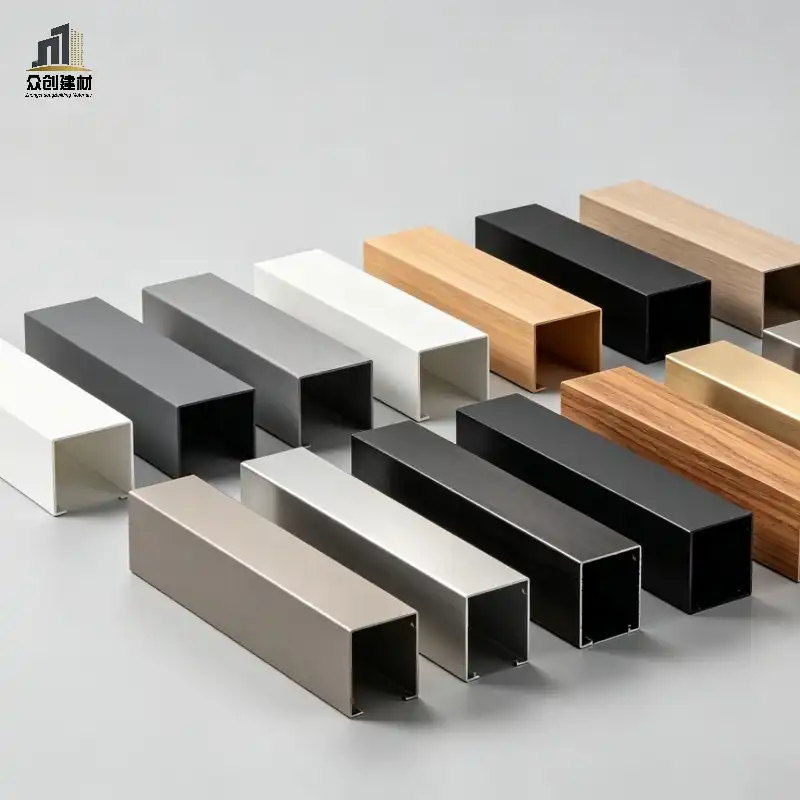
Standard aluminium square tube sizes range from 10mm x 10mm for artistic purposes to 150mm x 150mm for structural needs. Walls can be anywhere from 1 mm to 6 mm thick, but 1.5 mm to 3 mm is more common for ceilings. These standard sizes are in line with international building rules and allow for adaptability to meet specific design needs. Specialized factories can make things that can be precisely cut, drilled, and have their surfaces changed to fit the needs of each job. Custom lengths keep big projects from throwing away unnecessary materials, and mounting holes that have already been drilled save money on field work. Surface treatments like anodizing, powder coating, and PVDF finishes make things look better and last longer in harsh environments for demanding uses.
Keel System Components and Aluminum Square Tube Accessories Selection
Essential Framework Elements
Ceiling keel systems that use metal square tubes need parts that are carefully planned to make sure the structure is strong, and the installation goes smoothly. The main structure is made up of main runners, cross tees, wall angles, and suspension gear. All of these are designed to work with aluminum tube shapes. Most suspension systems use stiff rods or flexible hanging wires that are attached to structural ceiling anchors. The connection points have to be able to handle thermal growth while keeping the ceilings level over big areas. Specialized clips and brackets made for square tube shapes make sure that mechanical links are safe without weakening the tube's structure. To stop galvanic corrosion, connection gear like corner brackets, T-joints, and straight couplers is made from metal alloys that work well with each other. These parts have similar surface processes to match the finish on the main tube. This keeps the look consistent and makes them last for a long time in a variety of environments.
Load Calculation and Sizing Guidelines
A full load study that takes into account dead loads, aluminium square tube from ceiling materials, live loads from repair work, and dynamic loads from building movement is needed to choose the right tubes. For ceilings that aren't solid, the highest deflection limits are L/240, and for artistic uses where straightness is important, they are L/360.Span tables, which were made after a lot of testing, show safe working loads for a range of tube sizes and wall thicknesses. These figures use safety factors that are right for different types of populations and seismic zones. All structural estimates should be checked by professional engineers, especially for installations that go over the normal span limits or support heavy equipment.
Comparative Analysis: Aluminum Square Tube Versus Other Materials
Performance Characteristics
Compared to standard ceiling materials, aluminium square tube profiles perform better in a number of rating categories. Comparing their weights shows that aluminum tubes are about 65% lighter than the same-sized steel pieces. This means that building frames don't have to carry as much weight. This weight advantage means that a smaller base is needed, and the building process is easier. According to ASTM B117 salt spray guidelines, metal surfaces that have been properly treated can stand up to over 1,000 hours of exposure without breaking down. Steel options need regular upkeep and new protection coatings to last as long, especially in seaside or industrial settings where atmospheric corrosion speeds up the breakdown of materials. Aluminum is a good thermal conductor, which means it can get rid of heat quickly in situations where lights or electronics are built in. This trait helps keep working temperatures fixed while also lowering the amount of energy that HVAC systems use. Aluminum is also non-magnetic, which means it doesn't interact with sensitive electrical equipment that is often put in modern commercial ceilings.
Cost-Benefit Analysis
At first, aluminum tubes may cost more than steel options for their materials, but a lifecycle study shows that they are much more cost-effective in the long run. Total cost of ownership estimates are better when protective coatings are not needed, repair intervals are shortened, and the service life is increased. Because aluminum is lighter and easier to handle, it saves time and money during installation, which is already a good thing. Recycling aluminum at the end of its useful life is also good for the economy because the metal keeps its qualities even after being recycled many times. This environmentally friendly feature meets green building standards and could help make money during building renovations or demolitions.
Procurement Guide for Aluminum Square Tube Keel Systems and Accessories
Supplier Evaluation Criteria
To find trusted suppliers, you need to look at their production skills, quality certifications, and expert support services. ISO 9001 quality control systems make sure that production standards are always met, and ISO 14001 environmental certifications show that a company is committed to making products in a way that doesn't harm the environment. Compliance with ASTM and EN standards ensures that the qualities of a material meet foreign standards. Audits of manufacturing facilities should look at how much they can make, how they control quality, and how much they can customize. Modern extrusion equipment makes it possible to keep the dimensions very close, which is necessary for installing ceilings precisely. Surface treatment facilities must show that they can regularly apply certain finishes across large production runs while still meeting color-matching standards. Technical help services are very important during the planning and installation stages of a project. Beyond just supplying materials, suppliers who offer technical help, special cutting services, and field support add value. Established distribution networks make sure that deliveries happen on time and cut down on the cost of shipping for big projects.
Pricing Strategies and Volume Considerations
Prices for aluminium square tube depend on a aluminium square tube number of factors that affect costs, such as the type of metal used, the limits for size, the surface treatment, and the number of tubes ordered. The price of base aluminum changes with the price of other commodities on the world market. This makes long-term supply deals good for building projects that have more than one phase. Most of the time, volume savings start at 5,000 linear feet and get a lot bigger after 25,000 linear feet. Custom manufacturing services charge more, but they often save money in the long run because they require less work and waste fewer materials. With pre-cut lengths, pre-drilled mounting holes, and fully completed parts, you don't need skilled labor to install them, and you can do it faster and better. Specifications for packaging should limit harm from handling while maximizing the efficiency of shipping.
Practical Installation Tips and Maintenance for Aluminum Square Tube Ceilings
Installation Best Practices
To put a ceiling correctly, you need to pay close attention to the plan, the connections, and how the heat is distributed. The first plan sets up reference lines that make sure the main runners are lined up parallel while taking into account building features and structural limitations. Laser levels are very accurate and can be used for large-scale projects where even small errors can be seen. When installing a suspension point, you need to think about how strong the connection surfaces are and which fasteners will work best with the different types of substrates. Different fitting methods are needed for concrete bolts, steel beam clamps, and wood fasteners, but their load values are the same. The choice of suspension wire takes into account both cost and the need for corrosion protection based on the climate. In order to accommodate thermal growth and maintain mechanical security, aluminium square tube joints must be connected in certain ways. Slip joints placed in set spots let heat move without putting stress on the structure, and strong links make sure everything stays stable. Threaded screws have torque limits that keep them from being over-tightened, which could damage metal parts.
Maintenance Protocols and Longevity
When compared to other materials, aluminum ceiling systems don't need as much routine care. However, regular checks make sure that they keep working well and looking good. Any weak connections, broken parts, or surface wear that needs to be fixed should be found during visual checks. The placement of access panels should make it easy to check important structural links without having to take down a lot of the ceiling. How to clean something depends on what kind of surface treatment was used and how it will be exposed to the world. Anodized surfaces only need to be washed every so often with light detergents, but painted surfaces may need to be touched up in places that get a lot of use. To keep the surface from getting damaged in a way that makes it less resistant to rust, you should avoid using harsh chemical cleaners. The steps for replacing a component should be compatible with the way it was installed and the material requirements that are already in place. Standardized connection details make it possible to swap individual parts without having to make big changes to the whole system. Recommendations for spare part inventories help building managers take care of repair needs quickly while causing as few problems as possible to operations.
Conclusion
When choosing the right keel systems and accessories for metal square tube ceilings, you need to think carefully about the structure, the surroundings, and the limitations of the installation. Aluminum profiles are great for challenging business and industrial uses because they are strong for their weight, don't rust, and can be designed in a variety of ways. Choosing the right parts, having them installed by a professional, and keeping up with the upkeep will make sure that the system works well for a long time and looks good. When architects, engineers, and builders understand these basic ideas, they can choose ceiling aluminium square tube systems that meet both technical needs and price constraints for a wide range of projects.
FAQ
1. What are the standard dimensions available for aluminum square tubes in ceiling applications?
For ceiling systems, standard metal square tubes are 15 mm x 15 mm to 100 mm x 100 mm in size, and wall widths are 1.2 mm to 4 mm. Profiles in 20 mm x 20 mm, 25 mm x 25 mm, 40 mm x 40 mm, and 50 mm x 50 mm shapes are common. To meet special building needs, products can be made to custom sizes.
2. How do I calculate the appropriate tube size for my ceiling span?
When figuring out the size of a tube, safety factors, bending limits, and dead loads are all taken into account. For different span lengths and tube sizes, engineering tables show the safe working loads. For spans over 3 meters or structures that support heavy equipment, it is best to have a professional structural study done.
3. What surface treatments are recommended for different environmental conditions?
Mill-finished metal works well in places inside where the humidity level is average. Anodized finishes are better at resisting rust in industrial or seaside settings. Powder finishing keeps colors better and is more resistant to damage. PVDF finishes are the most durable when it comes to harsh environments.
4. Can aluminum square tubes be field-modified during installation?
Yes, normal welding tools can be used to cut, drill, and change aluminum tubes. Any changes should, however, keep the structure's stability and not hurt the surface processes. Pre-fabricated parts are often of higher quality and easier to place.
5. What are the typical lead times for custom aluminum square tube orders?
Most standard profiles are sent out within 5 to 10 business days. Depending on how complicated they are, custom shapes and surface treatments take 2 to 4 weeks. Lead times may go up to 6 to 8 weeks for large orders or finishes that aren't standard. Planning ahead makes sure that the availability of materials matches the plan for building.
Partner with Zhongchuang for Premium Aluminum Square Tube Solutions
Zhongchuang delivers exceptional aluminium square tube ceiling solutions engineered for demanding commercial and architectural applications. Our advanced manufacturing skills allow us to make precision-extruded profiles with excellent surface treatments and uniform measurement tolerances. We offer full technical support, unique fabrication services, and reliable delivery plans that meet your project needs. We have more than ten years of experience with decorative metal products. Get in touch with [email protected] to talk about your needs for an aluminum square tube source and find out how our focus on quality can help your next ceiling installation job.
References
1. Aluminum Association. "Aluminum Design Manual: Specifications and Guidelines for Aluminum Structures in Building Applications." 2020 New Version.
2. American Society for Testing and Materials. "ASTM B221: Standard Specification for Aluminum and Aluminum-Alloy Extruded Bars, Rods, Wire, Profiles, and Tubes." ASTM Worldwide, 2019.
3. The authority for building and construction. The 2021 Technical Guidelines Series has a document called "Code of Practice for Suspended Ceiling Systems Using Aluminum Framework Components."
4. European Group for Standardization. "EN 755-2: Aluminum and Aluminum Alloys - Extruded Rod/Bar, Tube and Profiles - Mechanical Properties." CEN Guidelines, 2020.
5. Council for International Building Codes. The IBC Guidelines Manual from 2021 has "Structural Design Criteria for Suspended Ceiling Systems in Commercial Buildings."
6. National Association of Manufacturers of Architectural Metal. The 2020 NAAMM publication is called "Technical Bulletin: Selection and Installation of Aluminum Ceiling Grid Systems."