_1762768699969.webp)

_1782530506402.webp)
(1)_1783045836766.webp)
_1786157639392.webp)
(1)_1780970038980.webp)
Curved Aluminum Baffles: Core Solution for Special-Shaped Architectural Decoration
With the development of modern architectural design concepts, more and more buildings are breaking away from the constraints of traditional straight lines, and a large number of free shapes such as curves, curved surfaces, waves and arcs are adopted to create architectural spaces with visual impact. Under this trend, curved aluminum baffles have become the core decorative material for realizing special-shaped curve shapes by virtue of their excellent modeling ability, light weight and high strength material properties and mature installation system, and are widely used in high-end construction projects such as commercial complexes, airport terminals, cultural and art centers, convention and exhibition centers.
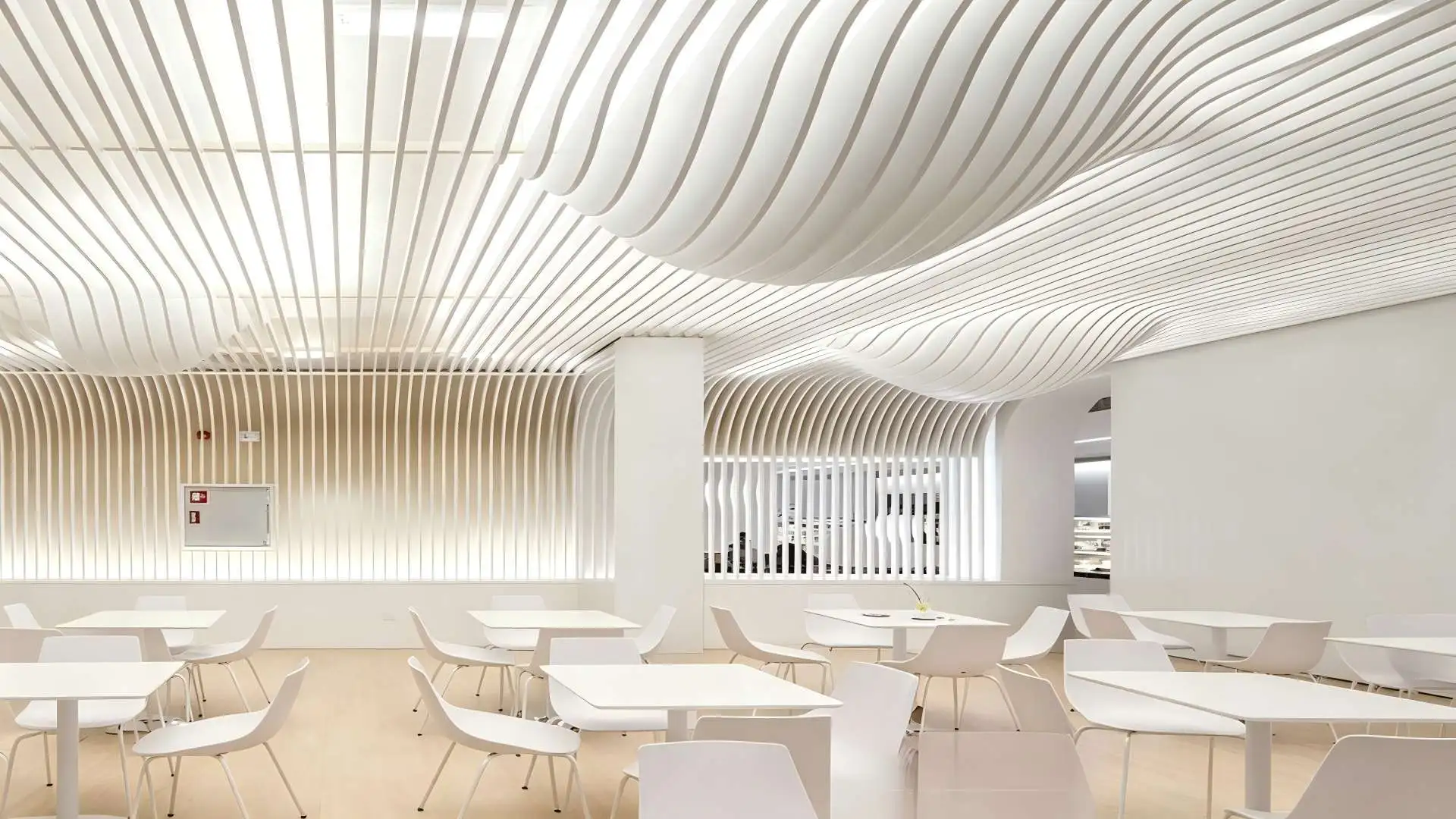
White wave pattern aluminum baffle ceiling, staff canteen real project case
There are three core processes for realizing the radian of curved aluminum baffles: stretch bending process, roll bending process and welding forming process. The stretch bending process is to fix the straight aluminum baffle profile on special stretch bending equipment, and process the profile into the radian required by the design through simultaneous stretching and bending. This process is suitable for curved aluminum baffles with large curvature radius and relatively gentle radian, with high processing accuracy and good surface flatness, and will not damage the treatment layer on the surface of the profile. It is the most commonly used arc processing technology at present; the roll bending process uses three sets of rollers to continuously roll the aluminum baffle profile to realize continuous arc or wavy shape, which is suitable for S-shaped and wavy aluminum baffles with long length and continuous radian, with high processing efficiency and can realize continuous radian change of the whole profile; the welding forming process is suitable for special-shaped aluminum baffles with small curvature radius, large radian or three-dimensional twisted shape. The plate is cut, bent and formed, then welded into the required arc structure, and then polished and surface treated. This process can realize any complex shape, but the processing cycle is longer and the cost is relatively high.
The radian accuracy control of curved aluminum baffles is the core indicator of project quality. Professional manufacturers usually use the combination of CNC stretch bending equipment and 3D modeling technology. Before processing, the curvature radius, arc length, chord length and other parameters of each curved aluminum baffle are accurately calculated through BIM modeling. During the processing, a special radian detection mold is used for inspection one by one to ensure that the radian error is controlled within ±2mm to meet the accuracy requirements of on-site installation. For projects with large hyperboloid and three-dimensional twisted shapes, 3D scanning technology will also be used to scan the main structure of the building, and after generating a point cloud model, the processing parameters of each aluminum baffle will be generated in reverse to achieve a perfect fit between the decorative layer and the main structure.
The installation system of curved aluminum baffles is more complicated than that of ordinary straight aluminum baffles. It is usually necessary to customize special curved keels. Each curved aluminum baffle has a corresponding installation position number, and the unit installation method is adopted. It is pre-assembled in the factory and then transported to the site for assembly to ensure installation accuracy. For curved aluminum baffles at the ceiling part, the installation method of suspenders combined with light steel keels or special aluminum keels is usually adopted, and the spacing of suspenders is controlled between 800mm-1200mm according to the height and weight of aluminum baffles to ensure the structural safety of the ceiling system; for curved aluminum baffles on exterior walls, it is necessary to adopt the curtain wall installation system of columns combined with beams. Each curved aluminum baffle is connected to the beam through stainless steel pendants, and expansion joints for thermal expansion and cold contraction are reserved at the same time to ensure that there will be no deformation or abnormal noise when the temperature changes.
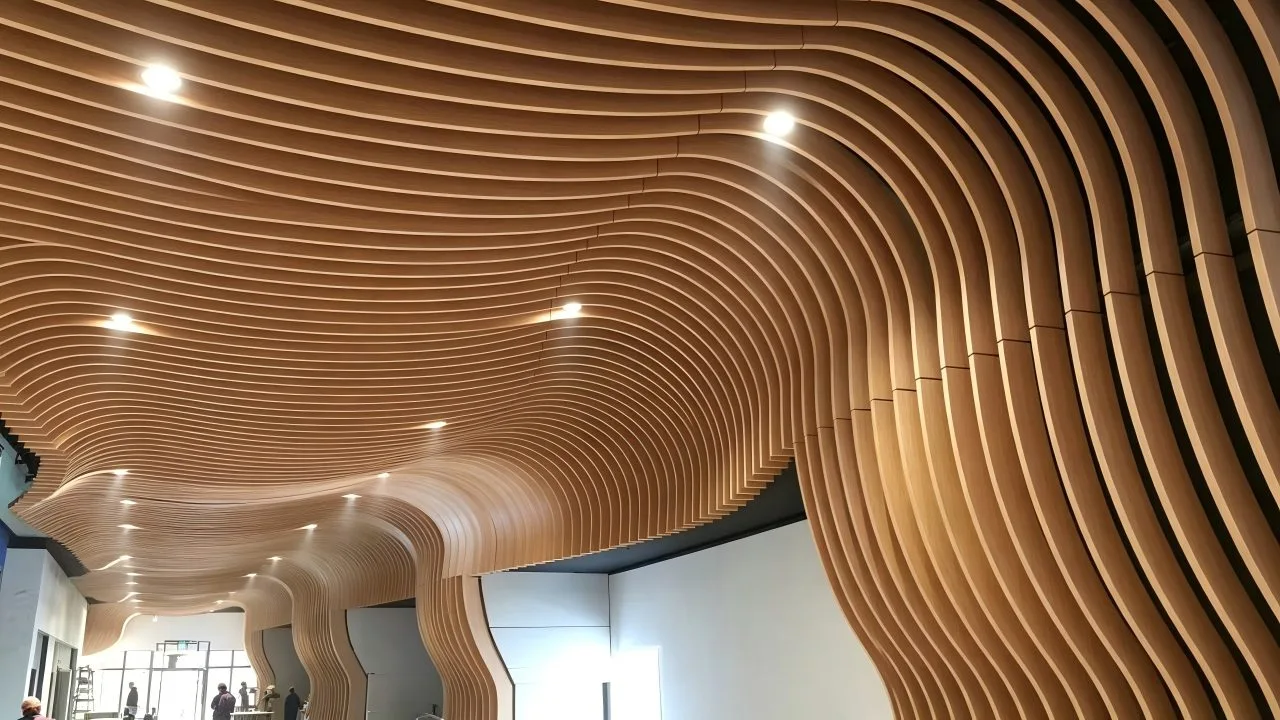
Wood grain transfer large wave aluminum baffle ceiling, commercial entrance real project
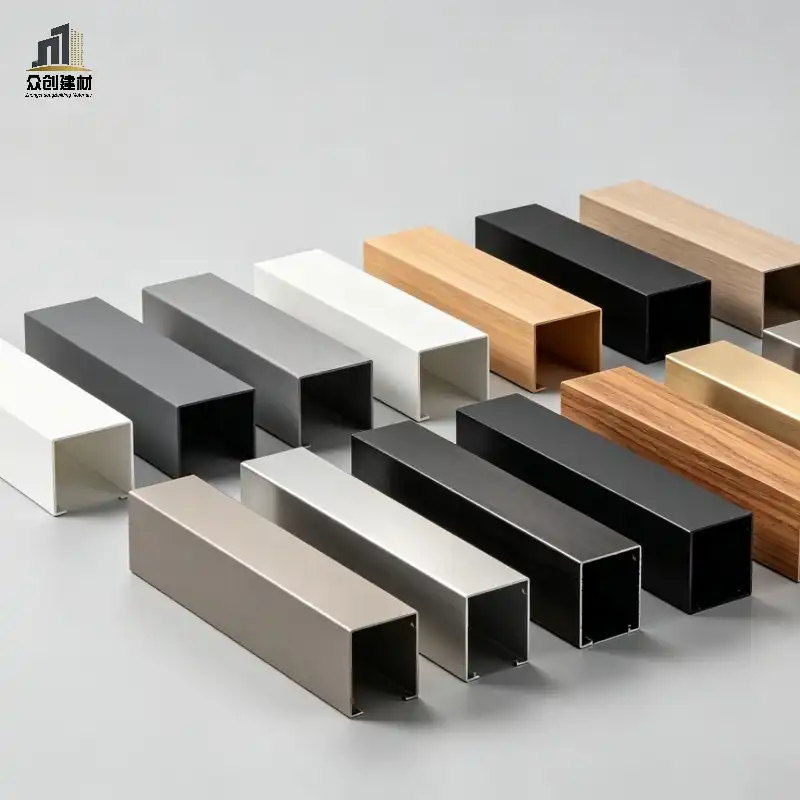
In terms of surface treatment, curved aluminum baffles are usually surface treated before stretch bending to avoid cracking or falling off of the surface coating during the forming process. For welded curved aluminum baffles, the overall surface treatment needs to be carried out after welding and grinding are completed to ensure consistent surface color and no color difference. Curved aluminum baffles used outdoors must be treated with fluorocarbon spraying, and the coating thickness is not less than 40μm to ensure the service life in harsh outdoor environments; curved aluminum baffles used indoors can be treated with powder coating or wood grain transfer to achieve rich decorative effects.
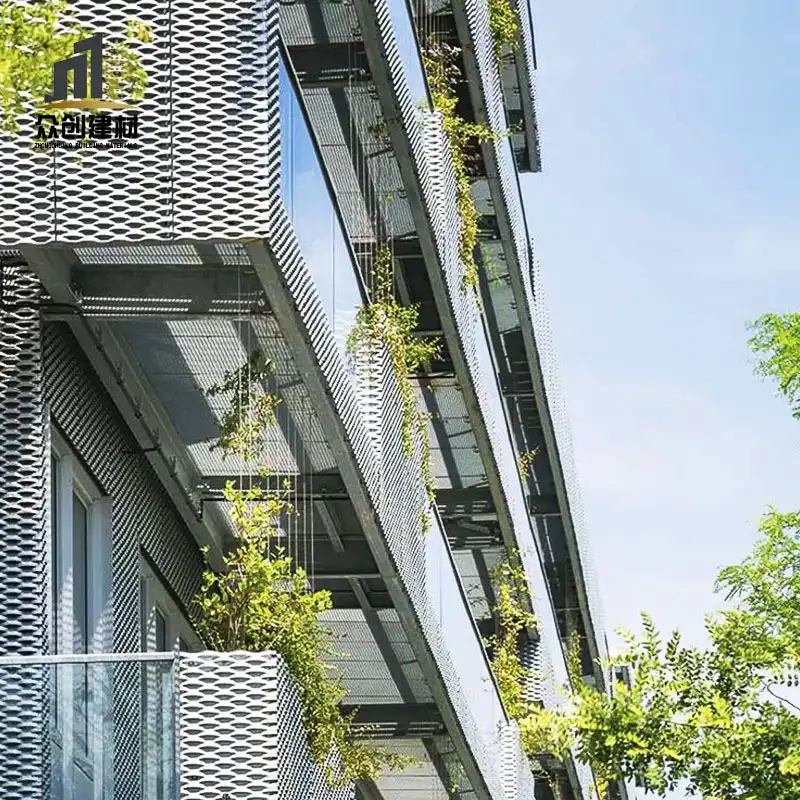
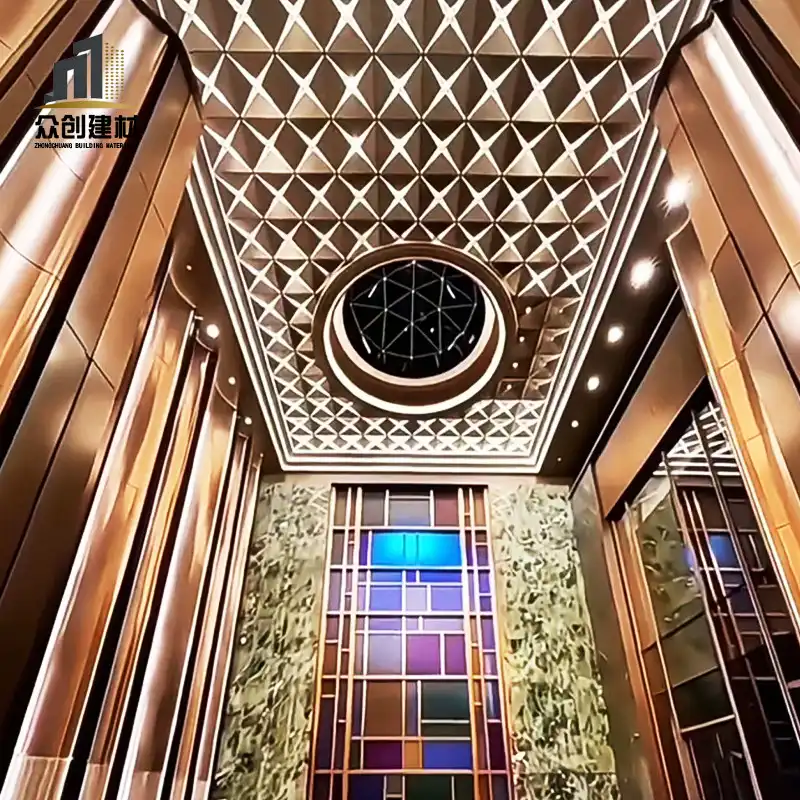
Typical application cases of curved aluminum baffles include ceiling of airport terminals, atrium decoration of commercial complexes, exhibition hall shapes of museums and art galleries, corridor ceilings of subway stations, art shapes of hotel lobbies, etc. For example, the T2 terminal of Guangzhou Baiyun Airport adopts a large-span wavy curved aluminum baffle ceiling, which simulates the visual effect of flowing clouds and becomes the iconic design of the terminal; a commercial complex in Shenzhen adopts a curved aluminum baffle exterior wall with gradual radian to create a flowing building facade effect, which has won many architectural design awards.
In terms of cost, the price of curved aluminum baffles is 30%-150% higher than that of ordinary straight aluminum baffles. The specific price depends on the radian size, modeling complexity, surface treatment process and project scale. Generally, the smaller the curvature radius and the more complex the shape, the higher the processing cost. For designers, communicating with aluminum baffle manufacturers about modeling feasibility and cost control in advance during the scheme design stage can effectively control the project cost while realizing the design effect.