_1782530506402.webp)
(1)_1783045836766.webp)
_1786157639392.webp)
(1)_1780970038980.webp)
Perforated Aluminium Panel: Environmental Performance, Recyclability and Value in Green Buildings
Against the backdrop of global efforts to address climate change and pursue sustainability, the environmental performance and sustainability of construction materials have become critical considerations for material selection. As a metal material capable of infinite recycling, aluminium alloy possesses inherent advantages in environmental protection and circularity. As a finished product processed from aluminium alloy, perforated aluminium panels deliver outstanding environmental benefits worthy of in-depth analysis. This article examines the environmental value of perforated aluminium panels from multiple dimensions: inherent environmental advantages of aluminium, recycling characteristics, life-cycle environmental impacts and green building certification compliance.

The eco-friendly features of aluminium alloy are reflected in the following aspects.
First, infinite recyclability. Aluminium is one of the most highly recycled materials worldwide, and its recycling does not degrade material performance, allowing repeated circulation. Statistics show that more than 75% of all aluminium ever produced remains in use today — ranging from building components and automotive parts to packaging and electronic products. Scrapped aluminium can be remelted and manufactured into new goods. This characteristic of endless circulation makes aluminium a true circular-economy material.
Second, low energy consumption for recycling. Producing aluminium from recycled scrap only consumes roughly 5% of the energy required for primary aluminium production, saving around 95% of energy. Primary aluminium production relies on electrolytic reduction of alumina from bauxite, which consumes massive electricity. By contrast, recycled aluminium only requires melting and recasting scrap aluminium, slashing energy use drastically. Recycling one tonne of aluminium saves approximately 4 tonnes of standard coal and cuts substantial carbon dioxide emissions.
Third, corrosion resistance and long service life. Aluminium alloy offers excellent corrosion resistance under normal service conditions. Construction-grade aluminium can last for decades or even over a century, far outperforming many alternative building materials. A longer service life reduces replacement frequency, lowering resource consumption and waste generation.
Fourth, lightweight property for energy saving. The density of aluminium alloy is only one-third that of steel. Lightweight aluminium cuts energy consumption during transportation and installation, and reduces dead load on building structures, indirectly lowering consumption of structural materials.
Fifth, non-toxic and harmless. Aluminium alloy contains no hazardous substances. It releases no volatile organic compounds (VOCs) during production and service, so it will not cause indoor air pollution and poses no health risks to occupants. These properties make aluminium alloy an environmentally friendly green building material.
The environmental footprint of perforated aluminium panels must be assessed across the full cradle-to-grave life cycle. Raw material stage: Aluminium production requires energy input, yet thanks to high recycling rates, many new aluminium products contain a large share of recycled aluminium, resulting in relatively low environmental impacts. Manufacturing stage: Processes including perforation, bending and surface finishing consume energy and generate minor waste. Modern aluminium fabrication plants maintain high environmental standards, and most waste can be recycled. Coatings and chemicals used in surface treatment may create environmental risks if improperly handled, but qualified manufacturers are equipped with complete waste treatment facilities. Transportation stage: The lightweight nature of aluminium keeps transport-related energy consumption low. In-service stage: This is the longest phase of the life cycle. Aluminium alloy requires minimal maintenance beyond occasional cleaning over decades of service, leading to very low environmental impacts during use. Furthermore, the shading and ventilation functions of perforated aluminium panels help buildings save operational energy. End-of-life recycling stage: When buildings are demolished or renovated, used perforated aluminium panels can be recycled conveniently. Aluminium is easy to identify and separate, and scrap panels can be remelted into new aluminium products with almost zero residual waste. Compared with many composite materials such as coatings, plastics and composite boards, which are difficult to recycle and usually end up in landfills or incineration, aluminium’s recyclability is a major advantage. Overall, perforated aluminium panels have a low life-cycle environmental footprint and qualify as genuinely sustainable building materials.
Within green building rating systems, perforated aluminium panels can earn credits under multiple scoring categories, including China’s Green Building Standard, LEED (US) and BREEAM (UK), all of which treat material sustainability as an important assessment item. Perforated aluminium panels support green building certification in these ways:
1. Recycled content: Panels made with high recycled aluminium content can gain points under recycled material content criteria.
2. Local sourcing: If aluminium is sourced near the project site, shorter transport distances reduce carbon emissions and qualify for local material credits.
3. Low-emission materials: When the base material and surface coatings meet low-VOC standards, they contribute to indoor environmental quality credits and improve indoor air quality.
4. Durability: Long service life and low maintenance requirements help score points for life-cycle performance.
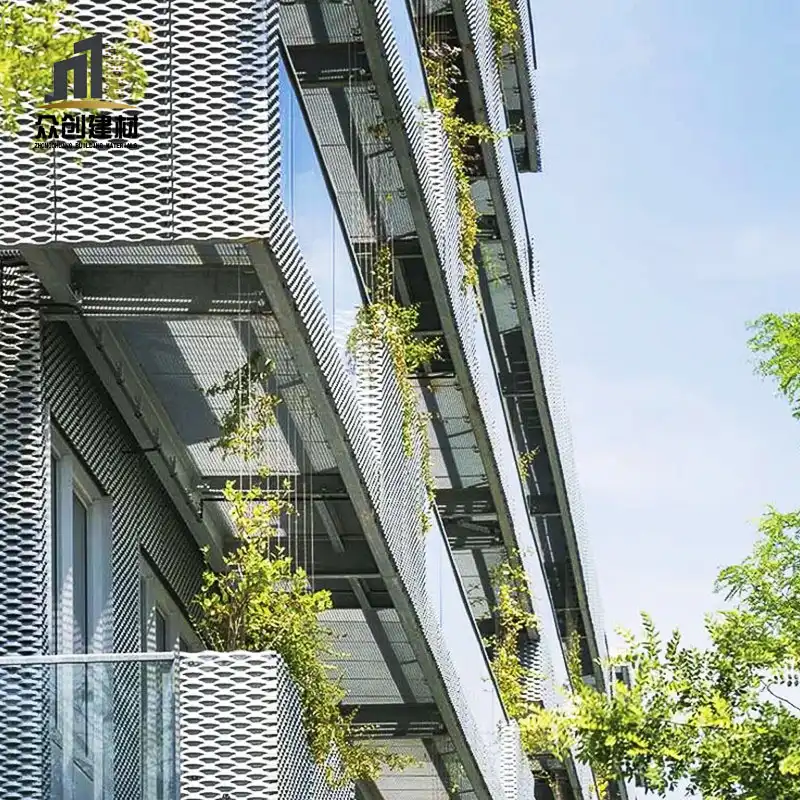
5. Energy efficiency benefits: The shading effect of perforated panels reduces air-conditioning loads and improves building energy performance for energy-efficiency credits.
6. Design for circularity: Dry-hung installation that facilitates easy disassembly supports future recovery of materials, earning points for sustainable design. Accordingly, perforated aluminium panels are a valuable material choice for projects targeting high-level green building certifications.
From a macro perspective, selecting eco-friendly building materials is critical for the construction sector to achieve carbon peaking and carbon neutrality goals. The construction industry accounts for a large share of global energy consumption and carbon emissions, driven largely by building material production and operation. Promoting recyclable, low-energy and long-lasting green building materials is a key pathway to cut carbon emissions and advance sustainability in construction. As a high-performance, durable and recyclable green metal cladding material, perforated aluminium panels align perfectly with the development trend of future construction materials. For architects, developers and procurement teams, choosing perforated aluminium panels is not only selecting a functional and aesthetic decorative material, but also contributing to environmental sustainability and a greener future. With rising environmental awareness and wider adoption of green buildings, perforated aluminium panels with superior environmental performance will see expanding application across construction projects.