_1782530506402.webp)
(1)_1783045836766.webp)
_1786157639392.webp)
(1)_1780970038980.webp)
Surface Treatment Process Selection and Weatherability Analysis of Perforated Aluminum Panels
Surface treatment is a crucial process in perforated aluminum panel production. It not only determines the appearance color and texture of the aluminum panel, but also directly affects the corrosion resistance, weather resistance and service life of the aluminum panel. Perforated aluminum panels are usually used in various indoor and outdoor environments, facing various natural factors such as UV radiation, temperature and humidity changes, acid rain corrosion, wind and sand abrasion. Good surface treatment is the basis for ensuring the long-term performance of the product. At present, the commonly used surface treatment processes for perforated aluminum panels mainly include powder coating, fluorocarbon coating, anodizing, wood grain transfer, etc. Each process has its own characteristics and applicable scenarios. This article will introduce in detail the technical characteristics, performance differences and selection principles of various surface treatment processes, helping engineering personnel choose the appropriate surface treatment method according to project requirements.
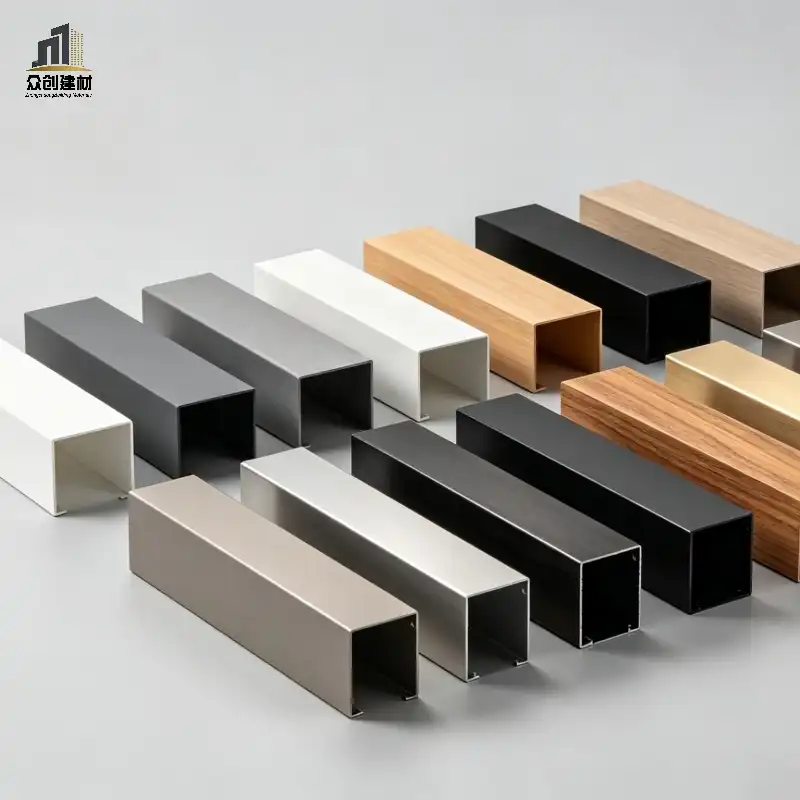
Powder coating is one of the most commonly used surface treatment processes for perforated aluminum panels. It uses electrostatic spraying to uniformly spray powder coating on the aluminum panel surface, then bakes at high temperature to melt and cure the powder, forming a uniform coating. The main advantages of powder coating include: rich colors, providing almost unlimited color choices; strong coating adhesion, wear and scratch resistance; uniform coating thickness, good decorative effect; high production efficiency, relatively low cost; solvent-free, good environmental performance. The coating thickness of powder coating is usually between 40-120μm, and the coating quality meets the requirements of AAMA 2603 standards. The main disadvantage of powder coating is that the weather resistance is not as good as fluorocarbon coating. Long-term outdoor use will cause fading and chalking, so it is generally suitable for indoor environments or projects with low outdoor requirements. For indoor perforated aluminum panel ceilings, partitions and walls, powder coating is the most cost-effective choice. In terms of color selection, neutral colors such as white, silver gray, black, gray are commonly used indoors, and various custom colors can also be provided according to design requirements. Another feature of powder coating is that it can provide different surface textures, such as matte, glossy, sand texture, hammer tone, etc., and different textures bring different visual and tactile effects.

Fluorocarbon coating is a high-end surface treatment process for perforated aluminum panels. It uses fluorocarbon coating (PVDF) as the coating material and forms a high-performance coating through multiple spraying and baking processes. The main component of fluorocarbon coating is polyvinylidene fluoride resin, which has extremely excellent weather resistance and chemical corrosion resistance. The main advantages of fluorocarbon coating include: excellent weather resistance, no obvious fading and chalking after 10-20 years of outdoor use; excellent corrosion resistance, able to resist acid rain, salt spray, industrial waste gas and other corrosion; good coating gloss and color retention; strong stain resistance, surface stains are easy to clean. Fluorocarbon coating is usually divided into different coating structures such as two-coat, three-coat, four-coat. Two-coat is suitable for general outdoor environments, and three-coat and four-coat are suitable for harsh environments such as coastal areas, industrial zones, and high ultraviolet radiation. The quality of fluorocarbon coating usually meets AAMA 2605 standards, which is the highest grade standard for surface treatment of aluminum alloy building profiles and panels. The disadvantages of fluorocarbon coating are high cost, about 2-3 times that of powder coating; color selection is slightly less than powder coating, but it can basically meet the needs of most projects. For projects with high weather resistance requirements such as building exteriors, coastal areas, and high corrosion environments, fluorocarbon coating is the first choice for surface treatment. Perforated aluminum panels on the exteriors of high-end hotels, office buildings, and commercial complexes usually adopt fluorocarbon coating.
Anodizing is another important aluminum panel surface treatment process. It does not spray a coating on the aluminum panel surface, but grows a dense oxide film (Al₂O₃) on the aluminum panel surface through electrochemical methods. The main advantages of anodizing include: the oxide film is firmly combined with the aluminum substrate and will not peel off; the surface has metallic luster and matte texture with a strong sense of luxury; good weather resistance and durability for outdoor use; high surface hardness and good wear resistance; environmentally friendly, no coating components. Anodizing can present various colors such as silver white, bronze, black, gold. Among them, silver white is the most classic color and is widely used in various building facades. The main disadvantages of anodizing are relatively few color choices, and it is difficult to provide very bright colors; there may be certain differences in the color of oxide films in different batches, and color difference control needs attention for large-area use. The film thickness of anodizing is usually divided into different grades such as AA10 (10μm), AA15 (15μm), AA20 (20μm), and a film thickness of 15μm or more is recommended for outdoor use. Anodized aluminum panels are especially suitable for projects pursuing metallic texture and luxury, such as high-end curtain walls, luxury stores, subway stations, airports, etc. In recent years, warm-toned anodized aluminum panels such as bronze and champagne have been increasingly favored by designers because they can create a warm, luxurious and textured spatial atmosphere.
Wood grain transfer is a surface treatment process that transfers wood grain to the aluminum panel surface. It allows metal aluminum panels to have the appearance and texture of solid wood, while having the durability and fire resistance of metal materials. The process flow of wood grain transfer is usually: first spray a base color coating on the aluminum panel surface, then cover the aluminum panel surface with transfer paper printed with wood grain patterns, and transfer the wood grain pattern to the coating through heating and vacuum treatment, finally forming a realistic wood grain effect. The advantages of wood grain transfer perforated aluminum panels include: the appearance is very similar to solid wood, which can meet the design demand for wood grain effect; good fire performance, Class A non-combustible, superior to solid wood materials; good weather resistance and durability, will not crack, deform or rot like wood; simple maintenance, no need for regular painting like wood. Wood grain transfer perforated aluminum panels are widely used in indoor ceilings, walls, furniture and other parts, and are very popular in dining spaces, hotel rooms, high-end residences, leisure clubs that pursue natural and warm atmosphere. The colors and textures of wood grain are very rich, and can simulate various common wood species such as oak, walnut, cherry, teak, etc., providing rich choices for design. In addition to wood grain transfer, there are other texture transfer processes such as stone grain transfer and cloth grain transfer, which can simulate the texture of various materials on the aluminum panel surface, expanding the decorative expressiveness of aluminum panels.
When selecting surface treatment processes for perforated aluminum panels, the following factors need to be comprehensively considered. The first is the use environment: for indoor use, powder coating is preferred, with low cost and rich colors; for outdoor use, fluorocarbon coating or anodizing is preferred, with good weather resistance; for coastal areas, industrial zones and other severely corrosive environments, three-coat or four-coat fluorocarbon coating is recommended. The second is design style and effect requirements: for pursuing metallic texture and luxury, anodizing can be selected; for pursuing rich colors, powder coating can be selected; for pursuing wood grain effect, wood grain transfer can be selected; for pursuing high weather resistance, fluorocarbon coating can be selected. The third is budget constraints: powder coating has the lowest cost, anodizing is medium, fluorocarbon coating has higher cost, wood grain transfer also has relatively high cost. Reasonable selection should be made according to the project budget. The fourth is quality standard requirements: different surface treatment processes correspond to different quality standards, such as powder coating corresponding to AAMA 2603, fluorocarbon coating corresponding to AAMA 2605, anodizing corresponding to corresponding oxide film standards. Project bidding documents usually clearly require the standards and grades of surface treatment, and need to be strictly selected according to requirements. The fifth is color difference control: no matter which surface treatment is selected, attention should be paid to color difference control, especially for large-area use, the same batch production should be required, and color difference inspection should be carried out to ensure consistent color. The sixth is maintenance convenience: different surface treatments have different maintenance requirements. Fluorocarbon and anodized surfaces have good self-cleaning performance and simple maintenance; powder coated and wood grain transfer surfaces are relatively easy to stain and require regular cleaning. Comprehensively considering the above factors and selecting the surface treatment process most suitable for project requirements can achieve the best balance between effect, durability and cost.