_1762768699969.webp)

_1782530506402.webp)
(1)_1783045836766.webp)
_1786157639392.webp)
(1)_1780970038980.webp)
Why A2 Non-Combustible Folded Aluminium Cladding Is the 2026 Standard for High-Rise & Public Building Facades
Introduction
Following high-profile cladding fire incidents globally over the past decade, building codes across Europe, Oceania, the Middle East and Southeast Asia have been drastically tightened, with A2 non-combustible external cladding now mandatory for most high-rise structures and high-occupancy public buildings. For years, project owners and architects faced a difficult trade-off: fire-safe materials like stone and precast concrete offered limited design flexibility, while aesthetically versatile materials like standard aluminum composite panels failed to meet A2 fire requirements.
A2 non-combustible folded aluminium cladding has emerged as the solution that breaks this trade-off, combining the highest level of fire safety with modern geometric design versatility. This guide breaks down the industry shift, performance advantages, specification criteria and common misconceptions around this fast-growing facade category.

The Global Regulatory Shift to A2 Non-Combustible Exterior Cladding
The move toward A2 rated facades is not a regional trend — it is a global industry reset. As of 2026:
- All EU member states require A2 or equivalent non-combustible cladding for residential buildings above 18 meters and all public buildings above 11 meters
- Australia’s National Construction Code mandates A2 non-combustible external cladding for all Class 2-9 buildings above three stories
- Southeast Asian markets including Singapore, Malaysia and Vietnam have adopted similar A2 requirements for high-rise commercial and public projects
- Middle East mega-projects now routinely specify A2 fire rated cladding as a baseline requirement for all tower developments
This regulatory shift has created demand for non-combustible cladding materials that can still deliver the modern, custom architectural aesthetics that clients expect — a gap that folded solid aluminium panels are uniquely positioned to fill.
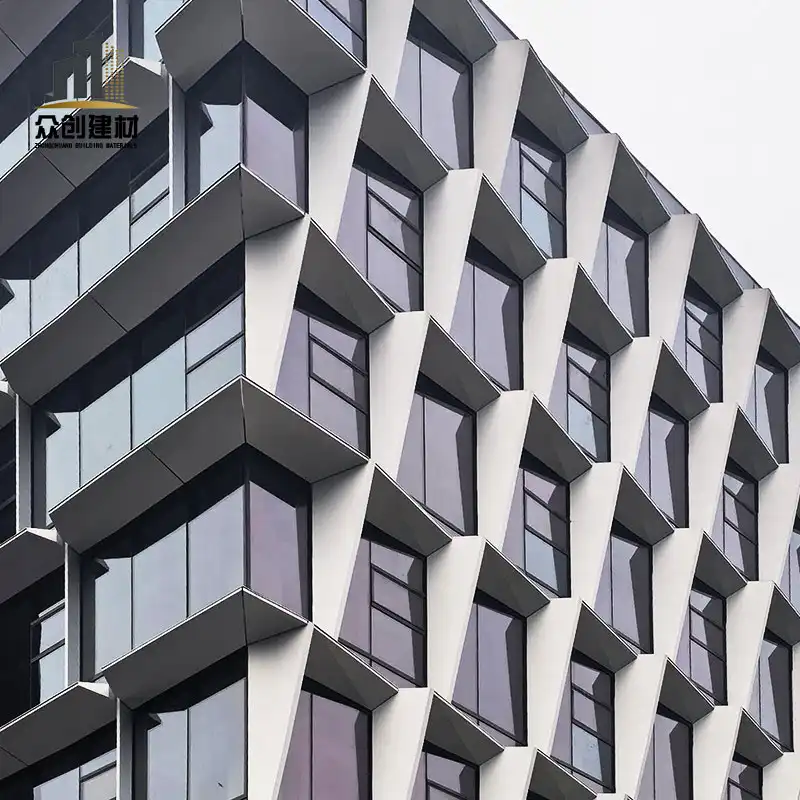
Why Folded Design Is the Perfect Match for Non-Combustible Aluminum Panels
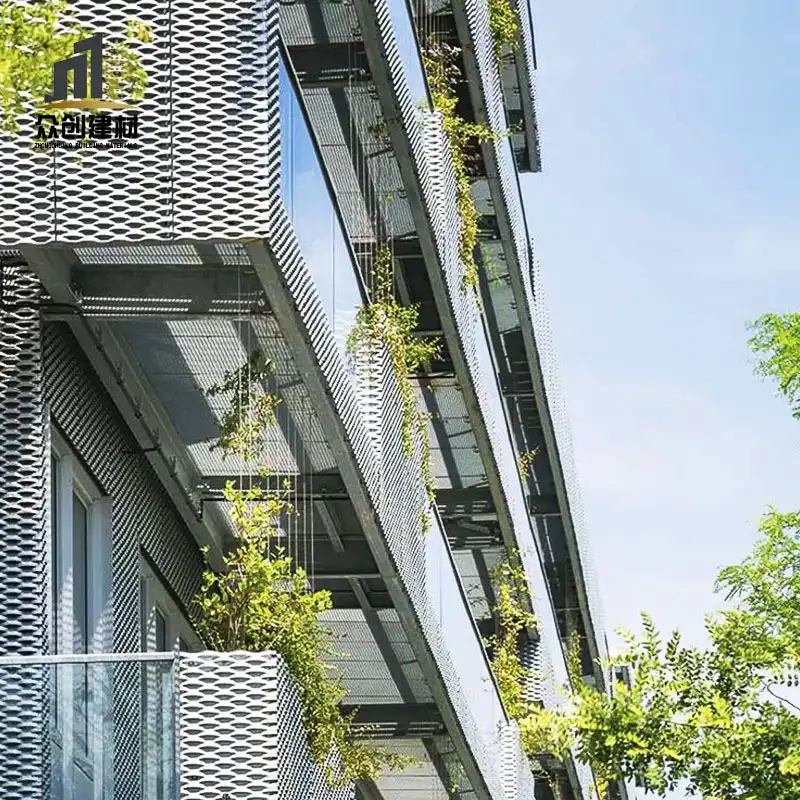
Unlike composite cladding materials that lose fire rating when modified for decorative effect, solid aluminium panels retain their full A2 non-combustible rating even after folding and forming. This makes folded design the natural aesthetic upgrade for fire-safe facades, with three key synergies:
- Structural rigidity without added material: Folded edges increase panel stiffness by 30% compared to flat solid panels, eliminating the need for internal stiffeners. This keeps material weight low (3-5kg/sqm) while improving wind load resistance for high-rise applications.
- Dynamic light and shadow with no extra components: The angular folded surfaces create natural, changing light and shadow effects throughout the day, delivering architectural depth without requiring separate decorative elements that could compromise fire performance.
- Tighter, more consistent joints: Precision press-braked folding creates uniform, straight edges that allow tighter joint alignment between panels, improving both weather sealing and visual finish compared to flat cut panels.
Crucially, all of these design benefits are achieved using 100% solid aluminum alloy base material, with no added combustible core layers or decorative coatings that would reduce the fire rating.
Performance Comparison vs. Traditional Cladding Materials
| Cladding Material | Fire Rating | Weight (kg/sqm) | Design Flexibility | Installation Speed | 25-Year Lifecycle Cost |
|---|---|---|---|---|---|
| A2 Folded Aluminium Cladding | A2 Non-Combustible | 3-5 | Very High (custom shapes & colors) | Fast (modular system) | Low |
| Natural Stone Cladding | A1 Non-Combustible | 25-30 | Low (limited standard formats) | Slow (heavy installation) | High (high maintenance) |
| Standard PE Core ACP | B/B2 Combustible | 3-4 | Medium | Fast | Very Low (short lifespan, non-compliant) |
| Precast Concrete Cladding | A1 Non-Combustible | 30-40 | Very Low | Very Slow | Medium |
The comparison shows A2 folded aluminium cladding is the only material category that delivers top-tier fire safety, high design flexibility and competitive long-term cost all at once — explaining its rapid adoption across compliant commercial and public projects.
Key Specification Criteria for A2 Folded Aluminium Cladding Projects
Not all A2 folded aluminium panels are equal. For code-compliant, long-lasting facade installations, specifiers should verify five core criteria:
- Base material certification: Panels must be manufactured from solid 3003 or 5052 series aluminum alloy, with full mill test reports confirming material composition. Composite or honeycomb core panels cannot achieve true A2 rating even if marketed as fire resistant.
- Folding process accuracy: CNC four-axis press brake fabrication with ±0.1° angle tolerance ensures consistent panel dimensions and tight joints, which are critical for both weather performance and fire integrity.
- Coating fire compatibility: PVDF fluorocarbon coatings are the standard for outdoor A2 panels, as they do not contribute to flame spread. Low-quality powder coatings with high resin content can reduce overall fire performance and should be avoided for exterior A2 specified projects.
- Full system fire certification: Require third-party tested A2 certification for the complete panel assembly (substrate + coating), not just the raw aluminum material. Partial component certification does not guarantee code compliance.
- Structural wind load calculation: Folded panels have different structural performance than flat panels, so project-specific wind load calculations should be provided by the supplier for high-rise installations.
Common Misconceptions About Non-Combustible Decorative Cladding
Misconception 1: "All A2 rated cladding looks the same and has no design flexibility"
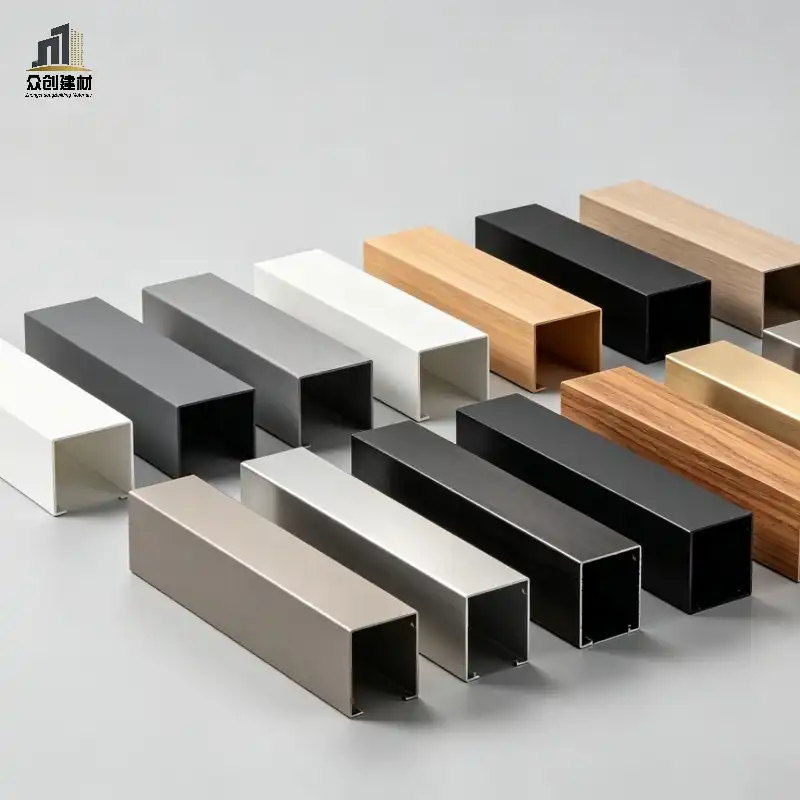
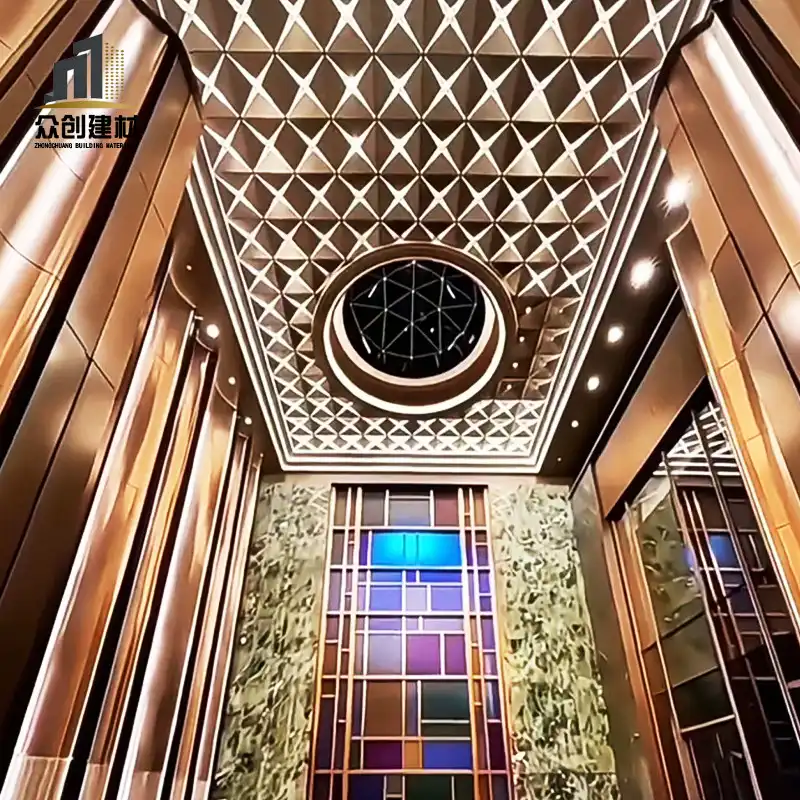
This was true a decade ago when A2 cladding options were limited to plain flat panels and precast concrete. Modern CNC folded aluminium panels support custom angles, zig-zag patterns, 3D faceted shapes and unlimited color options, delivering the same design versatility as lower-rated composite panels while retaining full A2 fire performance.
Misconception 2: "A2 rating only measures flame spread, so all A2 materials are equally safe"
A2 rating covers both heat release and flame spread, but total fire safety also depends on smoke toxicity and molten drip performance. High-quality solid aluminium panels produce negligible toxic smoke and no molten drips during fire events, making them significantly safer than some mineral-based A2 materials that release harmful crystalline silica dust when exposed to high heat.
Misconception 3: "Folded aluminium cladding is much more expensive than flat A2 panels"
While folded panels have slightly higher fabrication costs than basic flat panels, the increased structural rigidity reduces the number of required support brackets and installation time. On a full project basis, total installed cost for folded A2 aluminium cladding is typically only 8-15% higher than standard flat A2 panels, with far superior aesthetic results.
Final Verdict
As fire safety regulations continue to tighten globally, A2 non-combustible folded aluminium cladding is transitioning from a premium option to the baseline standard for high-rise commercial, residential and public building facades. Its unique combination of code-compliant fire safety, design versatility and competitive long-term cost makes it the most well-rounded facade solution for the current regulatory environment.
For architects and project owners, specifying A2 folded aluminium cladding eliminates the common trade-off between safety and design, delivering compliant, visually striking facades that meet both current and future building code requirements.
Frequently Asked Questions
Q: What is the difference between A2 and B1 fire rated cladding?
A: A2 is the second-highest non-combustible rating, with very limited heat release and no contribution to fire spread. B1 is a flame-retardant rating for materials that still have combustible components. Most current high-rise building codes require A2 rating for external cladding, with B1 no longer acceptable for buildings above a certain height.
Q: Does folding the aluminum panel reduce its fire rating?
A: No. Folding is a cold-forming process that physically bends the solid aluminum panel without adding any combustible materials or changing the base material composition, so the A2 fire rating remains fully intact.
Q: What is the maximum building height suitable for A2 folded aluminium cladding?
A: With appropriate structural support and wind load engineering, A2 folded aluminium cladding can be used on buildings of any height. It is currently specified for tower projects up to 250 meters across multiple markets.