_1762768699969.webp)

_1782530506402.webp)
(1)_1783045836766.webp)
_1786157639392.webp)
(1)_1780970038980.webp)
Wood Grain Transfer Aluminum Baffles: Realization Process of Wood-like Effect for Interior Decoration
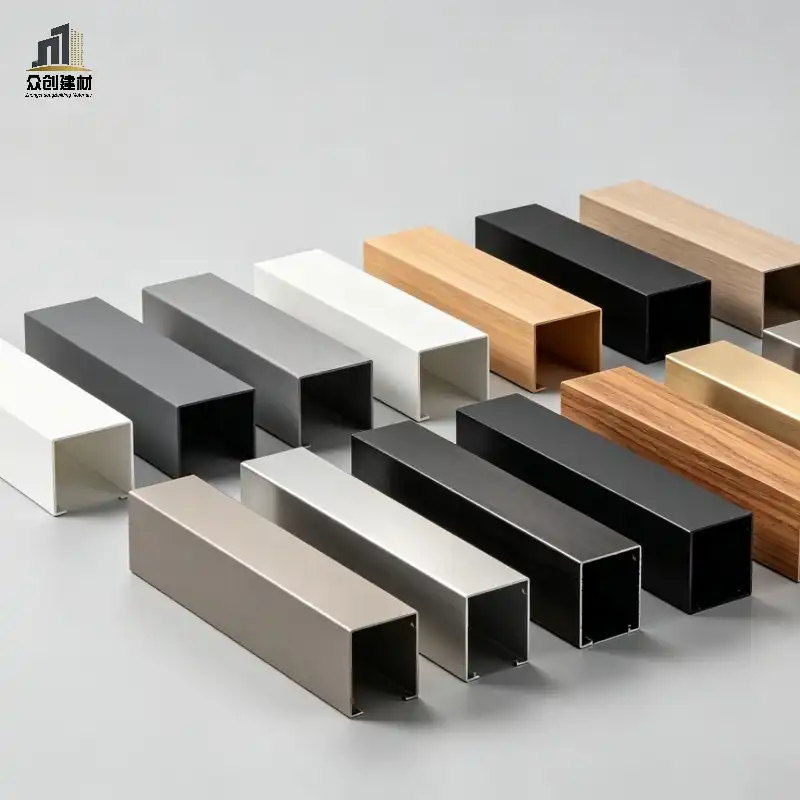
Wood grain transfer aluminum baffles are one of the most popular aluminum baffle products in interior decoration at present. Through vacuum thermal transfer technology, the texture effect of various natural woods is realistically restored on the surface of aluminum baffles. It not only has the natural warm texture of wood, but also has the advantages of aluminum alloy such as fire prevention, moisture resistance, moth resistance, no deformation, and recyclability, perfectly replacing traditional solid wood materials, and is widely used in ceiling and wall decoration of offices, shopping malls, hotels, schools, hospitals, airports and other places.

The production process of wood grain transfer aluminum baffles is mainly divided into the following steps. The first step is base material forming. According to specification requirements, aluminum alloy coils are processed into U-shaped, groove-shaped or other cross-section shaped aluminum baffle base materials by roll forming machine, cut into required lengths, and polished to remove burrs. The second step is base powder spraying. Spray polyester powder coating close to the wood grain background color on the surface of the formed aluminum substrate, usually light yellow, light brown and other background colors, then enter the curing oven and cure at 180-200℃ for 15-20 minutes. The function of base powder is to provide the basic background color of wood grain and increase the adhesion of transfer layer at the same time. The third step is wrapping transfer paper. Wrap the special transfer paper printed with wood grain pattern tightly on the surface of aluminum baffles sprayed with base powder, fix the joints with high temperature resistant tape, then vacuumize to make the transfer paper completely close to the surface of aluminum baffles without any wrinkles or bubbles. This is the key to ensure clear and realistic wood grain. The vacuum degree must reach above 0.06MPa to ensure that the transfer paper is close to the profile everywhere. The fourth step is thermal transfer. Send the aluminum baffles wrapped with transfer paper into the curing oven, bake at 170-190℃ for 15-25 minutes. The specific time and temperature are adjusted according to the type of transfer paper and profile specifications. At high temperature, the wood grain ink on the transfer paper sublimates and penetrates into the powder coating to form a firm wood grain pattern. The fifth step is film tearing and inspection. After cooling out of the oven, tear off the transfer paper, check the surface wood grain effect, whether there are missing transfer, color difference, bubbles and other defects. Qualified products are sprayed with a layer of transparent protective varnish to enhance surface wear resistance and UV resistance, and finally pasted with protective film for packaging.
In addition to the traditional vacuum thermal transfer process, there are now new processes such as 3D wood grain transfer and hand-feel wood grain transfer. 3D wood grain transfer uses three-dimensional printing technology to print wood grain with three-dimensional effect on transfer paper. After transfer, the wood grain has concave and convex real touch, with higher fidelity; hand-feel wood grain is brushed with a special hand-feel paint on the surface after transfer is completed, which feels like real wood grain texture when touched, and both vision and touch are close to real wood. Wood grain aluminum baffles for outdoor use need to use fluorocarbon base powder plus weather-resistant transfer paper, and then spray a layer of fluorocarbon varnish on the surface to ensure no fading for more than 10 years of outdoor use.

The quality of wood grain aluminum baffles on the market varies greatly, with prices ranging from dozens of yuan to more than two hundred yuan per square meter. The main differences are in several aspects. First is transfer effect. High-quality wood grain aluminum baffles have clear and natural texture, uniform color transition, no color difference, no missing transfer, white spots, floating and other defects, consistent wood grain direction, coherent texture after splicing, looking almost indistinguishable from real wood; inferior products have blurred texture, dull color, large color difference, obvious printing traces, disordered texture after splicing, looking fake. Second is adhesion. High-quality wood grain transfer layer has good adhesion, will not lose paint when scratched with nails, will not fall off when stuck with tape, and will not peel after long-term use; inferior products have poor transfer layer adhesion, and will peel off after a period of use. Third is weather resistance. High-quality wood grain aluminum baffles for indoor use guarantee no fading for 10 years, and those for outdoor use guarantee more than 10 years; inferior products will seriously fade and discolor after 1-2 years of use. Fourth is base material quality. Good products use high-quality aluminum alloy base materials from regular manufacturers, with sufficient thickness and good strength; inferior products use recycled waste aluminum, with false thickness marking and easy deformation.
There are several simple ways to identify the quality of wood grain aluminum baffles: first, look, observe closely whether the wood grain is clear and natural, whether there is ghosting, blurring, color difference, whether the color of the same batch of products is consistent, and whether the texture is coherent after splicing; second, touch, good wood grain surface is smooth and delicate, no graininess, hand-feel wood grain has real concave and convex feeling, inferior products have rough surface, with particles or exposed bottom; third, scratch, gently scratch with a nail in an inconspicuous place, good products will not leave traces, inferior products will lose paint; fourth, smell, tear off the protective film and smell, good products have no pungent smell, inferior products have obvious paint smell or glue smell.
There are many kinds of wood grain for aluminum baffles, common ones are walnut, cherry, oak, teak, maple, pine, sandalwood, ash and so on. You can choose according to the design style, or customize special wood grain according to wood samples provided by customers. There are various colors such as light wood color, medium wood color, dark wood color, retro old color, etc. Light wood color is suitable for fresh styles such as Nordic and Japanese; medium wood color is suitable for modern minimalist and new Chinese styles; dark wood color is suitable for Chinese, American and classical styles.
Compared with traditional solid wood materials, wood grain aluminum baffles have obvious advantages: first, good fire performance, Class A non-combustible, fully meet fire protection requirements, while solid wood is flammable; second, moisture and water resistance, will not deform, mold, rot due to moisture, suitable for humid environments; third, moth resistance, will not be moth-eaten, no need for regular moth-proof treatment; fourth, no deformation, aluminum alloy has stable performance, will not crack or deform due to temperature and humidity changes; fifth, environmental protection, 100% recyclable, no need to cut down trees, green and environmental protection; sixth, simple maintenance, usually wipe with a dry cloth, no need for regular waxing maintenance like solid wood; seventh, convenient installation, light weight, mature installation system, fast construction speed. Although the initial cost of wood grain aluminum baffles is slightly higher than ordinary solid wood, the life cycle cost is much lower than solid wood, the service life is 3-5 times that of solid wood, and the maintenance cost is almost zero.
When installing wood grain aluminum baffles, attention should be paid to the consistent wood grain direction. The wood grain direction of all baffles should be the same, and the texture at the splicing should be aligned to achieve good decorative effect. On-site cutting parts should be repaired with same-color touch-up paint to avoid exposing the base material color and affecting the appearance. Wood grain products are best produced in the same batch for the same project to avoid color difference between different batches.