_1762768699969.webp)

_1782530506402.webp)
(1)_1783045836766.webp)
_1786157639392.webp)
(1)_1780970038980.webp)
Hook-On Aluminum Ceiling System: The Definitive Guide for 2026 Commercial Projects
In the fast-paced world of commercial construction, ceiling systems are no longer just decorative elements – they are critical components that impact safety, acoustics, energy efficiency, and long-term maintenance costs. Among the various ceiling solutions available today, the hook-on aluminum ceiling system has emerged as the preferred choice for large-scale projects worldwide, offering an unbeatable combination of performance, aesthetics, and practicality .
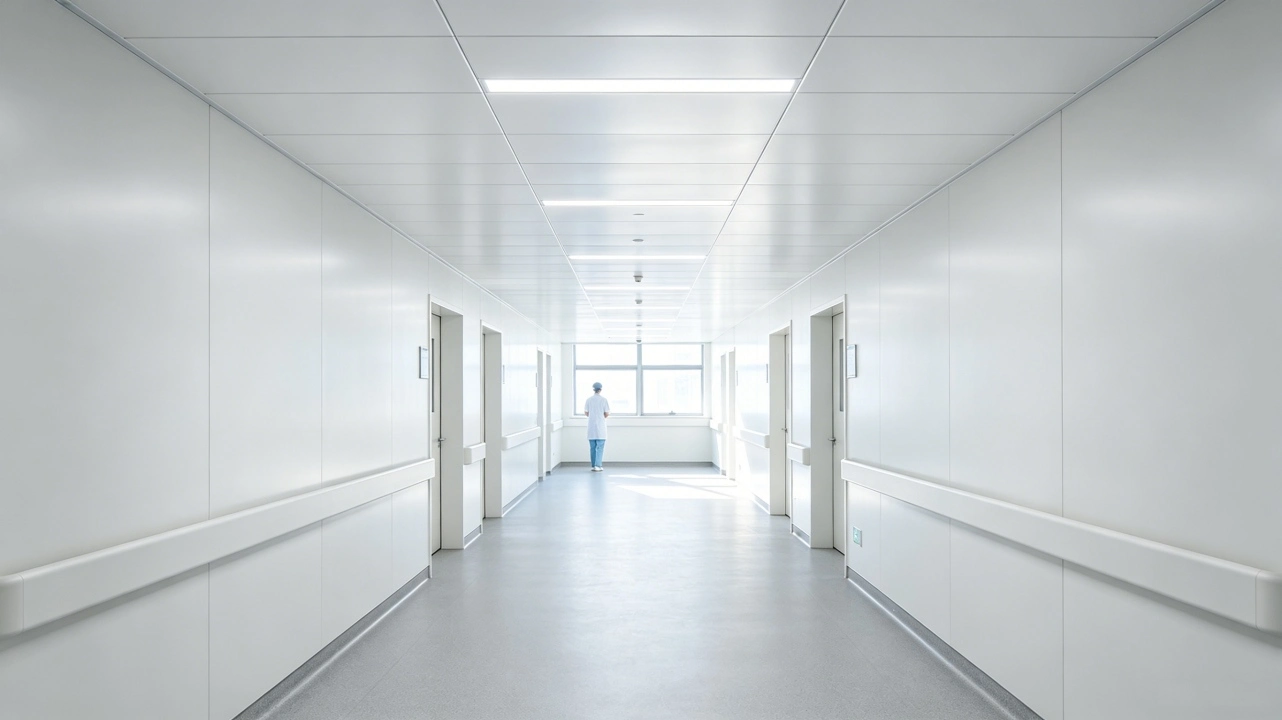
Hook-type aluminum panel system used in hospital ceiling
What Is a Hook-On Aluminum Ceiling System?
A hook-on aluminum ceiling system is a modular metal ceiling solution that uses a unique interlocking design to secure panels to a supporting framework. Unlike traditional clip-in or lay-in systems, hook-on panels feature specially formed L-shaped edges that "hook" onto Z or J-type carriers, creating a secure, seamless connection that requires no visible fasteners .
This innovative design was specifically engineered for large, open spaces where speed of installation, ease of maintenance, and structural integrity are paramount. Today, it is the standard ceiling system for airports, railway stations, shopping malls, office buildings, hospitals, and educational institutions globally .
How It Works: System Components and Structure
A complete hook-on aluminum ceiling system consists of five core components:
- Aluminum Panels: Fabricated from high-grade 3003 or 5052 aluminum alloy, available in various thicknesses (1.0–3.0mm) and sizes. Each panel features precision-formed hook edges on two sides.
- Hook Carriers (Z/J-type): Extruded aluminum or galvanized steel profiles that run parallel to each other, providing the support structure for the panels.
- Main Carriers: Galvanized steel profiles that run perpendicular to the hook carriers, distributing the weight across the ceiling structure.
- Hanger Rods and Brackets: Adjustable components that suspend the main carriers from the building structure, allowing for precise leveling.
- Wind-Resistant Clips: Optional but highly recommended for exterior or high-wind applications, these clips secure each panel individually to prevent dislodgement .
The installation process is remarkably simple: once the supporting framework is in place, panels are simply hooked onto the carriers one by one. No screws, nails, or adhesives are required, and individual panels can be removed and reinstalled in seconds without damaging adjacent panels or the framework .
Key Advantages Over Traditional Ceiling Systems
| Feature | Hook-On Aluminum Ceiling | Traditional Gypsum Ceiling | Clip-In Aluminum Ceiling |
|---|---|---|---|
| Installation Speed | 300% faster | Slow (requires taping, mudding, sanding) | Moderate |
| Maintenance Access | Tool-free, single-panel removal | Requires cutting and patching | Requires special tools, may damage adjacent panels |
| Fire Rating | Class A (non-combustible) | Class A (with fire-rated compound) | Class A |
| Durability | 30+ years, no warping or cracking | Prone to water damage, cracking, and mold | 20+ years |
| Seamless Appearance | Excellent (joints ≤1mm) | Good (with skilled labor) | Fair (visible grid lines) |
| Lifecycle Cost | Low | High (frequent repairs and repainting) | Medium |
The most significant advantage of hook-on systems is their unmatched maintainability. In commercial buildings, ceiling systems must provide easy access to MEP (mechanical, electrical, plumbing) systems above. With hook-on panels, maintenance personnel can simply lift and remove any panel to access utilities, then replace it just as easily – no tools required, no mess, and no damage to the ceiling finish .
Technical Performance Specifications
Modern hook-on aluminum ceiling systems deliver exceptional performance across all critical metrics:
- Fire Resistance: Class A rating according to EN 13501-1 and ASTM E84 standards, making them suitable for all public buildings .
- Acoustic Performance: Perforated panels with acoustic backings can achieve Noise Reduction Coefficient (NRC) ratings of up to 0.9, effectively controlling reverberation in large spaces .
- Corrosion Resistance: PVDF-coated panels pass 5000-hour salt spray tests, making them ideal for coastal areas and humid environments .
- Structural Integrity: Reinforced panels can withstand wind loads of up to 2.4 kPa when equipped with wind-resistant clips .
- Dimensional Stability: Aluminum has a low coefficient of thermal expansion, ensuring panels remain flat and properly aligned even with temperature fluctuations .
2026 Industry Trends Shaping the Market
As we move through 2026, several key trends are driving innovation in the hook-on aluminum ceiling market:
-
Integration with Smart Building Systems: Modern hook-on panels are being designed to seamlessly integrate with smart lighting, HVAC diffusers, occupancy sensors, and air quality monitors. This "integrated ceiling" approach eliminates the need for separate cutouts and creates a cleaner, more streamlined appearance .
-
Sustainability and Circular Economy: With growing emphasis on green building standards like LEED and BREEAM, manufacturers are increasingly using recycled aluminum content in their panels. Leading companies now offer panels with up to 100% post-consumer recycled content, reducing the carbon footprint of construction projects by up to 95% compared to primary aluminum .
-
Parametric and Custom Designs: Advances in digital fabrication technology have made it possible to create custom hook-on panels with complex perforation patterns, curved shapes, and 3D textures. Architects are using these capabilities to create unique, signature ceiling designs that enhance the overall aesthetic of buildings .
-
Antimicrobial and Hygienic Coatings: In healthcare facilities and food processing plants, there is growing demand for hook-on panels with antimicrobial coatings that inhibit the growth of bacteria and viruses. These coatings are easy to clean and maintain, contributing to healthier indoor environments .
Installation Best Practices
To ensure optimal performance and longevity of a hook-on aluminum ceiling system, follow these best practices:
- Proper Framework Alignment: The supporting framework must be perfectly level and square to ensure panels fit together seamlessly. Use laser levels to verify alignment during installation .
- Adequate Clearance: Maintain a minimum clearance of 300mm above the ceiling to allow for easy panel removal and access to MEP systems.
- Wind-Resistant Clips: Always install wind-resistant clips for exterior applications or in areas prone to high winds, such as airport concourses and train station platforms .
- Thermal Expansion Allowance: Leave a small gap (1–2mm) between panels to accommodate thermal expansion and contraction, preventing buckling and warping .
- Professional Installation: While hook-on systems are relatively easy to install, it is recommended to use experienced professionals who are familiar with the specific product and installation requirements.
Conclusion
The hook-on aluminum ceiling system has revolutionized commercial construction by providing a high-performance, low-maintenance, and aesthetically pleasing solution for large-scale projects. Its unique interlocking design offers unmatched ease of installation and maintenance, while its exceptional durability and performance ensure it will remain the preferred choice for architects and contractors for years to come.
As the industry continues to evolve, we can expect to see even more innovative features and designs that further enhance the functionality and sustainability of these systems. Whether you are designing a new airport terminal, office building, or healthcare facility, a hook-on aluminum ceiling system should be at the top of your list of considerations.